
In This Article
Right, let’s talk about decorative trays — those unsung heroes of home styling that somehow make everything look more intentional. You know the ones: they corral your perfume bottles on the vanity, anchor your coffee table display, or keep your bedside clutter from spiralling into chaos. The thing is, you don’t need to spend a fortune on them.
When I first started looking at decorative trays under £30 on Amazon.co.uk, I expected the usual suspects: flimsy plastic masquerading as chic, or wood so thin it bows under the weight of a teacup. But here’s the pleasant surprise — there’s actually a rather decent selection available if you know where to look. From natural marble that adds instant luxury to your bathroom counter, to rustic wooden pieces that bring warmth to your living room, the sub-£30 bracket has more to offer than you might think.
What makes this price point particularly clever for UK buyers is that it sits comfortably below the £25 free delivery threshold (or well within it for Prime members), meaning you can experiment with different styles without the financial commitment of designer pieces. And in British homes where space comes at a premium — whether you’re in a compact city flat or a cosy terraced house — trays serve a dual purpose: they’re decorative, yes, but they’re also genuinely practical for keeping surfaces tidy.
Throughout this guide, I’ll walk you through seven standout options that actually deliver on both style and substance, explain what separates the wheat from the chaff in this category, and share some insider tips on styling these pieces to maximum effect. According to research from the University of Cambridge, organised spaces with clear visual boundaries (like those created by trays) can reduce stress and improve focus — making these humble accessories rather more important than they first appear. Because the secret to good home décor isn’t always spending more — sometimes it’s just about spending smarter.
Quick Comparison: Top Decorative Trays Under £30
| Tray Type | Best For | Price Range | Material | Size (Approx) | Rating |
|---|---|---|---|---|---|
| Hanobe Round Wooden | Farmhouse style, coffee tables | £15-£22 | Paulownia wood | 30cm diameter | 4.5/5 |
| Natural Marble Rectangular | Bathroom vanity, luxury look | £19-£23 | Genuine marble | 30x20cm | 4.6/5 |
| KINGFOM Round Leather | Modern décor, perfume display | £18-£25 | PU leather with gold trim | 30cm diameter | 4.7/5 |
| Hanobe Beaded White Wood | Boho style, centrepieces | £16-£24 | MDF with beaded edge | 30cm diameter | 4.5/5 |
| Mirrored Glass Round | Glamorous style, vanity | £11-£19 | Mirrored glass with metal frame | 25-30cm diameter | 4.2/5 |
| Copper Metal Decorative | Rose gold accents, serving | £13-£20 | Metal with copper finish | 29cm diameter | 4.3/5 |
| Hanobe Rectangular White | Shabby chic, ottomans | £14-£21 | MDF with cutout handles | 34x24cm | 4.0/5 |
The comparison above reveals something interesting about the decorative trays under £30 market on Amazon UK: wooden options dominate the mid-range (£15-£24), whilst mirrored glass pieces offer the best value at the lower end (£11-£19). For British buyers prioritising durability in damp conditions — think steamy bathrooms or chilly conservatories — marble and sealed wood perform better than untreated materials. Notice how most highly-rated options cluster around the 30cm size, which happens to be the sweet spot for UK coffee tables and vanity counters without overwhelming smaller spaces.
💬 Just one click — help others make better buying decisions too! 😊
Top 7 Decorative Trays Under £30: Expert Analysis
1. Hanobe Round Rustic Wooden Serving Tray
If you’re after that farmhouse-meets-Scandi aesthetic that’s still going strong in British interiors, this Hanobe round tray deserves your attention. Made from paulownia wood — which is about 40% lighter than standard wood — it strikes that rare balance between substantial and portable. The 30cm diameter fits perfectly on most UK coffee tables without dominating the space, whilst the raised edge (roughly 4cm high) means your candles and coasters won’t slide off when someone inevitably knocks the table reaching for the remote.
What caught my eye about this particular model is the wood grain variation — because it’s genuine paulownia rather than printed veneer, each tray has its own character. Some UK buyers have noted the wood can be sensitive to moisture (it’s decorative-use only unless you treat it with food-grade mineral oil), which is worth remembering if you’re planning to use it in a steamy bathroom or near a frequently-spilt-tea zone. For living room styling or bedroom displays, though, it’s spot on.
British customers particularly praise its lightweight nature for carrying breakfast in bed or moving displays around during seasonal redecorating — rather handy when you’re rearranging for the umpteenth time trying to maximise natural light in those short winter days. The distressed finish hides minor scratches well, which matters if you’ve got kids or pets treating your furniture like an obstacle course.
Pros:
- Lightweight paulownia wood (easy to move around)
- Natural wood grain adds character
- Raised edge prevents items sliding off
Cons:
- Not food-safe without treatment
- Can show water marks if not dried promptly
Price range: around £15-£22
2. Natural Marble Rectangular Tray
Marble has that instant luxury effect that makes even your Tesco toiletries look a bit posher, doesn’t it? This rectangular marble tray (typically 30x20cm) brings genuine stone to your bathroom vanity or kitchen counter without the eye-watering price tag of designer homeware shops. The dark brown marble variant I’ve seen most frequently on Amazon UK has lovely natural veining — no two are identical, which is part of the appeal.
Here’s what matters for UK buyers: marble is naturally cool to the touch (brilliant for skincare storage) and handles the damp British climate better than wood or metal that might rust. Natural stone like marble has been used in British homes for centuries precisely because it withstands moisture and temperature fluctuations — one reason Georgian and Victorian homes still have marble washstands intact. The weight — around 1-1.5kg depending on marble thickness — means it stays put on your counter rather than sliding about, though you’ll want to wipe it down regularly as marble can absorb moisture and develop marks over time if neglected.
The 3cm depth is shallow enough that items don’t look lost in it, but deep enough to contain small spills from perfume bottles or face oils. British bathroom sizes being what they are (read: bijou), the rectangular shape fits neatly along vanity tops or even on windowsills without jutting out awkwardly. One thing worth noting from UK customer reviews: the edges can be slightly sharp straight from the box, so give them a quick feel and perhaps a gentle sand if needed before placing near children.
Pros:
- Genuine natural marble with unique veining
- Cool surface ideal for skincare products
- Heavy base stays in place
Cons:
- Can absorb moisture if not sealed
- Relatively heavy (not portable)
Price range: around £19-£23
3. KINGFOM Round Tray with PU Leather
Right, this KINGFOM round leather tray with gold trim is what I’d call the “Chelsea flat” option — modern, polished, and decidedly more upmarket-looking than its price suggests. The PU leather (which is essentially high-quality vegan leather) has a vertical stripe emboss that catches the light rather nicely, whilst the gold-edged rim adds just enough glam without tipping into blingy territory.
At 30cm diameter and roughly 3cm high, it’s perfectly sized for perfume displays, jewellery organisation, or as a coffee table catch-all. What makes this particularly clever for UK homes is the scratch-resistant surface — proper leather can be precious, but PU leather wipes clean with a damp cloth and doesn’t show every fingerprint. The material also handles central heating fluctuations better than natural leather, which can crack in our stop-start British weather where heating goes on and off with the seasons.
UK buyers rave about using this on dressing tables where the gold trim complements existing brass or gold fixtures — it’s that sort of piece that ties a room together. One word of caution from the listing: don’t place candles directly on it without protection. The PU leather can mark from heat, so use candle plates or coasters if you’re styling it with naked flames. For unscented candle jars, remote controls, or perfume bottles, it’s absolutely fine and looks far more expensive than the £18-£25 price bracket would suggest.
Pros:
- Easy-clean PU leather surface
- Gold trim adds upscale look
- Scratch-resistant and durable
Cons:
- Not suitable for direct candle contact
- Gold trim may not suit all colour schemes
Price range: around £18-£25
4. Hanobe White Beaded Round Wood Tray
This beaded-edge wooden tray is what I’d describe as having “thoughtful design details” — the sort of thing that makes visitors do a double-take and ask where you got it. The raised beaded rim around the circumference gives it a more refined look than standard wooden trays, adding a decorative element that works equally well in boho, coastal, or traditional British country interiors.
Made from MDF with a white finish, it’s lighter than solid wood but sturdy enough for everyday use. The 30cm diameter has become something of a standard for good reason — it’s large enough to make a statement on your coffee table or kitchen counter, but not so massive that it overwhelms smaller surfaces. UK customers mention it sits particularly well on ottomans, which are having rather a moment in British living rooms as we all try to maximise seating and storage in limited space.
The white finish is where opinions divide slightly. Some UK buyers love how it brightens up darker rooms (always a consideration in British homes where natural light can be scarce), whilst others note it shows dust more readily than darker colours. The consensus seems to be that if you’re using it for display rather than heavy daily use, the white stays pristine. For high-traffic areas or homes with young children, you might want to consider the natural wood variant instead. The beaded edge, incidentally, does an admirable job of keeping small items from rolling off — no more chasing your ring across the floor when you plonk it down at bedtime.
Pros:
- Distinctive beaded edge detail
- White finish brightens spaces
- Lightweight MDF construction
Cons:
- White shows dust more than darker colours
- MDF less durable than solid wood
Price range: around £16-£24
5. Round Mirrored Glass Tray
Mirrored trays are that classic styling trick that instantly makes your display look more curated — the reflective surface doubles the visual impact of whatever you place on it, whether that’s a collection of perfume bottles or a cluster of pillar candles. This round mirrored option (typically 25-30cm) delivers the look without the designer price tag, with a silver metal frame that adds structure and prevents the glass edges from chipping.
For UK bathrooms and vanities, the mirrored surface is particularly practical because it shows spills immediately, prompting you to wipe them up before they dry into stubborn rings — rather useful given how hard water can be in certain British regions. The glass is treated to resist moisture, though I’d still recommend wiping it dry after bathroom use to prevent dulling over time. UK customer feedback consistently mentions it’s heavier than expected (around 600-800g), which actually works in its favour for staying put on dressing tables.
The silver metal frame comes with small rubber feet underneath, which prevents scratching on polished surfaces — a thoughtful touch for renters who can’t afford deposit deductions. One thing worth noting is that mirrored trays show every fingerprint and water spot, so they’re higher maintenance than matte-finish alternatives. If you’re the sort who enjoys regular styling updates and doesn’t mind a quick daily wipe, it’s brilliant. If you prefer set-it-and-forget-it décor, perhaps look elsewhere. The reflective quality does work wonders in dimly-lit spaces though, bouncing available light around effectively — particularly valuable during those long British winters.
Pros:
- Reflective surface amplifies displays
- Silver frame prevents edge chipping
- Rubber feet protect surfaces
Cons:
- Shows fingerprints and water spots readily
- Requires regular cleaning
Price range: around £11-£19
6. Copper Metal Decorative Tray (Rose Gold)
Rose gold had its moment a few years back, but it’s proving to have staying power in British home décor — perhaps because the warmer metallic tone suits our generally cooler colour palettes. This copper-finish metal tray brings that rose gold aesthetic at a fraction of what you’d pay in homeware shops on the high street. The 29cm diameter and textured hammered surface give it an artisanal quality, whilst the raised edge keeps items secure.
What makes this particularly suitable for UK homes is the anti-slip pads on the bottom — they’re not just protecting your surfaces from scratches, but also preventing the tray from sliding on polished countertops when you’re reaching for items. The copper finish is applied over metal rather than being solid copper, which keeps the weight manageable (around 400-500g) and the price sensible. Some UK reviewers note slight imperfections in the finish, which I’d argue adds character rather than detracting from it — that slightly uneven hammered texture means each one’s a bit different.
The edges are reportedly quite sharp straight from the box, so do give them a feel before placing the tray anywhere children might grab it. A quick file with an emery board sorts this out if needed. The rose gold tone works particularly well with grey, white, and navy colour schemes that are popular in British interiors, though it might clash with cooler silver fixtures. For serving drinks or displaying candles and books on coffee tables, it performs admirably. The textured surface means items don’t slide around, and any minor scratches blend into the hammered finish rather than standing out glaringly.
Pros:
- Rose gold finish suits modern interiors
- Hammered texture adds interest
- Anti-slip pads prevent movement
Cons:
- Edges can be sharp initially
- Finish may scratch with heavy use
Price range: around £13-£20
7. Hanobe Rectangular White Wood Tray with Handles
This rectangular white wooden tray with carved-out handles is proper shabby chic — the sort of piece that looks equally at home in a country cottage or a trendy urban flat. Measuring roughly 34x24cm, it’s more generously sized than the round options, making it ideal for ottoman tops or dining table centrepieces where you want to create a focal point. The cutout handles aren’t just decorative; they make it genuinely practical for carrying tea things from kitchen to garden (weather permitting, naturally).
Made from MDF with a distressed white finish, it has that “I found this at a vintage market” look that British interior magazines love. The finish deliberately shows through to darker wood underneath in places, creating texture and visual interest. UK customer reviews are somewhat mixed on build quality — some find it perfectly decent for the price, whilst others describe it as feeling lightweight and delicate. The general consensus seems to be that it’s decorative rather than heavy-duty; fine for displaying candles, books, or a small plant arrangement, less suited to hauling full tea services about.
The rectangular shape is particularly useful for UK homes because it fits neatly along windowsills, mantelpieces, or the back of sofas without wasting space. The white finish does show marks more readily than natural wood, and a few buyers mention it arrived with small dents or chips. For the £14-£21 price range, though, expectations should be calibrated accordingly — this isn’t heirloom furniture, but a stylish accent piece that does its job well enough for most decorative purposes.
Pros:
- Cutout handles add functionality
- Shabby chic finish suits multiple styles
- Rectangular shape fits narrow spaces
Cons:
- MDF construction feels lightweight
- White finish can chip or mark
Price range: around £14-£21
Styling Your Decorative Tray: From Cluttered to Curated
One of the most common mistakes I see British homeowners make is treating decorative trays as just another surface to pile things on — defeating the entire purpose. The whole point of a tray is to create visual boundaries that turn random objects into an intentional display. Here’s how to actually use these pieces effectively in UK homes where every centimetre counts.
The Rule of Thirds for Coffee Tables
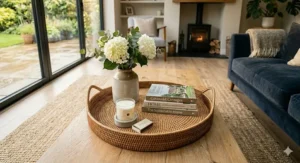
On coffee tables, aim for three elements: height variation, texture contrast, and one living element. For instance, pair a candle (height), a small stack of coffee table books (texture), and a succulent or fresh flowers (living). The tray contains these items whilst the negative space around them lets each piece breathe. In smaller British living rooms where coffee tables often serve multiple functions, this approach lets you quickly move the entire display aside when you need the surface for actual coffee (or more likely, builders’ tea and biscuits).
Bathroom Vanity: Beauty with Boundaries
British bathrooms are notoriously compact, so trays earn their keep by corralling toiletries whilst making them look more spa-like than chaotic. Group items by frequency of use: daily essentials in a small tray near the sink, occasional items (perfumes, special skincare) in a decorative tray further back. The tray edge contains inevitable spills from bottles and prevents products from migrating across the counter. Opt for marble or glass for bathrooms rather than wood, which can warp in steamy conditions.
Bedside Table: The Evening Edit
Your bedside table probably accumulates debris throughout the week — water glass, lip balm, phone charger, that book you’re definitely going to finish. A small tray (20-25cm) keeps these essentials contained whilst leaving space for your lamp and alarm clock. The psychological effect of “putting things back on the tray” rather than “putting things away in a drawer” is surprisingly powerful for maintaining order with minimal effort.
What to Look for When Buying Decorative Trays Under £30
Material Matters: Matching Trays to UK Conditions
British weather is famously damp, and our homes reflect that — fluctuating humidity, occasional condensation, and the ever-present threat of water rings from tea mugs. According to Which? home experts, British homes face unique moisture challenges that affect furniture and accessories differently than in drier climates. Your tray material needs to handle this. Sealed wood and marble cope best with bathroom moisture, whilst metal can rust if not properly treated. PU leather is surprisingly durable in centrally-heated rooms but keep it away from damp areas. Mirrored glass needs regular wiping but shows spills immediately, which actually helps prevent damage.
Size vs Space: The British Home Reality
Most British homes have smaller rooms than American or European counterparts, so oversized trays quickly dominate surfaces. For standard UK coffee tables (80-120cm wide), a 30cm diameter tray creates a focal point without overwhelming. Rectangular trays work better on narrow windowsills or mantelpieces. Measure your intended surface before buying — nothing worse than excitement turning to disappointment when a tray arrives and literally doesn’t fit.
Edge Design: Practicality Over Prettiness
Raised edges (3-5cm) are non-negotiable if you’re using the tray for functional purposes rather than pure decoration. They contain spills, prevent items rolling off when someone inevitably bumps the table, and make carrying things safer. Flat trays look minimalist but are genuinely less useful unless they’re purely for static displays. For homes with children or pets — or just generally clumsy adults — prioritise raised edges every time.
Finish Quality at the £30 Price Point
At this price bracket, you’re unlikely to get museum-quality craftsmanship, so adjust expectations accordingly. Look for even coating (no visible brush marks or thin patches), secure construction (no wobbling or loose joints), and smooth edges (nothing that’ll snag clothing or scratch surfaces). Some imperfections are acceptable and even add character — perfectly uniform finishes at under £30 often mean cheap printed veneers rather than genuine materials.
Decorative Trays vs Alternative Solutions
Why Not Just Use Plates or Baskets?
Plates lack the raised edge that makes trays functional, whilst baskets hide contents rather than displaying them. Trays occupy the middle ground: they contain items whilst showing them off. For open-plan British living where everything’s visible, this matters more than you might think. Baskets work brilliantly for hiding clutter, but trays actually make clutter look intentional — there’s a place for both, just not the same place.
When Wall Shelves Work Better
If your surfaces are already crowded (the British accumulation problem), adding a tray just creates another layer of things to dust. Wall shelves might be the better solution, lifting items off precious horizontal space. Reserve trays for surfaces you actively use and want to keep organised — bedside tables, bathroom counters, coffee tables. Don’t add trays to already-cluttered bookcases or windowsills where they’ll just collect more stuff.
The Multi-Tray Approach
One large tray isn’t always better than several smaller ones. For kitchen counters, separate trays for coffee station (mugs, pods, sugar) and baking essentials (oils, flour, frequently-used tools) create zones that make cooking more efficient. British kitchens often lack counter space, so the ability to lift an entire “station” and move it aside when you need surface area becomes genuinely useful rather than just aesthetically pleasing.
Common Mistakes When Buying Decorative Trays
Choosing Style Over Function
That Instagram-perfect marble tray looks stunning, but if you’re planning to use it for serving drinks and it weighs 2kg, your wrists will regret it. Be honest about primary use: display (prioritise appearance) or function (prioritise weight and durability). For UK homes where we often need things to multi-task, look for the overlap — something attractive enough for daily display but practical enough for occasional use.
Ignoring Your Existing Colour Scheme
Rose gold trays clash magnificently with chrome bathroom fixtures, just as rustic wood can look oddly out of place in sleek modern flats. Before buying, photograph your intended surface and check the tray colour against it. British homes tend toward cooler colour palettes (greys, blues, whites), so warmer wood tones or metallics can feel incongruous unless you’ve got other warm accents to tie them in.
Buying Too Many Too Fast
The temptation when you discover affordable decorative trays is to buy several at once. Resist. Start with one for your most-used surface, live with it for a few weeks, and see if it actually improves your daily life before adding more. British minimalism isn’t just aesthetic — it’s practical when space is limited and clutter accumulates easily despite best intentions.
Maintaining Your Tray Investment: Care Tips for UK Conditions
Dealing with Damp: The British Challenge
Wood trays need occasional treatment with food-safe mineral oil if you’re using them in damp areas — every 2-3 months should suffice. This prevents warping and water marks that British bathrooms inflict. Marble should be sealed annually to prevent absorption of moisture and stains. Metal trays with exposed edges can rust in humid conditions, so check regularly and treat any spots with metal polish before they spread.
Seasonal Adjustments
British homes experience significant temperature fluctuations, particularly if you turn heating off completely in summer. Wood and MDF trays can expand and contract, sometimes causing finishes to crack. Store decorative (non-functional) trays somewhere with relatively stable temperature during extreme weather. For functional trays, simply wipe them dry after use — moisture is the enemy, not temperature itself.
Cleaning Without Damaging
Different materials need different approaches. Wood and MDF: damp cloth only, dry immediately, never soak. Marble: pH-neutral cleaner, avoid acidic products (bye-bye, vinegar-based eco-cleaners). Metal: depends on finish, but generally metal polish for copper/brass, glass cleaner for metallic coatings. PU leather: damp cloth, mild soap if needed, condition occasionally with leather cream. Mirrored glass: glass cleaner, microfibre cloth, buff dry to prevent streaks. None of this is complicated, but using the wrong cleaner can damage finishes irreversibly.
Where Budget Decorative Trays Genuinely Shine
Gift Giving Without Guilt
At £15-£25, decorative trays hit that sweet spot for British gift-giving: thoughtful without being overly extravagant, useful without being boring. They work for housewarmings, birthdays, or thank-you gifts, particularly when styled with a candle or small plant. The Guardian’s consumer research consistently shows that practical homeware gifts rank highly for recipient satisfaction — people genuinely appreciate items they’ll actually use rather than ornamental pieces that gather dust. The recipient can use it immediately, and if it’s not quite their taste, the modest price means no one feels obliged to keep it on permanent display.
Rental Property Solutions
Renters face a particular challenge: wanting to personalise spaces without permanent changes. Decorative trays transform generic surfaces without nails, paint, or damage. They’re portable between properties, update easily with the seasons, and create visual interest that makes rented spaces feel more like home. When you move, trays pack easily and rarely break in transit — unlike mirrors, artwork, or ornaments that require bubble wrap and crossed fingers.
Testing Design Directions
Unsure about committing to a full room makeover? Buy an inexpensive tray in your potential new colour scheme or style. If you love the rose gold tray for three months, perhaps those rose gold cabinet handles are worth installing. If the farmhouse wooden tray starts feeling dated after a few weeks, you’ve avoided the expensive mistake of rustic furniture. Trays let you trial aesthetic directions with minimal financial commitment — rather clever for commitment-phobic decorators.
FAQ: Decorative Trays Under £30
❓ Can marble trays handle hot drinks without damage?
❓ Do wooden trays warp in British bathrooms?
❓ Are decorative trays suitable for outdoor use in UK gardens?
❓ How do I stop items sliding around on smooth tray surfaces?
❓ What size tray fits standard UK coffee tables?
Conclusion: Small Budget, Big Impact
The real revelation about decorative trays under £30 isn’t just that they’re affordable — it’s that they punch well above their price point in terms of visual impact. These aren’t luxury items that’ll outlive your grandchildren, granted, but they’re far more capable than you’d expect from budget homewares. They transform messy surfaces into styled vignettes, contain the daily accumulation that British homes inevitably generate, and create visual anchors in rooms that otherwise feel a bit aimless.
What strikes me most about this category on Amazon UK is the genuine variety available. Whether you’re after rustic wooden warmth, marble sophistication, or rose gold glamour, there’s something here that’ll suit without requiring a second mortgage. The key is being realistic about what you need: a display piece for your pristine guest bathroom demands different qualities than a workhorse tray corralling your daily chaos on the bedside table.
For British buyers specifically, these trays solve problems we don’t always articulate: they manage clutter in smaller homes, they handle our damp climate better than you’d expect (with minimal care), and they satisfy our fondness for seasonal redecorating without wasteful expenditure. That £20 marble tray makes your Boots purchases look like Chanel, and honestly, in these economically uncertain times, that’s the sort of everyday luxury we could all do with more of.
The decorative trays under £30 sweet spot exists because British retailers have recognised what we actually need: affordable, practical pieces that still look decent. Not everything requires investment-piece thinking. Sometimes — perhaps more often than aspirational magazines suggest — good enough is genuinely good enough, particularly when “good enough” means your surfaces stay tidy and your home feels more put-together with minimal effort. Start with one. See what difference it makes. I suspect you’ll be back for another within the month.
✨ Recommended for You
- Best Coffee Table Trays UK 2026: 7 Expert-Tested Picks
- 7 Best Bay Window Curtain Tracks UK 2026
- 7 Best Brass Curtain Poles UK 2026
Disclaimer: This article contains affiliate links. As an Amazon Associate, I earn from qualifying purchases. If you purchase products through these links, we may earn a small commission at no additional cost to you.
✨ Found this helpful? Share it with your mates! 💬🤗
