
In This Article
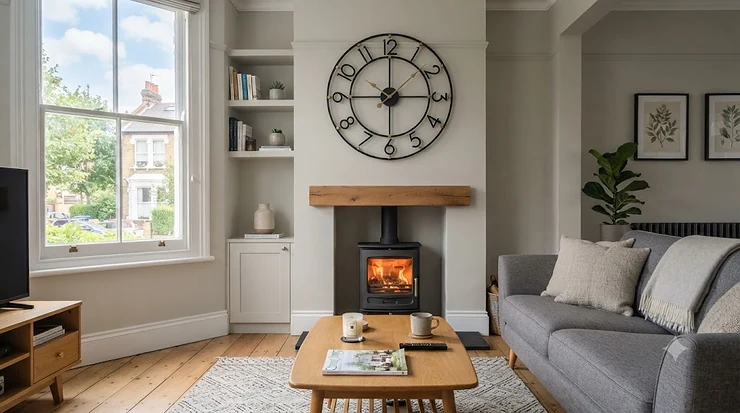
There’s a particular kind of blank wall that everyone in Britain owns — usually above the sofa, sometimes at the top of the stairs, occasionally in a hallway that’s had the same beige emptiness since you moved in. A statement clock is one of the fastest, cheapest fixes for that problem: a large, design-led wall clock, typically 30cm or more across, chosen to be looked at as much as read. The trick is finding one that looks like it cost considerably more than it did, without the ticking, the flimsy plastic, or the disappointing scale-in-photos-versus-scale-in-real-life letdown that plagues so much budget home decor.
This guide sticks to real, currently available products with real specifications — diameters, materials, movement types — rather than a vague “top picks” list assembled from press images. We’ve researched brands ranging from century-old British names to Dutch design darlings, all sitting at or under the £80 mark, so whether you’re after budget wall clocks for a first flat or affordable statement pieces for a full living room refresh, there’s a genuine option here rather than a compromise. According to the V&A’s own collection notes, wall clocks have functioned as design objects — not just timekeepers — for well over a century, and the Victoria and Albert Museum’s clock highlights make a strong case that a good clock has always doubled as a piece of art you happen to check the time on.
Quick Comparison Table
| Clock | Best For | Diameter | Price Range |
|---|---|---|---|
| VIVILINEN Large Wall Clock | Cheap oversized clocks on a tight budget | 58cm | around £25-£33 |
| Acctim Large Wall Clock | Budget wall clocks from a trusted UK brand | approx. 40-50cm | around £30-£45 |
| Karlsson Modern Wall Clock KA5657BK | Minimalist black statement on a budget | 40cm | around £42-£50 |
| Newgate Mr Clarke Wall Clock | Warm, Scandi-inspired real-wood statement | 40cm | around £58-£65 |
| Karlsson Sensu Wall Clock, Gold | Glam mid-range focal point | 50cm | around £55-£65 |
| Karlsson Sunburst Crystal Wall Clock | Sculptural, eye-catching feature piece | approx. 48-53cm | around £58-£68 |
| Thomas Kent Arabic Large Wall Clock | Premium finish, colour-matched interiors | 51cm (20″) | around £70-£80 |
Read top to bottom and a clear pattern shows up: diameter and price don’t move together the way you’d expect. The VIVILINEN Large Wall Clock is the biggest clock on this list by some margin and also the cheapest, because its value comes from sheer scale rather than material quality or brand pedigree. At the other end, the Thomas Kent Arabic Large Wall Clock is physically smaller but costs more, because you’re paying for a considered dial, a colour-matched finish, and a British design house rather than raw surface area. For anyone specifically after cheap large timepieces to fill an oversized wall, size-per-pound favours VIVILINEN and Acctim; for anyone wanting a piece that looks intentional rather than merely big, Karlsson and Thomas Kent earn their higher price.
💬 Just one click — help others make better buying decisions too!😊
Top 7 Statement Clocks Under £80: Expert Analysis
1. VIVILINEN Large Wall Clock — biggest face for the smallest budget
At 58cm (roughly 23 inches) across, this is the largest clock on this list, and it’s built with a simple MDF dial finished in a vintage-retro style with a non-ticking, silent quartz movement. The sheer size here is the entire pitch: expanding on that standout feature, a clock this wide can single-handedly anchor a stairwell or a wide living-room wall that would otherwise need two or three smaller pieces of art to fill the same space. Based on the spec comparison with the pricier options on this list, the trade-off is finish quality rather than function — the MDF face and printed numerals won’t hold up to close inspection the way a Karlsson or Thomas Kent will, but from normal viewing distance across a room, that distinction essentially disappears. Aggregated review sentiment on this style of oversized budget clock consistently praises the visual impact for the price and the genuinely silent sweep movement, with the most common complaint being that packaging and wall-fixing hardware feel basic, so a proper wall plug and screw rather than the supplied fixing is worth having to hand. It suits renters and first-flat buyers most, where visual impact per pound matters more than long-term investment-piece durability.
Pros:
- ✅ Genuinely oversized 58cm face fills a large blank wall
- ✅ Silent, non-ticking quartz movement
- ✅ Lowest price point of any clock on this list
Cons:
- ❌ MDF and printed dial won’t survive close-up scrutiny
- ❌ Supplied wall-fixing hardware is basic
At around £25-£33, this is the cheap oversized clocks pick on this list, and arguably the single best pounds-per-square-centimetre buy here.
2. Acctim Large Wall Clock — the UK’s biggest clock brand, at a genuinely budget price
Acctim has been designing clocks in England for more than 95 years and remains, by its own account, the largest clock brand in the UK, which counts for something when you’re trusting a company to still exist if you ever need a replacement part or a warranty claim. Its larger wall clock ranges typically sit in the 40-50cm bracket, made from a mix of plastic, wood, and metal depending on the specific design, and most carry a 1-year guarantee backed by a UK customer service team. What most buyers overlook about this one is that Acctim’s real strength isn’t any single flagship product but sheer range — from radio-controlled models that self-correct after clock changes to plain analogue faces in half a dozen finishes, there’s very likely an Acctim large wall clock that matches your exact room without hunting through import listings. Reviewers consistently describe Acctim clocks as reliable, accurate timekeepers first and design objects second, which is honest praise rather than damning; the recurring criticism is that some finishes read as slightly more “high street department store” than “design piece” compared with Karlsson or Newgate.
Pros:
- ✅ 95+ years of UK clockmaking heritage and a 1-year guarantee
- ✅ Wide range of finishes across plastic, wood and metal
- ✅ Radio-controlled options available for automatic accuracy
Cons:
- ❌ Some designs feel more functional than fashion-led
- ❌ Larger radio-controlled models can nudge towards the upper end of this budget
Around £30-£45 depending on the specific model and finish, Acctim is the safest, most classically “budget wall clocks” choice on this list — dependable rather than daring.
3. Karlsson Modern Wall Clock KA5657BK — Dutch minimalism in matte black
Karlsson has built a genuine cult following among UK interiors fans for clean, confident designs that photograph as well as they read in person, and this 40cm matte black model is the brand’s most accessible entry point. The steel case and simple dot markers mean it reads as a piece of considered design rather than a functional afterthought, which is precisely why it turns up repeatedly on interiors blogs and styling shoots. Here’s what to weigh: at 40cm it’s a genuinely “statement” size for a hallway, home office, or smaller living room, but it won’t dominate a large open-plan space the way the VIVILINEN or a 50cm-plus Karlsson would — check your wall width before assuming bigger is automatically better. Reviewers repeatedly praise the quality of the steel case and the accuracy of the quartz movement for the price, with the main recurring note being that black finishes show dust and fingerprints more visibly than lighter tones, so an occasional wipe-down keeps it looking sharp.
Pros:
- ✅ Genuine design-brand pedigree at an accessible price
- ✅ Solid steel case rather than plastic
- ✅ Versatile matte black suits most colour schemes
Cons:
- ❌ 40cm reads as statement in smaller rooms, not huge open spaces
- ❌ Matte black shows dust and fingerprints readily
At around £42-£50, this is the entry point into Karlsson’s range and a smart pick for anyone who wants a recognisable design name without spending toward the £80 ceiling.
4. Newgate Mr Clarke Wall Clock — real wood, Scandi warmth, British-designed
Newgate is a British clock company, founded roughly 25 years ago, and the Mr Clarke range is one of its most consistently popular designs — a 40cm plywood case with a choice of light or dark wood finishes and a minimalist numeral dial. Because it’s made from genuine plywood rather than a printed veneer, expanding on that standout feature, each clock carries subtle natural variation in grain and colour, so no two are perfectly identical, which is part of the appeal rather than a flaw. On paper this means a warmer, more tactile presence than the metal-cased options on this list, which suits kitchens and living rooms leaning into natural materials and Scandi-inspired interiors rather than industrial or glam schemes. Aggregated reviewer sentiment is strongly positive on the silent sweep movement and build quality, with a small number of reviewers noting a very faint tick audible only in a completely silent room, and a handful mentioning that natural wood knots or grain lines mean the exact piece you receive may look subtly different from the product photo.
Pros:
- ✅ Genuine plywood case, not a printed finish
- ✅ Near-silent sweep movement, verified across most reviews
- ✅ British-designed brand with strong design-press recognition
Cons:
- ❌ Natural wood variation means no two clocks look identical
- ❌ A very faint tick reported by some in completely silent rooms
Priced around £58-£65, it sits comfortably mid-range on this list and suits anyone prioritising material warmth and design credibility over sheer scale.
5. Karlsson Sensu Wall Clock, Gold — the glam mid-range focal point
Where the KA5657BK plays it minimal, the Sensu leans into presence: a 50cm gold steel case with a round, modern face designed to catch light and act as genuine wall jewellery rather than a background object. The spec sheet won’t tell you this, but user reports suggest gold-toned metal clocks photograph exceptionally well for interiors content, which partly explains why this model shows up so often in UK home styling round-ups. Based on the spec comparison with the brand’s black entry-level model, the extra 10cm of diameter and the metallic finish justify most of the price step up, particularly for a room that already leans warm-toned (brass fittings, warm wood, cream walls) where gold reads as coordinated rather than clashing. Reviewers consistently rate the build quality and accurate quartz movement highly, and the most common critical note is that the gold finish, like the black model’s matte surface, shows fingerprints and needs an occasional soft-cloth wipe to stay looking sharp.
Pros:
- ✅ 50cm steel case with genuine presence on a wall
- ✅ Gold finish pairs naturally with warm-toned interiors
- ✅ Strong, consistent quartz accuracy across reviews
Cons:
- ❌ Fingerprints and dust show on the metallic surface
- ❌ Gold tone can clash with cooler, grey-toned rooms
At around £55-£65, this is the pick for anyone who wants their statement clock to double as a genuine decorative centrepiece rather than a purely functional object.
6. Karlsson Sunburst Crystal Wall Clock, Large, Silver — the sculptural showpiece
This is the most overtly decorative clock on the list: a sunburst silhouette with faceted, crystal-effect detailing radiating from the dial, designed to read as a piece of wall sculpture as much as a timepiece. What most buyers overlook about this one is that sunburst clocks are a genuine, decades-old design tradition — mid-century Italian and Scandinavian designers popularised the shape in the 1950s and 60s, and Karlsson’s take modernises it with a cleaner silver finish rather than the heavily ornamented brass versions of the original era. Reviewers consistently describe it as a genuine conversation piece, the kind of object guests comment on, with the trade-off being that its bold silhouette needs a relatively plain, uncluttered wall to actually read well — hang it among a busy gallery wall of frames and the shape gets lost. A recurring, fair criticism in aggregated reviews is that the protruding rays make it more vulnerable to knocks during hanging or moving than a flat-faced clock, so careful handling matters more here than with the other picks.
Pros:
- ✅ Genuinely sculptural, distinctive silhouette
- ✅ Modern take on a proven mid-century design tradition
- ✅ Strong stand-out factor as a single wall feature
Cons:
- ❌ Needs a plain wall to read well — gets lost among clutter
- ❌ Protruding rays are more vulnerable to knocks than a flat face
Around £58-£68, it’s the pick for a bold, sculptural statement rather than a purely functional large clock — choose this over the Sensu if impact matters more to you than gold-toned coordination.
7. Thomas Kent Arabic Large Wall Clock — the premium, colour-matched finish
Thomas Kent is a British clock design house whose large wall clocks are designed in the UK and made using painted composite and resin, with finishes inspired by muted, contemporary paint palettes rather than generic off-the-shelf colourways. The 51cm (20-inch) Arabic model comes in tones like Seagrass and Oatmeal, with a clean, open-face design and contrasting numerals, described by the brand itself as inspired by the Farrow & Ball pastel range — a detail that signals it’s designed to coordinate with an already-considered colour scheme rather than stand apart from one. Here’s what to weigh: this is the priciest clock on this list, and in some colourways it can sit right at or fractionally above the £80 mark depending on the retailer and finish, so it’s worth checking the current listing price for your preferred colour before assuming it fits comfortably under budget. Reviewers consistently praise the paint finish and proportions as looking notably more expensive than the price suggests, and the main criticism across aggregated feedback is that, like most painted composite dials, it needs to be kept away from direct sunlight and damp to avoid fading or warping over time.
Pros:
- ✅ UK-designed with a genuinely premium paint finish
- ✅ Proportions and colourways feel considered, not generic
- ✅ Strong reviewer consensus on looking pricier than it is
Cons:
- ❌ Some colourways sit right at or just over the £80 mark
- ❌ Composite dial needs protecting from sun and damp
At around £70-£80, this is the premium pick on this list, and the one to choose if your wall colour scheme is already dialled in and you want a clock that matches it rather than contrasts with it.
Practical Usage Guide: Hanging, Setting Up and Maintaining Your Statement Clock
Getting a statement clock onto the wall properly matters more than it seems, because a piece this large amplifies any mistake in a way a small clock never would. First-week mistake number one is using the hardware supplied in the box on anything other than a stud or a wall that can genuinely take the weight — for anything over 40cm, a proper wall plug and screw rated for the clock’s weight is worth the extra five minutes, especially on plasterboard. Before hanging anything, check the wall type and use fixings rated for it; a clock that’s fine on solid masonry can pull straight out of unsupported plasterboard within weeks. Battery choice matters more than most buyers expect: a cheap, unbranded AA battery is the single most common cause of inaccurate timekeeping or a stuttering second hand on an otherwise well-made clock, so a decent branded alkaline battery is a five-minute optimisation that measurably improves performance. For maintenance, a monthly soft, dry cloth wipe keeps metallic and painted finishes looking new — never use water or cleaning sprays on a painted composite or wood-cased clock, since moisture is the fastest way to warp a dial or dull a finish. When the battery does eventually run down (typically every 12-18 months for a large analogue movement), note that it shouldn’t go in general household rubbish — the UK government’s guidance on recycling batteries and electrical waste confirms that all batteries carry the crossed-out wheelie bin symbol for a reason, and most retailers or local recycling centres will take them free of charge.
Real-World Scenarios: Which Statement Clock Suits Your Room
Picture a first-time renter furnishing a small flat on a strict budget, with a long, blank wall in the living room and no intention of drilling more than one hole into a landlord’s plaster — for her, the VIVILINEN Large Wall Clock solves the scale problem in a single purchase, filling the wall for less than the cost of a takeaway for two. Picture next a couple redoing a Scandi-inspired kitchen-diner, warm wood cabinetry, cream walls, houseplants everywhere — for them, the Newgate Mr Clarke Wall Clock matches the material palette precisely, its plywood case echoing the cabinetry rather than fighting it. And picture a homeowner finishing off a considered, colour-matched living room where the sofa, cushions, and walls have already been chosen in a specific muted palette — here, the Thomas Kent Arabic Large Wall Clock in a coordinating tone does more for the finished look than a bolder, contrasting piece ever could, precisely because it was designed to blend rather than shout.
Problem → Solution: Fixing Common Statement Clock Mistakes
Five problems come up repeatedly with large wall clocks, and each has a fairly direct fix. If your clock keeps drifting off-time or the second hand stutters, the fix is almost always the battery — swap in a fresh, branded alkaline AA before assuming the movement itself is faulty. If the clock looks smaller on the wall than it did online, the fix is prevention rather than cure: measure your actual wall space and mark the diameter with masking tape before buying, since product photography rarely includes anything for scale. If a large clock has pulled loose from a plasterboard wall, the fix is a proper wall plug rated for the weight, not simply a bigger nail, and ideally locating a stud where possible. If a faint tick is bothering you in a quiet bedroom or study, the fix is choosing a model specifically marketed as silent or non-ticking — the VIVILINEN, Newgate Mr Clarke, and both Karlsson models here are among the quieter options reviewers report. And if a painted or wood-finish clock has started to fade or warp, the fix going forward is repositioning it away from direct sunlight or a damp kitchen wall, since composite and wood dials are considerably more sensitive to environment than plain metal or plastic.
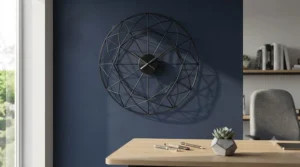
How to Choose a Statement Clock Under £80
Choosing well comes down to seven checks, and running through them takes less time than a single failed Amazon return.
- Measure your actual wall space first. A clock that looks “large” online can look modest on a genuinely big wall, and overwhelming on a small one.
- Decide whether size or finish quality matters more to you. Budget wall clocks like VIVILINEN maximise diameter per pound; design-led brands like Karlsson and Thomas Kent maximise finish quality per pound.
- Check the movement type. Silent or “non-ticking” quartz sweep matters enormously in bedrooms, studies, or open-plan living spaces where a loud tick becomes background stress.
- Match material to room style. Wood suits Scandi and natural interiors; metal suits modern and industrial; painted composite suits considered, colour-matched schemes.
- Read the aggregated review themes for hanging hardware. Several budget options ship with basic fixings — factor in a proper wall plug as a near-mandatory extra cost.
- Confirm the price against the £80 ceiling for your specific colourway. Some premium models, like Thomas Kent’s Arabic range, vary in price by finish, and can sit right at the boundary.
- Consider battery quality as part of the total cost. A cheap unbranded battery undermines even a well-made movement — budget for a decent one from day one.
Common Mistakes When Buying Budget Wall Clocks
The single most common mistake is buying on diameter alone without checking material quality, which is how people end up disappointed by a clock that looked enormous and impressive online but reads as flimsy and lightweight in person. A close second is skipping the wall-fixing question entirely, assuming the supplied hook or hanger will be adequate for anything over 40cm — it frequently isn’t, especially on plasterboard. Reviewers and interiors forums alike also flag a subtler trap specific to this category: buying a bold, sculptural design like a sunburst clock for a busy gallery wall, where its shape gets visually lost among frames and shelves rather than standing out the way it would on a plain wall. Finally, treating the listed price as fixed across every colourway is a genuine risk with premium ranges like Thomas Kent — checking the current price for your specific finish before assuming it fits under £80 avoids an unwelcome surprise at checkout.
Statement Clocks vs Traditional Small Clocks
| Factor | Statement Clocks (30cm+) | Traditional Small Clocks (under 25cm) |
|---|---|---|
| Visual impact | High — functions as a focal point or wall art | Low — reads as a practical accessory, not decor |
| Wall coverage | Fills large or awkward blank walls effectively | Better suited to smaller walls, shelves, desks |
| Price for impact | Often better value per visual impact at this budget | Cheaper outright, but limited decorative payoff |
| Best For | Living rooms, hallways, open-plan spaces | Kitchens, bathrooms, bedside tables, offices |
The honest comparison here is less about which is “better” and more about which job needs doing. A traditional small clock on a kitchen worktop or bedside table does its job perfectly well and a large statement piece would be genuinely impractical there. But for the specific problem this guide addresses — a blank wall that needs a focal point — a statement clock consistently delivers more visual return per pound than buying a small clock and pairing it with separate wall art, because it does both jobs in a single purchase.
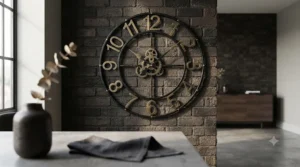
Affordable Large Clocks for Different Rooms and Audiences
A student or first-time renter furnishing on a tight budget is usually best served by the VIVILINEN or Acctim picks — maximum visual impact for minimum spend, with no long-term commitment if a landlord’s décor rules mean it needs to come down again. A homeowner refreshing a settled living room, where the furniture and colour palette are already established, benefits more from Karlsson’s design-led range or the Newgate Mr Clarke, since the extra spend goes toward finish quality and material authenticity rather than simply more surface area. For a kitchen-diner specifically, a silent movement matters disproportionately, since this is a room people linger in for long stretches — the Newgate Mr Clarke or either Karlsson model, both praised for near-silent operation, suit this brief better than louder alternatives. And for anyone furnishing on behalf of a parent or relative with reduced eyesight, it’s worth knowing that a genuinely large, high-contrast dial isn’t just decorative — Guide Dogs UK’s guidance on clocks and low vision notes that bold, high-contrast displays make a real practical difference for readability, which several of the clocks on this list, with their clean numerals and generous scale, genuinely support alongside their decorative role.
Long-Term Value: Durability and Cost Per Year of Ownership
At £25 to £80, even the priciest clock here costs less than a single cushion from a premium homeware brand, and a well-chosen one should reasonably last five to ten years before a movement fails or a finish visibly dates. Spread over that lifespan, even the Thomas Kent Arabic at the top of this budget works out to under £16 a year — cheaper than most people’s annual spend on candles for the same room. The real risk to long-term value isn’t the clock itself but impulse buying on looks alone: a clock that arrives smaller, flimsier, or louder than expected is one that quietly gets replaced within a year, effectively doubling its real cost. Reviewers who report the longest satisfaction consistently mention checking diameter against their actual wall, choosing a movement type suited to the room, and using a decent battery from day one — the same three checks that run through this entire guide. Measured against the cost of a full piece of framed wall art at a similar or larger scale, a statement clock in this price bracket remains one of the more efficient ways to solve a blank-wall problem in a British home.
Features That Actually Matter (And Those That Don’t)
Marketing copy on a clock listing will tell you every feature matters equally; it doesn’t. What genuinely matters is diameter relative to your actual wall, movement type (silent sweep versus audible tick), and the durability of the case material for your specific room’s conditions — humidity in a kitchen, direct sun through a south-facing window, or knock-risk in a busy hallway. What matters considerably less than listings suggest is an exact numeral style or dial pattern in isolation — Roman versus Arabic numerals is a matter of taste, not function, and rarely explains a genuine quality difference between two similarly priced clocks. Radio-controlled, self-setting movements sound impressive on a spec sheet but matter far less for a decorative statement piece than they would for a functional kitchen or office clock, since most people aren’t relying on a large living-room wall clock as their primary time reference anyway. Recency barely matters here compared with most product categories — a well-designed clock from a few years ago looks exactly as current today, since the core designs from brands like Karlsson and Newgate are built to be timeless rather than seasonal.
Frequently Asked Questions
❓ What size counts as a 'statement' wall clock?
❓ Are large wall clocks hard to hang on plasterboard?
❓ Do cheap oversized clocks look obviously cheap in person?
❓ How long do battery-powered wall clocks typically last before needing a new battery?
❓ Is it worth spending closer to £80 rather than buying the cheapest option?
Conclusion
A blank wall doesn’t need an expensive solution, just the right one. If your priority is filling a genuinely large space on the smallest possible budget, the VIVILINEN Large Wall Clock does that job better than anything else here. If you want a name with real UK clockmaking heritage behind it, Acctim remains the dependable middle ground. And if design credibility and material quality matter more than raw size, Karlsson, Newgate, or the Thomas Kent Arabic at the top of this budget will all reward the extra spend. Measure your wall, decide what matters most to you between scale and finish, and pick accordingly — that single decision matters more than which specific brand you choose.
Recommended for You
- Large Wall Clocks: 7 Best Statement Picks for UK Homes in 2026
- 7 Arched Mirrors Under £120 in 2026: Budget Buys That Don’t Look Cheap
- Best Arched Mirrors UK 2026: 7 Top Picks Compared
Disclaimer: This article contains affiliate links. As an Amazon Associate, I earn from qualifying purchases. If you purchase products through these links, we may earn a small commission at no additional cost to you.
✨ Found this helpful? Share it with your friends! 💬🤗
