
In This Article
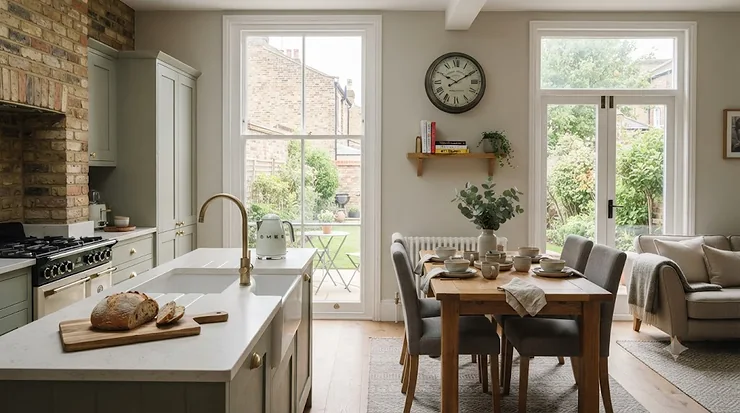
There’s a particular kind of quiet a vintage wall clock brings to a room. Not silence, exactly — more like a steady, unhurried presence that digital displays and phone screens simply can’t replicate. A vintage wall clock is a timepiece designed to evoke an earlier era, whether through genuinely aged materials, distressed dials, or new manufacturing that deliberately echoes railway, Victorian, or mid-century design. Walk into any home with one properly placed above a mantelpiece or in a hallway, and you’ll notice it does double duty: it tells the time, sure, but it also tells a small story about the person who chose it.
The trouble is, “vintage” has become one of those words retailers slap on anything with a slightly aged font, and separating the genuinely well-made pieces from the flimsy imitations takes more digging than most of us have patience for on a Tuesday evening. That’s the gap this guide fills. We’ve dug through real product specifications, aggregated genuine customer sentiment, and cross-referenced design history so you’re not left squinting at a listing photo trying to guess whether that “antique brass finish” is actual metal or a sticker on cardboard (spoiler: it happens more than you’d think — more on that later).
Whether you’re after retro station clocks reviews before committing, chasing antique style wall clocks for a period property, or simply want something in the kitchen that doesn’t need charging, this piece covers seven real, currently available options across budget, mid-range, and premium tiers, plus the practical detail — sizing, battery types, wall fixings, regulatory bits — that most listings conveniently skip. As the V&A’s own curators note when discussing their collection of decorative clocks, a clock’s design has always said as much about its era as its mechanism does, and that’s exactly the lens we’re using here.
Quick Comparison Table
Before the deep dive, here’s the shape of the market at a glance. All prices are indicative ranges at the time of research and will fluctuate, so always check current pricing before buying.
| Clock | Style | Size | Price Range | Best For |
|---|---|---|---|---|
| Roger Lascelles London Antique Dial | Victorian antique print | 14.2″ (36cm) | £35–£45 range | Period hallways and studies |
| Roger Lascelles Neill Classic London | Roman numeral classic | 14.2″ (36cm) | £35–£45 range | Traditional living rooms |
| Roger Lascelles Radio Controlled | Black station clock | 30cm | £45–£60 range | Buyers who never want to reset a clock |
| Newgate Master Edwards | Mid-century metal | 30cm | £40–£55 range | Kitchens and Scandi-retro interiors |
| Newgate Luggage | Retro station/luggage tag | 30cm | £45–£60 range | Industrial and loft-style spaces |
| Acctim Earl | Art Deco retro | 25cm | £15–£25 range | Budget-conscious style seekers |
| Acctim Elstow | Small retro | 20cm | £12–£20 range | Compact kitchens and utility rooms |
Looking at the table, the split is fairly clean: Roger Lascelles dominates the “genuinely antique-feeling” end thanks to its printed dial designs sourced from real historical clock faces, while Newgate owns the mid-century and industrial-retro lane with its metal-cased builds. Acctim undercuts both on price without abandoning the aesthetic entirely, which makes it the sensible starting point if you’re testing whether a vintage clock even suits your space before committing to a heftier spend.
💬 Just one click — help others make better buying decisions too!😊
Top 7 Vintage Wall Clocks: Expert Analysis
We’ve grouped these across budget, mid-range, and premium so there’s a genuine option whatever you’re working with. Every product name below stays bold throughout the article so you can scan back to it at a glance.
1. Roger Lascelles London Antique Dial Wall Clock — the most convincingly aged printed face
The standout feature here is right there in the name: a “rusty-looking” London clockmaker’s dial, printed to mimic decades of foxing and tarnish rather than achieving it through actual ageing. It’s a clever bit of design sleight of hand, and on a 14.2-inch (36cm) case it reads as a genuine antique from across a room.
Key specs: a quartz movement running on a single included AA battery, a printed antique-style dial under glass, and a manufacturer’s one-year guarantee. In practice, quartz movement means dependable timekeeping without the fortnightly winding a genuine antique would demand — you get the look without the maintenance debt.
Who it’s for: anyone furnishing a period property or a study who wants the antique aesthetic without hunting auction houses for a real Victorian piece, which can run into hundreds of pounds and still need servicing. Based on the spec comparison with genuine antiques, this is the pragmatic middle ground — visual authenticity, modern reliability.
Reviewers consistently report that the clock looks convincingly aged and keeps accurate time well beyond expectations for the price point. A recurring theme in feedback, however, is that the case material feels lighter and less substantial than buyers anticipate — some describe it as closer to a printed dial on a pressed composite backing than solid metal, which is worth knowing before you unbox it expecting real gilt bronze.
Pros:
- ✅ Genuinely convincing aged-dial print at a fair price
- ✅ Quartz reliability with a one-year guarantee
- ✅ Lightweight, so hanging it is a five-minute job
Cons:
- ❌ Case material feels less premium than the dial suggests
- ❌ No radio-controlled auto-adjustment for clock changes
Price sits around the £35–£45 range at the time of research; for the visual impact against genuine antique alternatives costing many times more, it’s a solid value pick for anyone testing the antique-clock look before investing further.
2. Roger Lascelles Neill Classic London Wall Clock — Victorian Roman numerals with a modern white face
This one leans lighter and crisper than its antique-dial sibling: a classic London clock dial styled on Victorian originals, but printed with a white background and clean black Roman numerals that reads as “vintage-inspired” rather than “deliberately weathered.” That contrast is the standout feature worth expanding on — it works in brighter, more modern rooms where a heavily distressed dial would look out of place.
Key specs mirror the range: 14.2-inch case, quartz movement with an included AA battery, and a one-year guarantee. The Roman numeral layout is a genuinely useful practical detail too, since larger, simpler numerals like these read far more easily from across a room than the fussier Arabic fonts some budget clocks use.
Roger Lascelles positions itself as one of the UK’s larger clock manufacturers with a design history rooted in real antique dial photography, and that pedigree shows here — the numeral spacing and hand proportions are noticeably more considered than generic import clocks. This is the pick for anyone who wants a hallway or living-room clock that reads as “classic British” without tipping into shabby-chic distressing.
Aggregated review sentiment for this line skews positive on legibility and build consistency, with buyers noting the crisp dial is genuinely easy to read at a glance — a detail that matters more than most listings admit once a clock is actually hanging eight feet up a stairwell.
Pros:
- ✅ Crisp, highly legible Roman numeral dial
- ✅ Suits both traditional and lighter contemporary interiors
- ✅ Backed by an established UK clock manufacturer
Cons:
- ❌ Less “aged” character than the Antique Dial version
- ❌ Standard quartz only — no radio sync feature
Expect a similar £35–£45 range to its antique-dial sibling; the value verdict comes down to taste rather than spec, since the underlying mechanism and build are essentially matched.
3. Roger Lascelles Radio Controlled Wall Clock (Black) — station-clock looks that set themselves
The standout feature is right there in the name: this is a radio-controlled clock, meaning it synchronises automatically with the atomic clock signal broadcast from Anthorn in Cumbria, and it never needs manual adjustment for British Summer Time or the autumn clock change again.
The classic black round case is styled on traditional railway station clocks, which is precisely why it’s the pick to search for if you landed here chasing retro station clocks reviews specifically. Key specs: automatic time sync via the UK’s national radio time signal, durable construction, and a one-year manufacturer warranty. What that radio-sync spec means in daily life is simple but genuinely valuable — you will never again stand on a step stool at 2am fumbling with tiny buttons because the clocks went back.
Based on the spec comparison against the rest of this list, this is the only entry with genuine “smart” functionality, which justifies its position at the premium end. It’s worth it specifically for buyers who’ve been burned before by a beautifully styled clock that drifts a few minutes a month and needs constant correcting.
Aggregated customer sentiment is notably strong here: buyers consistently highlight the clock’s timekeeping accuracy and describe the finish as looking genuinely high quality in kitchens and living spaces, with quality specifically called out as a repeated positive theme in review analysis.
Pros:
- ✅ Self-corrects via UK radio time signal automatically
- ✅ Authentic station-clock design, not just station-inspired
- ✅ Strong, consistent build-quality feedback from buyers
Cons:
- ❌ Premium pricing versus the standard quartz options here
- ❌ Radio sync can be slower to acquire signal near thick walls
Sitting in the £45–£60 range, it’s the value pick for anyone who considers “never resetting a clock manually again” worth the premium over standard quartz alternatives.
4. Newgate Master Edwards Wall Clock — mid-century steel styling that suits a Scandi-retro kitchen
The standout feature is the deep-set metal case, available across finishes including matt black, matt dark grey, and copper/rose gold — a genuinely mid-century silhouette that leans closer to 1960s design language than Victorian antique.
Key specs: a 30cm (roughly 12-inch) deep metal case, glass lens, metal hands, and a quartz silent-sweep movement that runs without an audible tick — a detail that matters enormously if the clock’s going in a bedroom, home office, or anywhere audible ticking becomes genuinely irritating after week one. It requires a single AA battery, sold separately.
Newgate designs its clocks in the UK with a stated design heritage stretching back over three decades, and the Master Edwards specifically nails a look that’s increasingly hard to find: uncluttered, minimalist, but unmistakably retro rather than purely modern. What most buyers overlook about silent-sweep movements is that “silent” doesn’t always mean fully silent in a completely quiet room — Newgate itself notes a very faint whirring may be audible for particularly sensitive ears, which is honest disclosure worth respecting rather than a red flag.
This is the pick for kitchens with warm wood tones or industrial-lean living rooms, where a heavily distressed antique dial would clash but a clean mid-century case complements the palette.
Pros:
- ✅ Genuine silent-sweep movement, no audible ticking
- ✅ Multiple finish options to match different colour schemes
- ✅ Solid metal case construction, not printed composite
Cons:
- ❌ Battery not included despite the price point
- ❌ Mid-century look won’t suit period Victorian interiors
Priced in the £40–£55 range depending on finish, this represents solid value for anyone specifically hunting mid-century retro rather than Victorian antique styling — the two aesthetics get lumped together under “vintage” far too often, and this is squarely the former.
5. Newgate Luggage Wall Clock — the retro station clock built for industrial spaces
If retro station clocks reviews are what brought you here, this is the other one worth cross-shopping against the Lascelles radio-controlled pick. The standout feature is the deep metal case styled after vintage railway luggage-tag and station signage design — genuinely distinct from the plain round station-clock silhouette, with a slightly more angular, utilitarian read.
Key specs mirror the Master Edwards build: a 30cm deep metal case, quartz silent-sweep movement, glass lens, and metal hands, requiring a single AA battery not included in the box. The “deep case” spec is worth interpreting properly — it adds real shadow and dimensionality on the wall compared with flat printed-face clocks, which is exactly the industrial, tactile quality that separates genuinely well-made retro pieces from flat plastic imitations.
Here’s what the spec sheet won’t tell you outright: Newgate’s clocks are frequently used as set dressing in film, television, and photography work specifically because they photograph as authentically vintage under studio lighting — a reasonable proxy for how convincingly the design reads in real rooms too, not just on camera.
This is the pick for loft conversions, exposed-brick living rooms, home bars, or any space already leaning industrial where a station clock feels like a natural fit rather than a forced theme.
Pros:
- ✅ Distinctive luggage-tag styling not seen elsewhere on this list
- ✅ Deep case adds genuine dimensional shadow on the wall
- ✅ Silent-sweep movement for tick-free rooms
Cons:
- ❌ Angular styling won’t suit softer, traditional interiors
- ❌ Battery sold separately, an easy detail to miss at checkout
Expect a £45–£60 range; against the Lascelles radio-controlled option it trades auto-sync convenience for a bolder, more distinctly industrial silhouette — which one wins depends entirely on whether you prioritise function or theme.
6. Acctim Earl Wall Clock — Art Deco retro styling at a genuinely accessible price
The standout feature is the value-to-style ratio: a 25cm black-cased clock with an off-white dial and grey numerals, styled with an unmistakable Art Deco lean, at a fraction of the cost of the premium picks on this list.
Key specs: a quiet quartz movement, a rose gold/copper-toned surround on the black variant, and a cream (rather than stark white) dial face that’s easier on the eye in warmer-toned rooms. Acctim has been manufacturing clocks in the UK for over 90 years, and that longevity shows in small, sensible design choices — like using cream rather than bright white, which reduces glare under kitchen strip lighting.
Aggregated reviewer sentiment specifically praises the surround finish, with buyers describing a “lovely rose gold/copper look” that complements warm wall colours particularly well, alongside consistent notes that the silent sweep movement produces no audible tick and the second hand moves smoothly rather than jerkily.
Based on the spec comparison against pricier alternatives here, the honest analytical take is that Acctim achieves perhaps 80% of the visual impact of the Newgate and Lascelles pieces for roughly half the outlay — the trade-off is a lighter case and a smaller diameter, which matters more in larger rooms than compact ones.
Pros:
- ✅ Genuine Art Deco character at a budget-friendly price
- ✅ Silent sweep movement confirmed by repeated buyer feedback
- ✅ Warm cream dial reduces glare versus stark white faces
Cons:
- ❌ Smaller 25cm size may read as insubstantial in large rooms
- ❌ Case build is lighter-duty than the metal Newgate options
At around the £15–£25 range, this is arguably the best pound-for-pound value pick on the whole list for anyone dipping a toe into the vintage-clock aesthetic for the first time.
7. Acctim Elstow Wall Clock — compact retro styling for tight spaces
The standout feature is sheer compactness: at 20cm, it’s the smallest clock on this list, and Acctim’s own positioning leans into that directly, describing it as “perfectly formed” rather than apologising for the smaller footprint.
Key specs: a retro-styled case with a matching-colour centre nut detail — a small touch, but one that shows genuine design attention rather than a generic off-the-shelf mechanism dropped into any old case. It’s built for kitchens and home offices specifically, where wall space above worktops or shelving units is often at a premium.
What most buyers overlook about smaller wall clocks generally is legibility trade-off: a 20cm face read from across a large open-plan kitchen-diner can be genuinely harder to check at a glance than a 30cm+ piece, so this is best suited to spaces where you’ll typically be within a few metres of it rather than glancing across a large room.
Here’s the honest analytical framing: this isn’t a statement piece, and it was never designed to be one. It’s a practical, characterful clock for a small wall gap — above a kettle, beside a doorframe, in a downstairs loo — where a larger vintage clock would simply look oversized and out of proportion.
Pros:
- ✅ Compact 20cm size suits small or awkward wall spaces
- ✅ Thoughtful matching-colour centre nut detail
- ✅ Genuinely budget-friendly entry point to the range
Cons:
- ❌ Smaller face is harder to read from a distance
- ❌ Less of a standalone statement piece than larger options
Priced in the £12–£20 range, it’s the sensible pick specifically for smaller rooms, downstairs cloakrooms, or as a secondary clock rather than a living room centrepiece.
Practical Usage Guide: Getting Your Vintage Wall Clock Right From Day One
Buying the clock is the easy part; hanging and maintaining it properly is where most of the “why has my lovely new clock stopped keeping time” complaints actually originate. Start with wall fixings: heavier metal-cased clocks like the Newgate Master Edwards and Newgate Luggage genuinely benefit from a wall plug and screw rather than a picture hook, particularly on plasterboard — the deep metal cases carry more weight than their compact size suggests.
Battery choice matters more than people assume. Cheap, unbranded AA batteries are the single most common cause of a “new” clock losing time within weeks; Newgate specifically recommends a high-quality branded alkaline AA for exactly this reason, and it’s genuinely cheap insurance against the frustration of a drifting second hand. Position matters too — avoid hanging any quartz clock directly above a radiator or in direct summer sun through a south-facing window, since heat cycling can degrade both battery life and the movement’s long-term accuracy.
For the first 30 days, resist the urge to fiddle with the hands repeatedly to “test” accuracy; quartz movements settle into their genuine drift rate (typically a matter of seconds per month for these price points) after the first week or two of continuous running. If you’ve gone for the Roger Lascelles Radio Controlled model, give it a full 24 hours near an exterior-facing wall on first setup — signal acquisition from the Anthorn transmitter can take longer indoors than the box suggests, especially in homes with foil-backed insulation or thick stone walls common in older British properties.
Real-World Scenarios: Which Vintage Wall Clock Actually Suits You
The period-property owner in a Victorian terrace: if your hallway still has the original cornicing and a fireplace surround from 1890, the Roger Lascelles London Antique Dial or Roger Lascelles Neill Classic London will sit far more convincingly than anything mid-century. Budget around £35–£45, and hang it at eye level in the hallway rather than the stairwell, where the printed dial detail actually gets seen rather than glimpsed in passing.
The renter furnishing a first flat on a tight budget: the Acctim Earl or Acctim Elstow make the most sense here — genuinely under £25, lightweight enough for a Command strip rather than a drilled fixing (check the specific product’s weight rating first), and low-risk if your taste shifts in a year or two.
The design-conscious buyer in a converted warehouse loft: exposed brick, steel beams, and concrete floors call for the Newgate Luggage or Newgate Master Edwards, whose deep metal cases and industrial styling read as intentional rather than mismatched. At £40–£60, it’s a meaningful spend, but one that suits the room’s existing character rather than fighting it.
The commuter who’s tired of manually resetting clocks twice a year: the Roger Lascelles Radio Controlled solves a genuinely specific pain point — no more standing on a chair every March and October. If that recurring chore has ever irritated you, the £45–£60 outlay pays for itself in avoided hassle alone.
How to Choose a Vintage Wall Clock
- Decide on era first, style second. Victorian antique, Art Deco, and 1960s mid-century are genuinely different aesthetics that get lazily grouped under “vintage” — pick the era that matches your existing furniture before shopping by look alone.
- Measure your wall space properly. A 20cm clock like the Acctim Elstow vanishes on a large blank wall, while a 36cm Roger Lascelles piece can overwhelm a narrow hallway — measure twice, buy once.
- Check the movement type. Standard quartz is fine for most homes; radio-controlled, as on the Roger Lascelles Radio Controlled, is worth the premium specifically if you’ve been caught out by clock-change confusion before.
- Weigh case material against budget. Metal cases (Newgate) generally outlast lighter composite or printed-dial builds (entry Lascelles and Acctim pieces) under daily handling, though all are perfectly adequate for a wall-mounted clock that isn’t regularly touched.
- Read aggregated review themes, not star ratings alone. A 4.5-star average tells you little; recurring specific comments about case material, legibility, or battery life tell you far more about whether a clock suits your actual expectations.
- Confirm battery inclusion before checkout. Several genuinely good options, including both Newgate picks here, don’t include the AA battery — a small but easily missed extra cost and inconvenience.
- Match the dial style to room lighting. Cream or antique-toned dials (Lascelles, Acctim Earl) reduce glare under warm kitchen lighting; crisp white dials read better in naturally darker rooms.
Vintage Wall Clocks vs Modern Wall Clocks
The instinctive assumption is that “modern” automatically means “more accurate” and “vintage” means “more style, less substance” — but that’s a genuinely outdated read on the current market. Every clock on this list uses the same underlying quartz technology found in contemporary minimalist clocks; the difference is entirely in case design, dial artwork, and finishing, not mechanical accuracy.
Where modern clocks tend to win is uniformity — a plain minimalist clock rarely clashes with anything, precisely because it has no strong character to clash with. Where vintage-styled clocks win is presence: a Roger Lascelles Antique Dial or Newgate Luggage becomes a genuine focal point and conversation piece in a way a generic modern disc simply doesn’t. The trade-off, honestly assessed, is that vintage styling demands more consideration of the surrounding room — hang the wrong era in the wrong space and it reads as costume rather than decor, whereas modern minimalism is comparatively foolproof.
Cost-wise, there’s no consistent winner either direction; both categories span roughly £12 to £60+ at these product tiers, so the vintage aesthetic isn’t inherently a premium tax — it’s simply a different design language sold across the same price spectrum as modern equivalents.
Retro Station Clocks: What Reviewers Really Say
Station clocks occupy a specific, beloved corner of the vintage-clock world, and it’s worth addressing directly since it’s clearly a priority if retro station clocks reviews brought you to this guide. The core appeal is the plain, oversized, high-contrast dial originally designed for readability from a moving train platform — a design language that translates surprisingly well into modern homes precisely because it prioritises function over decoration.
Between the two station-styled options here, aggregated feedback draws a genuinely useful distinction. The Roger Lascelles Radio Controlled earns consistent praise specifically for accuracy and finish quality, with buyers repeatedly noting it “keeps excellent time” — the automatic sync clearly delivers on its core promise. The Newgate Luggage, styled after station signage and luggage tags rather than the clock face itself, draws more comment on its distinctive case depth and industrial character than on timekeeping specifically, which tracks with its positioning as a design-forward piece first and a precision instrument second.
The honest takeaway: if timekeeping accuracy is your genuine priority, the radio-controlled Lascelles is the stronger technical pick; if the industrial silhouette matters more than second-by-second precision, the Newgate wins on character.

Antique Style Wall Clocks: Getting the Victorian Look Right
Antique style wall clocks are frequently confused with genuine antiques, and the distinction matters enormously for expectations. A genuine Victorian wall clock — the kind you’d find at auction, as covered regularly by trade publications tracking the antiques and collectables market — typically involves mechanical or fusee movements requiring regular winding and periodic servicing, and prices for genuinely old pieces in working order routinely run into hundreds of pounds even for modest examples.
What products like the Roger Lascelles London Antique Dial offer instead is the visual language of that era — foxed printing, Roman or Victorian-style numerals, aged tones — built onto a modern, maintenance-free quartz movement. This is an entirely legitimate design approach, not a deception, provided you understand what you’re buying: the look of history without the upkeep of an actual antique. For anyone specifically hunting a period-accurate piece for a listed building or serious collection, that’s a meaningfully different purchase to what’s covered in this guide, and worth flagging honestly rather than blurring the line.
The practical advice here: if your priority is “looks right in a Victorian hallway,” the reproduction route is genuinely sensible and cost-effective. If your priority is “must be a real antique,” budget accordingly and expect ongoing mechanical maintenance that none of the seven products in this guide require.
Vintage Clock Styles Through the Decades
Understanding vintage clock styles properly means recognising they span several genuinely distinct design movements, not one homogenous “old-fashioned” look. Victorian-era pieces (roughly 1837–1901) favoured ornate cases, Roman numerals, and dark wood or gilt finishes — the aesthetic behind the Roger Lascelles antique-print range. Art Deco, dominant through the 1920s and 30s, brought cleaner geometric lines, chrome and black colour palettes, and bold contrast dials — visible in the Acctim Earl‘s black case and rose gold surround.
Mid-century modern, spanning roughly the 1950s to 1960s, stripped things back further still: minimal ornamentation, metal cases, and a focus on legibility over decoration — the design language behind both Newgate pieces on this list. Railway and station-clock design, technically a functional category rather than a decorative era, cuts across several of these decades and persists today specifically because oversized, high-contrast dials remain genuinely more legible than most decorative alternatives.
Knowing which decade’s language a clock is actually speaking helps enormously when matching it to existing furniture — mixing genuine Victorian ornateness with stark mid-century minimalism in the same room rarely reads as intentional eclecticism; it usually just reads as mismatched.
Retro Timepiece Designs for Every Room
Retro timepiece designs aren’t one-size-fits-all across a home, and treating them that way is a common styling mistake. Kitchens generally suit either the industrial station-clock look (Newgate Luggage) or a compact, easy-glance piece (Acctim Elstow) positioned where it’s visible from the hob or sink without dominating limited wall space. Living rooms tend to carry larger, more decorative statement pieces well — the 36cm Roger Lascelles options genuinely earn their wall space here in a way they might not in a smaller room.
Home offices benefit disproportionately from the mid-century Newgate Master Edwards, whose silent-sweep movement matters enormously in a room where you’re sitting still enough to actually notice a ticking second hand for hours at a time. Hallways and stairwells, meanwhile, are the natural home for the Roger Lascelles Radio Controlled — a space you pass through briefly but often, where “never needs resetting” delivers genuine ongoing value rather than a one-off nice-to-have.
Heritage Clock Aesthetics: Building a Timeless Interior
Heritage clock aesthetics work best as part of a considered scheme rather than a single statement bought in isolation. The Victoria and Albert Museum’s own curators, discussing pieces from their collection, have noted how a clock’s design consistently reflects the broader decorative movement of its era — which is exactly why a single well-chosen vintage clock can anchor a room’s entire visual language rather than sitting as an isolated accessory.
Practically, that means pairing case material and tone with existing metalwork in the room: a brass Roger Lascelles surround sits naturally alongside brass door handles or light fittings, while the matt black Newgate options complement contemporary black ironmongery and matt-black kitchen taps that have become common in recent renovations. Colour temperature matters too — warm cream dials (Lascelles, Acctim Earl) suit rooms with warm wood tones and yellow-toned lighting, while crisper white-dial pieces work better against cooler greys and daylight-bulb lighting schemes.
The genuine skill in heritage styling isn’t buying the most obviously “vintage” piece available; it’s choosing the one whose specific era and material palette actually converses with what’s already on your walls.
Common Mistakes When Buying Vintage Wall Clocks
The most frequent error is buying purely on listing photos without checking actual case dimensions against the wall space — a clock that looks substantial in a product photo, shot close-up against a plain background, can look surprisingly small once mounted on an actual wall. A close second is assuming “vintage-style” automatically means solid metal or wood construction; several genuinely good budget options use lighter composite cases with printed dial artwork, which is a perfectly legitimate approach but not what every buyer expects at first glance.
Skipping the battery type and inclusion check trips up more buyers than you’d expect — discovering on installation day that a AA battery wasn’t included, or that a cheap own-brand battery is already causing the second hand to stutter, is an entirely avoidable frustration. Finally, buyers frequently underestimate how much a clock’s numeral style affects legibility from typical viewing distances; ornate Victorian-style numerals look wonderful up close but can genuinely be harder to read at a glance across a large kitchen-diner than a plainer station-clock face.
Long-Term Cost & Maintenance
Total cost of ownership for these clocks is refreshingly low compared with genuine antiques, but it isn’t zero. Budget for one AA battery replacement roughly every 12–18 months across all seven products, at a cost of a couple of pounds — a negligible ongoing expense against the £12–£60 purchase price. Radio-controlled models like the Roger Lascelles Radio Controlled carry no additional maintenance burden over standard quartz beyond that same battery cycle, since the synchronisation happens automatically via radio signal rather than any serviceable component.
Where genuine long-term value diverges is case durability: the metal-cased Newgate pieces are built to shrug off years of minor bumps and dust without cosmetic wear, while lighter composite-cased options may show fading on the printed dial after prolonged direct sunlight exposure — a genuinely worthwhile reason to avoid hanging any of these directly opposite an unshaded south-facing window regardless of which one you choose. None of the seven require professional servicing at any point, which stands in stark contrast to genuine mechanical antiques, where servicing costs alone can exceed the purchase price of any clock on this list within a few years.
Safety, Regulations, and Compliance Guide
A small but genuinely important practical point: every clock on this list runs on standard AA batteries, which fall under UK battery disposal regulations rather than general household waste. Under current guidance, household batteries display a crossed-out wheelie bin symbol and should never go in general rubbish — instead, they should go to a supermarket collection point, council recycling centre, or wherever your council has designated for battery disposal. The government’s own guidance on recycling batteries and electrical waste explains why this matters: batteries contain materials that can leach into soil and groundwater in landfill, and the collection process recovers genuinely valuable raw materials for reuse.
On wall-fixing safety, particularly for the heavier metal-cased Newgate pieces, always use a fixing rated for the clock’s actual weight rather than assuming any picture hook will do — this is especially relevant on stud or plasterboard walls common in newer and renovated British homes, where a plastic wall plug rated for the specific wall type prevents the far more common failure mode of a clock (and a chunk of plaster) ending up on the floor.
✨ Don’t Miss These Exclusive Deals!
🔍 Take your interior styling to the next level with these carefully selected vintage wall clocks. Click on any highlighted product name to check current pricing and availability. These timepieces will help you create an authentic, characterful home your family will genuinely enjoy walking past every single day.
Frequently Asked Questions
❓ What is a vintage wall clock?
❓ Are vintage wall clocks accurate?
❓ What size vintage wall clock should I buy?
❓ Do vintage wall clocks need batteries?
❓ Is a radio-controlled vintage wall clock worth the extra cost?
Conclusion
There’s no single “best” vintage wall clock, and honestly, any guide claiming otherwise is oversimplifying a genuinely personal decision. What this piece has tried to do instead is give you the real specifications, honest aggregated review sentiment, and enough design-history context to match a specific clock to your specific room, budget, and patience for maintenance.
If period authenticity matters most, the Roger Lascelles London Antique Dial and Roger Lascelles Neill Classic London deliver convincing Victorian character without antique-shop pricing. If you’re drawn specifically to retro station clocks reviews and railway styling, weigh the Roger Lascelles Radio Controlled‘s technical precision against the Newgate Luggage‘s bolder industrial silhouette. For mid-century minimalism, the Newgate Master Edwards is the clear standout, and if budget is the deciding factor, both Acctim options prove convincingly that vintage character doesn’t require a premium spend.
Whichever you choose, the core advice holds across all seven: measure your wall space honestly, check battery inclusion before checkout, and match the clock’s specific era to the room it’s actually going in — not just to the vague, catch-all idea of “vintage” that got you searching in the first place.
Recommended for You
- Silent Clocks Under £40: 7 Best Quiet Picks for UK Homes 2026
- Best Silent Wall Clocks UK 2026: 7 Non-Ticking Picks Tested
- 7 Best Statement Clocks Under £80 UK Shoppers Love (2026)
Disclaimer: This article contains affiliate links. As an Amazon Associate, I earn from qualifying purchases. If you purchase products through these links, we may earn a small commission at no additional cost to you.
✨ Found this helpful? Share it with your friends! 💬🤗
