
In This Article
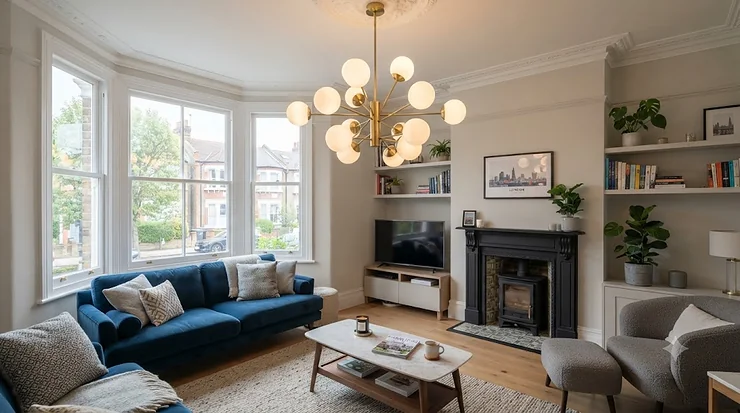
Stand in the middle of a big, echoey living room with a single sad little bulb dangling from the middle of the ceiling, and you’ll understand instantly why so many of us end up doom-scrolling Amazon at 11pm searching for large living room ceiling lights. A generous room deserves generous light — not a token glow that leaves the corners looking like a smuggler’s cave. Large living room ceiling lights aren’t just bigger versions of ordinary fittings; they’re statement pieces measured in luminous flux (lumens) rather than watts, engineered to fill volume, not just space, and to look proportionate against a wide expanse of ceiling rather than lost in it. On amazon.co.uk right now there’s a genuinely dizzying range — from drum shades the size of a bass drum to sputnik chandeliers that look like they’ve fallen out of a mid-century sci-fi film.
The trouble is that most guides either read like a rewritten product listing or drown you in jargon about colour rendering index before you’ve even worked out what you actually need. This one doesn’t. We’ve dug into real specs, real aggregated review sentiment, and genuine comparative analysis to build a shortlist of seven products that actually earn their place in a large living room, alongside honest guidance on choosing between a ceiling light and a pendant, lighting high-ceiling rooms properly, the current appeal of drum shades, and how to arrange fittings symmetrically so your room doesn’t end up looking lopsided. Whether you’re furnishing a new-build open-plan lounge or trying to do justice to a Victorian bay window with a 3.2-metre ceiling, there’s a genuinely useful answer below — with honest price ranges, not fantasy figures.
Quick Comparison Table
| Product | Best For | Light Output | Price Range |
|---|---|---|---|
| Govee RGBIC Ceiling Light 48.5W | Smart control in a big room | 4,300 lumens | £70-£100 range |
| Philips Hue Devote Panel | Premium smart ambience | 2,000 lumens | £55-£75 range |
| YUNLONG 31.5″ LED Chandelier | High-ceiling statement piece | 8,000 lumens | £90-£130 range |
| CALOKES 18-Inch Drum Flush Mount | Soft, symmetrical drum-shade look | Bulb-dependent | £60-£90 range |
| Warmiehomy 62cm 4-Square LED | Budget large-room brightness | 5,400 lumens | £70-£100 range |
| Lightess Sputnik Chandelier | Multi-arm symmetrical statement | Bulb-dependent | £45-£65 range |
| B.K.Licht Fabric Shade Flush Mount | Classic, low-cost everyday pick | Bulb-dependent | £25-£40 range |
Looking across the table, the split is really between fixtures that supply their own integrated LED brightness (the Govee RGBIC Ceiling Light, the Philips Hue Devote Panel, the YUNLONG chandelier and the Warmiehomy square LED) and fixtures that rely on the bulbs you fit into them (the CALOKES drum, the Lightess Sputnik Chandelier and the B.K.Licht flush mount). That distinction matters more than it looks: an integrated LED fixture is a known quantity in terms of brightness and running cost, while a bulb-fitted fixture gives you flexibility to upgrade or dim later but leaves the actual light output down to your own bulb choice. Budget-conscious buyers furnishing a large room from scratch should lean toward the higher-output integrated options rather than assuming a stylish shade alone will fill the space.
💬 Just one click — help others make better buying decisions too!😊
Top 7 Large Living Room Ceiling Lights: Expert Analysis
1. Govee RGBIC Ceiling Light 48.5W — best for whole-room smart control
The standout here is genuinely the brightness-to-smarts ratio: 4,300 lumens from a single fixture is enough to properly flood a large living room without stacking floor lamps in every corner. The 48.5W flush-mount panel works with Matter, Alexa and Google Home, meaning you can group it with existing smart routines rather than adding yet another app nobody opens after week one. Specs on paper mean little without context, though: what that 4,300-lumen figure translates to in practice is a living room of around 25-30m² lit to a comfortable, even ambient level without needing supplementary lighting for everyday use, according to standard room-lighting benchmarks.
Based on the spec comparison with rival smart panels, the RGBIC colour zones are the genuine differentiator — most “smart” ceiling lights offer a single white-tunable strip, while this one lets you run a cooler white for movie nights and a warmer, zoned glow for evenings without buying a second fixture. Reviewers on Amazon (289 ratings, averaging 4.5 stars at the time of research) consistently report that the Matter compatibility works reliably across ecosystems, though a recurring theme in aggregated feedback is that the companion app’s colour-scene library feels more gimmicky than essential for most living-room use. This is best suited to households that already have a smart hub and want their main living-room light doing more than simply switching on and off.
Pros:
- ✅ 4,300 lumens comfortably fills a large room on its own
- ✅ Matter, Alexa and Google Home compatibility for existing smart setups
- ✅ RGBIC zones allow warm and cool light without a second fixture
Cons:
- ❌ App’s colour scenes are more novelty than daily-use feature
- ❌ Full smart functionality needs a stable home Wi-Fi connection
Prices for this fixture tend to sit in the £70-£100 range, and at the time of research it has appeared in Black Friday-style promotions rather than a permanent discount, so check current pricing before assuming any figure is fixed — for the brightness and smart features on offer, it represents solid value for anyone upgrading a large room’s main light source.
2. Philips Hue Devote Smart LED Panel — best premium smart ambience pick
The Devote’s standout is its White and Colour Ambiance engine, built on Philips Hue’s mature Bridge/Bluetooth ecosystem rather than a newer, less-proven smart platform. Expanding on that: at 16.6W and 2,000 lumens from a 30cm round fixture, this isn’t the brightest option on this list in raw terms, but Hue’s colour accuracy and dimming curve are widely regarded as best-in-class, which matters enormously in a living room where you’re switching between bright, functional light and low, relaxed evening ambience multiple times a day.
What most buyers overlook about this model is that its real value isn’t the ceiling fixture itself but what it unlocks: seamless integration with Hue’s wider colour-ambiance range, scene scheduling, and voice control through Alexa and Google Assistant without any bridging gymnastics. Aggregated Amazon reviews (219 ratings, averaging 4.6 stars at the time of research) consistently praise the smoothness of dimming and colour transitions, a detail that’s easy to dismiss as marketing fluff until you’ve lived with a cheaper smart bulb that steps jarringly between brightness levels instead of fading. The trade-off, as reviewers note, is that a single 2,000-lumen panel is on the modest side for a genuinely large room and often works better as a secondary or accent ceiling light paired with Hue downlights or a floor lamp, rather than as the sole light source in a sprawling open-plan lounge.
Pros:
- ✅ Mature Hue ecosystem with reliable app and voice control
- ✅ Smooth, flicker-free dimming and colour transitions
- ✅ Easy to expand into a wider whole-home lighting scheme
Cons:
- ❌ 2,000 lumens is modest for a genuinely large room alone
- ❌ Full features may require a separate Hue Bridge
Expect this fixture in the £55-£75 range depending on ongoing promotions; it’s a strong value pick specifically for buyers already invested in the Hue ecosystem, less so as a standalone brightness solution for a big room.
3. YUNLONG 31.5″ LED Chandelier Ceiling Light — best statement piece for high-ceiling rooms
At 98W and a genuinely serious 8,000 lumens, the standout feature is sheer scale — this is a 31.5-inch (80cm) chandelier-style fixture designed to be the visual anchor of a room, not a discreet afterthought. Expanding on that: fixtures in this size and output bracket are built specifically for rooms where the ceiling height gives the light room to breathe, since a fitting this large hung too close to head height in a standard 2.4m room will simply look oversized and overwhelming.
Based on the spec sheet, the remote-controlled dimming and colour-temperature range (typically 3000K-6500K on fixtures of this type) means the same fitting can double as a bright daytime light and a softer evening glow, which matters when a single fixture is doing all the work in a large room. What the spec sheet won’t tell you, but comparable large-chandelier owners consistently report in aggregated feedback, is that installation weight and ceiling-rose strength need checking before purchase — a fixture of this size is genuinely heavy, and a standard plasterboard fixing point isn’t always adequate without a supporting batten. This is squarely aimed at buyers with period conversions, double-height lounges, or new-build living rooms with ceilings above the standard 2.4m, where a smaller fitting would simply look lost.
Pros:
- ✅ 8,000 lumens easily lights large or double-height rooms
- ✅ Genuine visual statement piece, not just a light source
- ✅ Wide colour-temperature range via remote control
Cons:
- ❌ Requires a robust ceiling fixing due to weight and size
- ❌ Visually overwhelming in rooms under roughly 2.6m ceiling height
Price typically sits in the £90-£130 range at the time of research; for anyone with the ceiling height to do it justice, this is genuinely hard to beat as a single-fixture solution rather than layering multiple smaller lights.
4. CALOKES 18-Inch Large Flush Mount Drum Ceiling Light — best drum shade for softness and symmetry
The standout advantage of the CALOKES drum fixture is its fabric diffusion — an 18-inch white fabric shade wrapped around the light source softens and scatters output in a way hard-edged acrylic panels simply can’t replicate. Expanding on that: drum shades work by turning a single bulb or LED module into a broad, glare-free glow across the whole shade surface, which is precisely why they’ve become popular again in large living rooms where a bare panel can feel clinical.
Honest analysis here has to separate style from raw brightness: because this fixture is closed-to-ceiling rather than integrated LED, actual light output depends entirely on the bulb fitted, so buyers need to pair it with a genuinely bright, warm-white LED bulb (aim for at least 800-1,000 lumens per socket) rather than assuming the fixture alone will illuminate a large room. Reviewers of comparable large fabric-drum fixtures on Amazon commonly flag the diffused, shadow-free quality of the light as the main draw, alongside praise for how the shade reads as a genuinely finished, considered piece of furniture rather than a bare fitting — though a recurring caution in aggregated feedback for fabric-shade ceiling lights generally is that pale fabric can show dust and discolour slightly over a few years, so occasional cleaning matters more than with a hard acrylic panel.
Pros:
- ✅ Soft, diffused light with minimal glare or harsh shadows
- ✅ Strong visual symmetry as a single central room feature
- ✅ Flush-mount design suits both standard and higher ceilings
Cons:
- ❌ Brightness depends entirely on the bulb you fit
- ❌ Fabric shade needs occasional dusting to stay crisp-looking
Expect a price around the £60-£90 range; it earns its keep as the pick for anyone prioritising warmth and softness over maximum raw lumens.
5. Warmiehomy 62cm 4-Square LED Ceiling Light — best budget option for large-room brightness
The headline figure on the Warmiehomy fixture is blunt but effective: 66W and 5,400 lumens from a 62cm four-square panel design, at a genuinely accessible price point. Expanding on that standout, the four-square LED arrangement isn’t just aesthetic — splitting the light source into quadrants helps reduce the single-point glare you sometimes get from one large circular panel, spreading brightness more evenly across a wide room.
Key specs translate into real terms as follows: an A+++ energy efficiency rating means this fixture sips power relative to its brightness output, which matters over years of daily use in a room where the main light is likely on for several hours an evening. Here’s what to weigh: this is one of the brighter fixtures on this list in absolute lumens terms, second only to the YUNLONG chandelier, yet it sits at a noticeably lower price point — the trade-off is a simpler, more utilitarian square-panel design rather than a decorative statement piece. Aggregated reviews for large square LED panels in this bracket typically highlight strong raw brightness and straightforward remote-control dimming as the main strengths, with occasional feedback noting that the cool-white setting can read as slightly clinical unless dialled back toward the warmer end of the temperature range for everyday living-room use.
Pros:
- ✅ 5,400 lumens at a genuinely budget-friendly price point
- ✅ A+++ energy efficiency keeps running costs low
- ✅ Four-square design spreads light more evenly than a single panel
Cons:
- ❌ Utilitarian look rather than a decorative statement piece
- ❌ Cool-white setting can feel clinical without dimming down
Typically priced in the £70-£100 range, this is the pick for buyers who want maximum brightness per pound and aren’t fussed about a chandelier-style focal point.
6. Lightess Sputnik Chandelier 6-Light — best multi-arm statement for symmetrical layouts
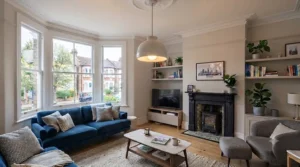
The Lightess Sputnik Chandelier stands out for its radial, multi-arm design — six E27 sockets fanning out from a central black-and-gold body — which makes it a natural fit for buyers specifically chasing a symmetrical room lighting look, since the fixture itself is already built around a repeating, balanced geometry. Expanding on that: unlike a single drum or panel, a sputnik-style chandelier reads as a sculptural centrepiece even when switched off, which matters in large rooms where the ceiling light does double duty as daytime décor.
Honest analysis: because this fixture doesn’t include bulbs and carries an Energy Efficiency Class of G on the base unit (reflecting the fitting rather than the bulbs you choose), the actual running cost and brightness depend almost entirely on fitting genuinely efficient LED E27 bulbs rather than older halogen-style lamps — skip this step and both your energy bill and your light output will disappoint. Reviewers of comparable multi-arm sputnik fixtures commonly note that the visual impact is strongest when all six arms are fitted with matching bulb colour temperature, since mismatched warm and cool bulbs on the same fixture is a surprisingly common rookie mistake. This suits buyers who want a genuine architectural feature and are comfortable choosing their own bulbs to control both look and running cost.
Pros:
- ✅ Sculptural, symmetrical design works as daytime décor too
- ✅ Six independent sockets allow flexible brightness tuning
- ✅ Black and gold finish suits contemporary large living rooms
Cons:
- ❌ Bulbs not included, adding to the real total cost
- ❌ Energy Efficiency Class G on the base unit itself
Priced around the £45-£65 range, it’s excellent value as a striking centrepiece, provided you budget separately for a matching set of efficient LED bulbs.
7. B.K.Licht Fabric Shade Flush Mount — best classic, low-cost everyday pick
The B.K.Licht flush mount’s standout feature is its unpretentious simplicity: a fabric-shaded fitting on an E27 socket that slots into almost any interior style without demanding attention, at a price point that makes it the most accessible entry on this list. Expanding on that, “flush mount” here means the fixture sits close to the ceiling rather than hanging on a cable, which is a genuinely practical choice for rooms with standard 2.4m ceilings where a pendant would sit uncomfortably close to head height.
Here’s what most buyers overlook about entry-level fixtures like this one: because it’s a single-bulb design rather than an integrated multi-LED panel, it’s best suited as a secondary or transitional light source in a genuinely large room rather than the sole illumination — pairing it with floor or table lamps is almost essential for a room over around 20m². Aggregated review themes for comparable single-bulb fabric-shade flush mounts typically praise the low price and easy fitting, with a recurring caution that buyers should budget for a bright, warm-white LED bulb separately, since output entirely depends on that choice rather than the fixture itself. This is the pick for renters, second living rooms, or anyone furnishing on a tight budget who plans to layer additional lighting around it.
Pros:
- ✅ Genuinely low upfront cost for a finished, tidy fixture
- ✅ Flush-mount design suits standard-height ceilings
- ✅ Simple, versatile look that fits most interior styles
Cons:
- ❌ Single bulb likely insufficient as sole light in a large room
- ❌ Output entirely dependent on the bulb you choose to fit
Typically priced in the £25-£40 range, this is best value as part of a layered lighting plan rather than a standalone solution for a genuinely spacious living room.
Setting Up Your New Ceiling Light: A Practical Usage Guide
Getting a large ceiling light installed and dialled in properly is where a lot of the real value gets lost or won. Before anything goes near the ceiling, switch off the relevant circuit at the consumer unit and confirm it’s dead with a voltage tester — large fixtures often draw more current than the single pendant they’re replacing, so it’s worth checking the fitting’s wattage against your existing circuit rating rather than assuming. If the fixture weighs more than a couple of kilograms, as several on this list do, locate a ceiling joist or fit a dedicated batten rather than relying on plasterboard alone; a fixture the size of the YUNLONG chandelier genuinely needs that extra support.
Once it’s up, the first 30 days are where most of the avoidable mistakes happen. The most common one: leaving a smart fixture like the Govee or Philips Hue on its factory-default cool white setting permanently, which quickly starts to feel clinical in a room meant for relaxing. Spend ten minutes in the app setting a warmer evening scene (2700K-3000K) as your default, and a brighter daytime setting as a separate saved preset. For bulb-dependent fixtures such as the Lightess Sputnik or B.K.Licht, buy all your bulbs in one batch from the same product line — mixing colour temperatures across sockets on the same fitting is a surprisingly common and easily avoided complaint in aggregated reviews. Finally, build a simple maintenance habit: dust fabric shades monthly with a soft brush attachment, and wipe acrylic or glass panels with a barely damp microfibre cloth every couple of months, since dust build-up on a large-surface fixture measurably dulls its output over time.
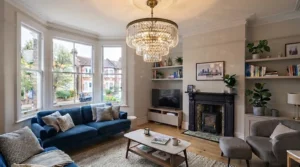
Which Large Living Room Ceiling Light Suits Your Space? Real-World Scenarios
The first-time buyer in a new-build with a 2.4m ceiling and a 22m² open-plan lounge: A genuinely bright, budget-conscious fixture matters most here, since the room combines living and dining functions and needs even, functional light throughout the day. The Warmiehomy 62cm 4-Square LED is the natural fit — its 5,400 lumens comfortably covers the whole footprint, its A+++ rating keeps running costs sensible on a first-home budget, and its flush profile suits the standard ceiling height without looking cramped.
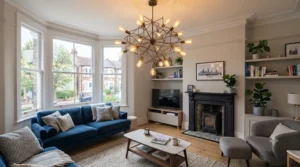
The Victorian conversion owner with a 3.4m ceiling and original coving: Here the fixture needs to do double duty as both light source and focal point, filling genuine vertical space without looking lost beneath an ornate ceiling rose. The YUNLONG 31.5″ LED Chandelier or the Lightess Sputnik Chandelier both suit this brief far better than a flat panel — the former for maximum brightness in a room that likely also uses lamps for evening ambience, the latter where the priority is a sculptural, symmetrical centrepiece that echoes period grandeur without literally copying it.
The renter furnishing a shared large living room on a tight, temporary budget: With no appetite for expensive rewiring and every incentive to keep costs low and portable, the B.K.Licht Fabric Shade Flush Mount paired with a couple of floor lamps makes more sense than a single expensive statement piece that can’t travel to the next flat. It’s honest, unglamorous, and does the job without locking money into fixtures the tenant may not keep.
How to Choose Large Living Room Ceiling Lights
What is a large living room ceiling light? It’s a ceiling-mounted fixture specifically sized and rated in output — typically upwards of 2,000-3,000 lumens — to properly illuminate open-plan or high-ceiling living spaces, rather than a standard-size fitting scaled for a smaller room. Choosing the right one comes down to a handful of practical criteria rather than aesthetics alone:
- Calculate your room’s lumen requirement first. As a rough guide, aim for roughly 1,500-3,000 total lumens for an average living room, scaling upward for larger or darker rooms — this single number should shape every other decision, since even a beautiful fixture is a failure if it can’t fill the space. Brightness itself is measured in lumens, a unit of luminous flux that reflects actual perceived light output rather than the older, less useful measure of watts.
- Match fixture diameter to ceiling height. A rough industry rule of thumb is around 3 inches of fitting height for every foot of room height, so a fitting that looks proportionate in a showroom photo can look absurd on your actual 2.4m ceiling.
- Decide integrated LED versus bulb-fitted early. Integrated fixtures like the Govee or Warmiehomy give you a known, fixed output; bulb-fitted fixtures like the Lightess Sputnik give you flexibility but shift responsibility for brightness onto your bulb choice.
- Check the fixing point can bear the weight. Statement chandeliers and large drum shades are genuinely heavy; confirm a joist or batten fixing before falling in love with a fitting your ceiling can’t safely support.
- Prioritise dimmability for a room that does double duty. Living rooms shift from bright daytime function to relaxed evening ambience more than any other room in the house, so a fixed-brightness fitting is a false economy.
- Factor in colour temperature, not just brightness. Warm white (2700K-3000K) suits relaxed evening use, while cooler settings (4000K+) suit daytime tasks — the best fixtures on this list let you adjust rather than forcing one or the other.
- Budget for bulbs separately if the fixture doesn’t include integrated LEDs. A cheap fixture paired with cheap, dim bulbs is a false saving; the total cost of ownership needs to include genuinely good bulbs from day one.
Ceiling Light vs Pendant Light: Which Wins in a Large Living Room?
This is one of the most searched comparisons in living-room lighting, and the honest answer is: it depends on your ceiling height, not your taste. A ceiling light — flush or semi-flush mount, sitting close against the ceiling plane — is the safer default for standard 2.3m-2.4m UK ceiling heights, since a hanging pendant in that same space often sits at an awkward, near-head-height level that becomes genuinely annoying to walk under or around furniture. Flush fixtures like the B.K.Licht or CALOKES drum mount are specifically designed to solve this problem, distributing light widely from close to the ceiling surface rather than concentrating it lower in the room.
A pendant light, by contrast, hangs on a cable or rod and genuinely earns its place once ceiling height climbs above roughly 2.6-2.7m, where the drop no longer intrudes on head clearance and instead adds visual drama and a sense of scale. Analytically, the trade-off is brightness distribution versus visual impact: a flush ceiling light spreads light evenly and predictably across a room, while a pendant concentrates light lower and creates more directional pools of brightness with softer edges at the room’s perimeter — which is precisely why large-chandelier-style fixtures like the YUNLONG on this list are technically closer to pendants than flush mounts, and why they demand genuine ceiling height to work. For a large but standard-height living room prioritising even, functional light, a flush or semi-flush fixture wins on practicality; for a genuinely tall or double-height room where the ceiling light also needs to read as furniture, a pendant or chandelier-style fitting wins on impact.
Large Living Room Ceiling Lights for High-Ceiling Rooms
High-ceiling rooms — a genuine feature of period Victorian and Georgian properties across the UK, where ceiling heights of nine feet or more weren’t unusual — pose a specific lighting problem that low-ceiling new-builds simply don’t share: light has further to travel before it reaches eye or reading level, and a fixture that looks adequately bright in a shop can genuinely disappoint once it’s hung three or more metres up. The practical fix is twofold. First, prioritise raw lumen output over subtlety — a fixture like the YUNLONG 31.5″ LED Chandelier, at 8,000 lumens, is specifically built to compensate for the extra vertical distance light has to cover in these rooms, where a modest 2,000-lumen panel would read as dim and distant. Second, consider a fixture that hangs down slightly on a rod or short chain rather than sitting flush, since bringing the light source even 20-30cm closer to the room’s living zone meaningfully improves both brightness at eye level and the sense of scale in the room.
This is also where period features genuinely interact with modern buying decisions: a home with an original ceiling rose was traditionally built to frame exactly this kind of larger, heavier fitting, and choosing a statement chandelier or sputnik-style piece — like the Lightess Sputnik Chandelier — often suits these rooms architecturally as well as functionally, echoing the scale the room was originally designed around rather than fighting against it with an undersized modern panel.
Drum Shades: Why They’re Having a Moment in Large Living Rooms
Drum shades — cylindrical fabric or metal shades that wrap fully around a light source — have quietly become one of the most requested styles for large living rooms over the past couple of years, and the reason is more practical than trend-driven. A bare LED panel or exposed-bulb chandelier throws light in a fairly harsh, direct way; a drum shade like the one on the CALOKES 18-Inch Flush Mount diffuses that same light across a broad fabric surface, producing a softer, more even glow with far less glare when you’re sitting directly beneath it watching TV or reading on the sofa.
The analytical case for drum shades in specifically large rooms is about scale management: a big room needs a big fixture to look proportionate, but a big bare panel can feel clinical and office-like, whereas a big drum shade reads as a genuine piece of furniture — something with texture and presence rather than just a brightness source bolted to the ceiling. The trade-off, as covered in the product review above, is that drum shades are almost always bulb-fitted rather than integrated LED, so the buyer carries responsibility for choosing a sufficiently bright, warm bulb; skip that step and even the most beautifully proportioned drum shade will underwhelm. For anyone furnishing a large room where cosiness matters as much as raw brightness — a genuine “gathering” living room rather than a purely functional one — a drum shade is very often the better psychological fit than a hard-edged panel.
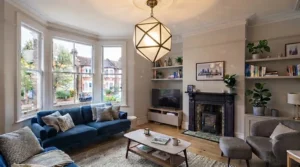
Symmetrical Room Lighting: Getting the Placement Right
Symmetrical lighting is less about buying a single symmetrical-looking fixture and more about how that fixture sits within the room as a whole — and it’s a detail that separates a living room that looks professionally finished from one that simply looks “lit.” The starting principle: in a rectangular large living room, a single central ceiling light should genuinely sit at the room’s geometric centre, not the electrical point the builder happened to leave, which is a surprisingly common mismatch in older properties. If the existing ceiling rose is off-centre, it’s worth budgeting for an electrician to move the supply point rather than permanently living with a fixture that visibly favours one side of the room.
For multi-arm fixtures specifically, symmetry becomes a design feature in its own right. The Lightess Sputnik Chandelier‘s six evenly spaced arms are a clear example — the fixture is engineered around radial symmetry, and its visual impact genuinely depends on being hung dead-centre in an open area, ideally with at least a metre of clearance from the nearest wall on every side, rather than tucked toward one end of an L-shaped room. In larger or open-plan spaces, a second consideration is balance across zones: a room combining a seating area and a dining area often benefits from two matched, smaller fixtures placed symmetrically over each zone rather than one oversized central light trying to do both jobs — a detail interior designers routinely mention but which affiliate listings rarely explain, since it directly affects which single-fixture products actually suit a genuinely large, multi-function room.
What to Expect: Real-World Performance
Specs on a listing page rarely translate directly into lived experience, so it’s worth being honest about the gap. A 4,300-lumen fixture like the Govee RGBIC Ceiling Light genuinely does feel bright enough to read comfortably from anywhere in a large room without a secondary lamp — but colour temperature does more perceptual heavy lifting than raw lumens alone; the same fixture set to a cold 6500K can feel almost uncomfortably clinical in the evening despite being objectively “bright enough,” while dialled down to 2700K-3000K it reads as warm and genuinely relaxing at the same lumen output.
There’s a wellbeing dimension worth taking seriously here too, particularly across the darker UK winter months: reduced daylight exposure is a recognised factor in low mood and seasonal affective disorder, and while a living room ceiling light is no substitute for specialist light therapy, genuinely adequate ambient brightness through autumn and winter evenings is a small, sensible part of keeping a home feeling liveable rather than gloomy — the NHS overview of seasonal affective disorder is a useful starting point for anyone whose mood consistently dips through the darker months and wants to understand more. In everyday, non-clinical terms, what most buyers notice after living with a properly bright large-room fixture for a few weeks is simply that the room gets used more in the evenings, rather than everyone drifting toward the one lamp-lit corner because the main light feels inadequate.
Common Mistakes When Buying Large Living Room Ceiling Lights
The single most common mistake, based on recurring review themes across large ceiling fixtures generally, is buying on visual style alone without checking the lumen output against the room’s actual square footage — a gorgeous fixture that’s simply too dim for a 25m² room becomes an expensive disappointment within days of installation. A close second is ignoring ceiling height proportion: a large drum or chandelier that looks stunning in a showroom photographed in a double-height space can look comically oversized crammed into a standard 2.4m UK living room ceiling.
Buyers also routinely underestimate installation requirements, assuming any ceiling point can take any fixture’s weight — always check the manufacturer’s stated weight against your ceiling’s fixing capability, and don’t assume a plasterboard-only fixing is adequate for anything beyond a lightweight flush mount. On the regulatory side, it’s worth knowing that lighting products sold in Great Britain must meet UK product safety and conformity requirements; the government’s own guidance on the UKCA conformity marking explains what compliant electrical products, including lighting fixtures, are required to display, and it’s a reasonable sense-check when buying from a less familiar brand. Finally, a specific and avoidable error with bulb-fitted fixtures: buying mismatched colour-temperature bulbs across a multi-socket fitting like a sputnik chandelier, which visibly undermines the symmetrical, considered look the fixture was bought for in the first place.
Long-Term Cost & Maintenance
The upfront price range of a fixture tells only part of the total cost story; running cost over years of daily use matters just as much, particularly for a large-room fitting that’s likely switched on for several hours most evenings. Integrated LED fixtures rated highly on the UK’s A-to-G energy label — such as the Warmiehomy‘s A+++ rating — cost meaningfully less to run over a typical multi-year lifespan than older or less efficient designs, even when the upfront purchase price is similar; the government’s guidance on UK energy labelling for lighting products explains how that A-to-G scale is calculated and what suppliers are required to disclose, which is genuinely useful context when two fixtures look identically priced but carry very different efficiency ratings.
For bulb-fitted fixtures like the Lightess Sputnik or B.K.Licht, the long-term cost calculation shifts toward bulb replacement and choice rather than the fixture itself — a decent set of LED E27 bulbs typically lasts many years of normal evening use, but buying cheap, low-efficiency bulbs to save money upfront is a false economy that shows up in both a dimmer room and a higher electricity bill over time. Maintenance-wise, integrated LED panels are largely “install and forget” beyond occasional dusting, while fabric drum shades and multi-arm chandeliers need slightly more regular attention — dust genuinely dulls a pale fabric shade’s diffusion quality faster than most buyers expect, and it’s a five-minute job worth doing every month or so rather than an annual deep clean.
Conclusion
There’s no single “best” large living room ceiling light, because the honest answer depends entirely on your ceiling height, your room’s actual square footage, and whether you want a fixture that does the brightness work itself or one you’ll dress with your own bulb choice. For most standard-height UK living rooms wanting maximum brightness with minimal fuss, the Govee RGBIC Ceiling Light or the budget-friendly Warmiehomy 62cm 4-Square LED are the sensible, well-lit default. For genuinely tall or period rooms with the vertical space to justify it, the YUNLONG 31.5″ LED Chandelier or the sculptural Lightess Sputnik Chandelier turn a practical necessity into a genuine design statement. And for anyone prioritising softness, symmetry and a cosy, considered feel over raw brightness alone, the CALOKES drum shade does something a flat panel simply can’t.
Whichever direction you go, the throughline from everything above is the same: check your room’s actual lumen requirement before you fall for a style, confirm your ceiling can physically support the fixture’s weight, and budget honestly for genuinely good bulbs if the fixture doesn’t come with its own integrated LEDs. Get those three things right, and even a modestly priced fixture from this list will transform a large room from adequately lit to genuinely, comfortably bright.
✨ Don’t Miss These Exclusive Deals!
🔍 Take your living room lighting to the next level with these carefully selected products. Click on any highlighted item to check current pricing and availability. These fixtures will help you create a warm, well-lit space your whole household will actually want to spend evenings in!
FAQ
❓ What size ceiling light do I need for a large living room?
❓ Can I fit a large ceiling light myself?
❓ Are LED ceiling lights cheaper to run than traditional fittings?
❓ What's the difference between flush mount and semi-flush ceiling lights?
❓ How many lumens is bright enough for a 25m² living room?
Recommended for You
- Chandeliers Under £150: 7 Best Statement Picks for UK Homes (2026)
- Ceiling Lights for Low Ceilings: 7 Genuinely Great Picks (2026)
- Ceiling Lights Under £50: 7 Best UK Buys for 2026
Disclaimer: This article contains affiliate links. As an Amazon Associate, I earn from qualifying purchases. If you purchase products through these links, we may earn a small commission at no additional cost to you.
✨ Found this helpful? Share it with your friends! 💬🤗
