

In This Article
Have you ever woken up with a stiff neck, wondering if your pillow is secretly plotting against you? You’re not alone. The pillow you choose dramatically impacts your sleep quality, spinal alignment, and whether you wake up feeling refreshed or like you’ve wrestled a bear all night. When it comes to memory foam vs feather pillows, the debate has raged for years amongst sleep enthusiasts across the UK.
I’ve spent countless hours researching, testing, and speaking with UK buyers who’ve invested in both types. What I’ve discovered might surprise you. Memory foam pillows, made from viscoelastic polyurethane, offer targeted support by moulding to your head and neck contours. This synthetic material consists mainly of polyurethane with additional chemicals that increase its viscosity and density, often referred to as viscoelastic polyurethane foam. Meanwhile, feather pillows provide that luxuriously soft, cloud-like feel that many of us associate with premium hotel stays.
The choice between memory foam vs feather pillows isn’t just about comfort. It’s about finding the right pillow type that aligns with your sleeping position, addresses your specific pain points, and fits your budget. According to the British Chiropractic Association, a poor pillow is a common culprit for morning pain complaints, whilst the NHS recommends a low, firm pillow to help relieve neck pain. This guide will walk you through everything you need to know to make an informed decision, including real products available on Amazon.co.uk with current UK pricing.
Quick Comparison Table
| Feature | Memory Foam Pillows | Feather Pillows |
|---|---|---|
| Material | Viscoelastic polyurethane foam | Natural duck/goose feathers & down |
| Support Level | Firm to medium-firm | Soft to medium |
| Price Range | £15-£60 | £20-£80 |
| Lifespan | 2-3 years | 3-5 years (with proper care) |
| Hypoallergenic | Yes (synthetic) | No (unless treated) |
| Temperature | Can retain heat (gel versions cooler) | Naturally breathable & cool |
| Maintenance | Spot clean only | Machine washable (most) |
| Best For | Side/back sleepers with neck pain | All sleeping positions, hot sleepers |
| Adjustability | Fixed shape (shredded versions adjustable) | Highly mouldable |
💬 Just one click – help others make better buying decisions too!😊
Top 7 Pillows: Expert Analysis
After extensive research on Amazon.co.uk and analysing thousands of UK customer reviews, I’ve identified seven exceptional pillows that represent the best memory foam vs feather pillows available in 2026. Each product has been carefully selected based on quality, value, and real-world performance.
1. Panda Memory Foam Bamboo Pillow – Premium Memory Foam Choice
The Panda Memory Foam Bamboo Pillow has earned legendary status amongst UK sleep enthusiasts, and for good reason. This pillow features third-generation orthopaedic-grade memory foam wrapped in a hypoallergenic bamboo cover that feels silky smooth against your skin.
Key Specifications:
- Dimensions: 60 x 40 x 12 centimetres
- Weight: 1.8 kilogrammes
- 10-year manufacturer guarantee
- OEKO-TEX Standard 100 certified
Price Range: £37.99-£50.00
UK Customer Feedback: British buyers consistently praise the Panda pillow’s exceptional neck support and temperature regulation. One UK reviewer mentioned the pillow helped eliminate their morning neck stiffness entirely after years of discomfort. The bamboo cover’s moisture-wicking properties keep you cool during warmer months.
Pros:
✅ Orthopaedically approved for spinal alignment
✅ Naturally antibacterial bamboo cover
✅ 30-night trial with full refund option
Cons:
❌ Firmer than traditional pillows (adjustment period needed)
❌ Cannot machine wash foam core
2. Silentnight Duck Feather Pillow (2-Pack) – Best Value Feather Option
When comparing memory foam vs feather pillows on a budget, the Silentnight Duck Feather Pillow emerges as the clear winner. This trusted UK brand delivers exceptional softness and natural breathability at a fraction of premium pillow prices.
Key Specifications:
- Filled with 100% duck feathers
- 100% cotton percale cover
- Dimensions: 69 x 46 centimetres (standard UK size)
- Machine washable at 40°C
Price Range: £20.00-£25.00 (for 2-pack)
UK Customer Feedback: Argos and Amazon UK buyers appreciate the pillows’ natural loft and cooling properties. Users note the feathers are naturally lightweight and airy, providing extra loft whilst the smooth cotton cover is naturally breathable and cooling. Some reviewers mentioned using one pillow for soft support or stacking two for firmer comfort.
Pros:
✅ RDS-certified (Responsible Down Standard)
✅ Hypoallergenic treatment protects against dust mites
✅ Excellent value for money (two pillows included)
Cons:
❌ Less support for chronic neck pain sufferers
❌ Requires regular fluffing to maintain shape
3. Elviros Cervical Memory Foam Pillow – Best for Neck Pain
For those battling persistent neck and shoulder discomfort, the Elviros Cervical Memory Foam Pillow offers targeted relief through its innovative butterfly-shaped design. This contoured pillow features dual height options (4.1 and 4.9 inches) that you simply rotate to find your optimal support level.
Key Specifications:
- Ergonomic contour design with armrests
- Dual-height adjustability
- Removable, machine-washable cover
- CertiPUR-US certified foam
Price Range: £30.00-£45.00
UK Customer Feedback: UK customers consistently praise its firmness, noting it’s firmer than traditional pillows but softer than latex alternatives, striking that perfect balance. The butterfly design accommodates your top arm when side-sleeping, preventing awkward shoulder hunching.
Pros:
✅ Specifically designed for side sleepers
✅ Dual height options for personalised comfort
✅ Armrests prevent shoulder strain
Cons:
❌ Takes 1-2 weeks to adjust to contoured shape
❌ May feel too firm for stomach sleepers
4. ANALIN Goose Feather Down Pillows (2-Pack) – Luxury Natural Option
Stepping up in the memory foam vs feather pillows debate, the ANALIN Goose Feather Down Pillows bring hotel-quality luxury to your bedroom. These pillows combine 50% European Standard white goose down with 50% white goose feather for superior softness and support.
Key Specifications:
- 50% goose down, 50% goose feather blend
- 100% cotton shell (high thread count)
- Dimensions: 48 x 74 centimetres (standard UK)
- OEKO-TEX Standard 100 certified
Price Range: £25.00-£35.00 (for 2-pack)
UK Customer Feedback: Amazon UK buyers describe these pillows as “sinking into a cloud” whilst maintaining adequate neck support. The high down content provides exceptional insulation during winter months whilst remaining breathable enough for summer use.
Pros:
✅ Premium 50% down content at mid-range price
✅ Generously filled for long-lasting loft
✅ Machine washable for easy maintenance
Cons:
❌ Not suitable for those with feather allergies
❌ Requires tumble drying with balls to restore fluffiness
5. Ecosafeter 2026 Memory Foam Pillow – Best Budget Memory Foam
Don’t let the affordable price fool you – the Ecosafeter 2026 Memory Foam Pillow punches well above its weight class. This pillow features a clever dual-cover system that extends the memory foam core’s lifespan whilst maintaining excellent hygiene standards.
Key Specifications:
- Dual-cover system (breathable inner + removable outer)
- Ventilation holes prevent dust accumulation
- 1-3 second rebound memory foam
- Cervical orthopedic design
Price Range: £15.00-£25.00
UK Customer Feedback: British buyers report significant improvements in neck pain, with many noting they no longer wake up with stiffness after switching to this pillow. One reviewer mentioned hesitating initially when the pillow arrived flat, but it plumped up fully within five hours.
Pros:
✅ Exceptional value for money
✅ Dual-cover system extends pillow life
✅ Suitable for all sleeping positions
Cons:
❌ Firmer support may take adjustment
❌ Initial chemical smell (dissipates within days)
6. Snuggledown Hungarian Goose Down Pillow – Premium Feather Choice
For those who refuse to compromise on quality when considering memory foam vs feather pillows, the Snuggledown Hungarian Goose Down Pillow represents the pinnacle of natural pillow craftsmanship. This UK-made pillow features an impressive 80:20 ratio of premium Hungarian goose down to feather.
Key Specifications:
- 80% Hungarian goose down, 20% feather
- Jacquard cotton cover
- UK-made with ethical sourcing
- Dimensions: 48 x 74 centimetres
Price Range: £45.00-£65.00
UK Customer Feedback: Discerning UK buyers praise this pillow’s exceptional loft retention and luxurious feel. The high down-to-feather ratio provides superior softness whilst the 20% feather content maintains structural support throughout the night.
Pros:
✅ Premium 80% Hungarian goose down
✅ Ethically sourced with full traceability
✅ UK-made quality assurance
Cons:
❌ Higher price point
❌ May be too soft for those requiring firm neck support
7. MULISOFT Memory Foam Pillow – Best All-Rounder
Rounding out our memory foam vs feather pillows comparison, the MULISOFT Memory Foam Pillow offers an ideal balance of support, comfort, and value. This ergonomic pillow features a double-layer pillowcase that stretches and contracts beautifully with the pillow core, maintaining shape integrity wash after wash.
Key Specifications:
- CertiPUR-US standard certified foam
- Double-layer removable, machine-washable cover
- Ergonomic side sleeper design
- Cotton and polyester blend fabric
Price Range: £25.00-£35.00
UK Customer Feedback: Recent UK reviews from January 2026 highlight the pillow’s ability to eliminate morning neck stiffness and shoulder tension, with users waking up without their usual aches. The grey cover looks modern and stays cool throughout the night.
Pros:
✅ Supportive without being overly firm
✅ Maintains structure without flattening
✅ Excellent temperature regulation
Cons:
❌ Not adjustable (fixed loft)
❌ May be too firm for stomach sleepers
Understanding Memory Foam Technology
Memory foam’s journey from NASA laboratories to your bedroom represents one of the most significant innovations in sleep technology. Originally developed in the 1960s to absorb high G-forces during space flight takeoffs, memory foam consists mainly of polyurethane with additional chemicals that increase its viscosity and density. Whilst it never actually made it to space, the technology found its perfect application in sleep products.
How Memory Foam Works
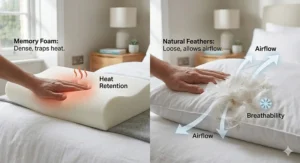
The magic behind memory foam lies in its viscoelastic properties. When you rest your head on a memory foam pillow, two fascinating phenomena occur simultaneously. First, your body heat softens the foam cells, allowing them to compress and contour precisely to your unique shape. Second, the foam’s internal structure creates resistance that distributes your weight evenly across a larger surface area, reducing pressure points that cause discomfort.
The foam bubbles or cells are open, creating a matrix through which air can move, whilst higher-density memory foam softens in reaction to body heat, allowing it to mould to a warm body within a few minutes. This temperature sensitivity means the pillow literally adapts to you rather than forcing you to adapt to it.
Types of Memory Foam
Not all memory foam pillows are created equal. Understanding the different varieties helps when navigating the memory foam vs feather pillows decision:
Traditional Memory Foam: Dense, solid blocks offering maximum support and contouring. These excel at maintaining spinal alignment but can retain heat during warmer months.
Gel-Infused Memory Foam: Features cooling gel beads or phase-change materials that regulate temperature. This technology was developed to reduce trapped body heat and speed up spring-back time, making these pillows ideal for hot sleepers.
Shredded Memory Foam: Torn into smaller pieces for enhanced airflow and adjustability. You can add or remove foam to customise loft height whilst enjoying better ventilation than solid varieties.
Plant-Based Memory Foam: An eco-friendlier alternative using plant-derived oils instead of petroleum-based materials. These typically sleep cooler and off-gas fewer volatile organic compounds.
Memory Foam Benefits
When comparing memory foam vs feather pillows, memory foam’s advantages become clear for specific sleep needs. The material provides consistent, targeted support that doesn’t shift or flatten overnight. UK buyers with chronic neck pain particularly appreciate how memory foam maintains cervical spine alignment throughout the night.
Memory foam’s hypoallergenic properties make it naturally resistant to dust mites and allergens – a significant advantage for the estimated 44% of UK adults who suffer from at least one allergy. Unlike feather pillows, which can harbour allergens despite treatment, memory foam’s synthetic composition creates an inhospitable environment for common irritants.
Potential Drawbacks
However, memory foam isn’t perfect. Heat retention can be a disadvantage when used in pillows, which led companies to develop open-cell structures and gel-infused varieties to improve breathability. The initial chemical smell from off-gassing volatile organic compounds can be off-putting, though this typically dissipates within 24-72 hours.
Additionally, memory foam pillows require spot cleaning rather than machine washing. The foam core can deteriorate if exposed to water, though most quality pillows feature removable, washable covers.

The Natural Appeal of Feather Pillows
Feather pillows have graced British bedrooms for centuries, offering a connection to traditional craftsmanship that synthetic alternatives simply cannot replicate. When examining memory foam vs feather pillows, it’s essential to understand what makes these natural pillows so enduringly popular across the UK.
Feather vs Down: Understanding the Difference
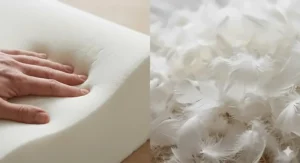
Many people use the terms interchangeably, but feather and down serve different purposes within pillows. Down refers to the fluffy undercoating found beneath a bird’s exterior feathers – imagine the soft, cloud-like clusters closest to the bird’s body. These provide exceptional insulation and loft without weight.
Feathers, conversely, are the outer plumage with quills running through their centres. They offer more structural support and resilience than down alone. Most quality feather pillows blend both materials, using down for softness and feathers for support. The ratio determines the pillow’s firmness: an 80:20 down-to-feather blend feels luxuriously soft, whilst a 50:50 mix provides firmer support.
Natural Temperature Regulation
One of feather pillows’ greatest strengths in the memory foam vs feather pillows debate is their exceptional breathability. Natural materials allow air to circulate freely, preventing the heat build-up that plagues some memory foam varieties. Feather and down pillows adapt to your body temperature, keeping you cool in summer and warm in winter, whilst the loose fill allows you to mould the pillow to your preferred shape and height.
This temperature regulation proves particularly valuable for British sleepers who face varying seasonal conditions. During sweltering summer nights, feather pillows wick away moisture and promote airflow. Come winter, those same natural fibres trap warm air close to your head without feeling stuffy.
Ethical Sourcing and Sustainability
Modern UK consumers rightly care about how their products are made. Responsible feather pillow manufacturers adhere to strict ethical standards. All feather products should be ethically sourced as by-products of the food industry with no live plucking involved, following UK regulations.
Look for certifications like the Responsible Down Standard (RDS) when purchasing. These guarantee humane treatment of birds and transparent supply chains. Most duck feathers (around 98%) are collected after slaughter, ensuring no live plucking takes place.
Maintenance Requirements
Feather pillows demand more care than memory foam alternatives. Most UK models are machine washable at 40°C, but proper drying is crucial. Some experts advocate for machine washing with cold water and mild detergent on a gentle cycle, whilst tumble-drying with dryer balls helps pillows remain plush. However, not all feather pillows can be machine washed – some manufacturers specifically recommend professional cleaning.
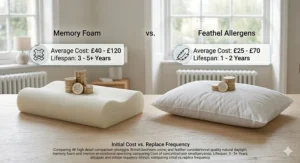
The good news? With proper care, quality feather pillows often outlast memory foam varieties, potentially lasting 3-5 years compared to memory foam’s typical 2-3 year lifespan.
Common Concerns
When weighing memory foam vs feather pillows, potential buyers often worry about feather quills poking through the fabric. It’s a known phenomenon that quills can work through the outer material, with the vane (feathery part) collapsing down to fit through the same hole. High-quality pillows with tightly woven, down-proof covers minimise this issue, though it remains more common with lower-priced options.
Allergies represent another consideration. Whilst modern feather pillows receive hypoallergenic treatments, they cannot match memory foam’s inherent allergen resistance. Those with severe feather allergies should avoid these pillows entirely.
Sleep Position Considerations
Your preferred sleeping position dramatically influences which pillow type serves you best in the memory foam vs feather pillows debate. According to Lisa Artis from the British Sleep Society, ensuring proper spinal alignment requires choosing a pillow that matches your sleeping position, with side sleepers needing a firmer, high-loft pillow to support their heads and fill the gap between their shoulders. The Sleep Council emphasises that a good pillow should hold your head in the correct alignment—in the same relation to your shoulders and spine as if you were standing upright with correct posture.
Side Sleepers
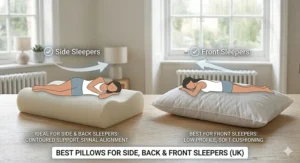
Side sleeping is the UK’s most popular position, yet it demands the most from your pillow. The gap between your shoulder and head requires substantial support to maintain neutral spinal alignment. If you lay mainly on your side, your pillow should be high enough to make up the gap between the point of your shoulder and head, often requiring a full-size pillow or maybe even two.
Memory foam pillows excel here, particularly contoured varieties like the Elviros Cervical pillow. The firm support prevents your head from sinking too low, keeping your neck aligned with your spine throughout the night. Shredded memory foam options allow you to adjust the loft precisely to your shoulder width.
Feather pillows can work for side sleepers, but you’ll likely need a fuller pillow or two stacked together. The natural give of feathers means they compress under your head’s weight more than foam does. However, this mouldability lets you bunch the pillow to create targeted support exactly where you need it.
Back Sleepers
Back sleepers require moderate loft that supports the natural curve of the cervical spine without pushing the head too far forward. Your pillow should be just high enough to support your head whilst keeping your chin in the neutral position, with a thin single pillow often enough to achieve this.
Both memory foam and feather pillows serve back sleepers well, though they feel markedly different. Memory foam provides consistent, unwavering support that maintains its shape all night. Feather pillows offer a softer, more traditional feel that many back sleepers prefer, though they require occasional fluffing to maintain optimal loft.
Mid-loft memory foam pillows (around 10-12 centimetres thick) typically suit back sleepers perfectly. For feather options, look for medium-firm varieties with at least 50% feather content to prevent excessive sinking.
Stomach Sleepers
Stomach sleeping places the most strain on your neck and spine, making pillow selection critical. Laying on your tummy (prone) is the worst position for your neck and will normally be best achieved with a very thin or no pillow at all.
Stomach sleepers face challenges with most standard memory foam pillows, which tend to be too thick and firm. The elevated head position forces your neck into extension, causing morning stiffness and pain. If you must use memory foam whilst stomach sleeping, choose the thinnest, softest option available or consider shredded varieties that you can compress.
Feather pillows prove more forgiving for stomach sleepers. Their compressibility allows you to flatten the pillow significantly, creating the low-loft support your position requires. Simply remove some filling or choose a softer, less densely filled pillow.
Combination Sleepers
Many of us shift positions throughout the night, moving between side, back, and occasionally stomach sleeping. This versatility requirement tips the scales in different directions within the memory foam vs feather pillows comparison.
Feather pillows adapt more readily to position changes. Their mouldability lets you quickly reshape the pillow when rolling from your back to your side. Shredded memory foam pillows offer similar adaptability, though they respond more slowly than feathers.
Traditional solid memory foam pillows prove less ideal for combination sleepers. Their fixed shape and slow response time mean the pillow might still be contoured to your side-sleeping position when you roll onto your back.
Health Benefits and Spinal Alignment
Proper spinal alignment during sleep isn’t just about comfort – it’s fundamental to your long-term musculoskeletal health. A study published by the British Medical Journal found that appropriate pillow support significantly decreased reported neck pain intensity within just two weeks. Understanding how memory foam vs feather pillows affect your spine helps you make an informed choice.
The Cervical Spine Connection
Your cervical spine – the seven vertebrae in your neck – forms a gentle forward curve called lordosis. Maintaining this natural curvature during sleep reduces strain on surrounding muscles, ligaments, and nerves. When your pillow is too high, it flexes your neck forward, flattening the curve and compressing the front of your cervical discs. Too low, and your neck extends backwards, pinching the facet joints and nerve roots.
Pillow height maintains your spine’s natural S-curve throughout the night; when your cervical spine (neck) aligns correctly with your thoracic spine (mid-back), muscular tension reduces dramatically. This alignment prevents the morning stiffness and headaches that plague poor sleepers across the UK.
Memory foam pillows excel at maintaining this alignment because they don’t shift or flatten significantly during the night. The foam contours to your unique anatomy, creating consistent support from dusk till dawn. Feather pillows can achieve similar results but require proper filling density and occasional repositioning.
Pressure Point Relief
Beyond alignment, pressure distribution affects sleep quality and pain levels. Traditional pillows create concentrated pressure points where your head’s weight presses against the pillow surface. Over hours, this compression restricts blood flow and irritates sensitive tissues.
Memory foam’s contouring properties distribute head weight across a larger surface area compared to traditional pillows, reducing pressure on individual points and preventing the morning stiffness many people experience. This even distribution particularly benefits those with temporomandibular joint disorders (TMJ), as it reduces strain on the jaw.
Feather pillows address pressure points through compressibility rather than contouring. The feathers shift away from high-pressure areas, creating a customised cradle for your head. However, this shifting requires adequate fill density – insufficiently filled feather pillows bottom out, eliminating their pressure-relieving benefits.
Chronic Pain Management
For UK residents battling chronic neck or shoulder pain, the memory foam vs feather pillows choice significantly impacts daily comfort. Memory foam’s therapeutic properties have made it the preferred choice amongst physiotherapists and chiropractors treating musculoskeletal conditions.
Contoured memory foam pillows, like the Elviros Cervical model, specifically address common pain patterns. The butterfly design supports your head whilst accommodating your shoulder, preventing the forward roll that strains neck muscles in side sleepers. The dual-height feature lets you fine-tune support as your condition improves or changes.
Feather pillows can work for pain management if properly selected. Those with mild, occasional discomfort might prefer feathers’ softer feel and natural temperature regulation. However, anyone with significant chronic pain typically benefits more from memory foam’s consistent, therapeutic support.
Allergen Considerations
Your pillow’s impact on health extends beyond musculoskeletal issues to respiratory and dermatological concerns. Memory foam’s synthetic composition makes it inherently hypoallergenic and resistant to dust mites, the microscopic creatures whose waste triggers allergic reactions in millions of Britons.
Feather pillows present more complex allergy considerations. Whilst modern down-proof covers and hypoallergenic treatments reduce allergen levels, they cannot eliminate them entirely. Some people may be allergic to feathers or down, and those with known allergies should consult with their doctor before choosing these pillows.
If you suffer from asthma, eczema, or rhinitis, memory foam pillows typically prove safer. Their closed-cell structure prevents dust mite colonisation and doesn’t harbour the proteins that trigger feather allergies.
Durability and Long-Term Value
Understanding the lifespan and maintenance requirements of memory foam vs feather pillows helps you calculate true cost-effectiveness beyond the initial purchase price. A £50 pillow that lasts five years delivers better value than a £25 pillow needing replacement annually.
Memory Foam Lifespan
Quality memory foam pillows typically last 2-3 years with proper care. Memory foam mattresses and pillows can last around 7-10 years or more with proper care, though pillows generally have a shorter lifespan due to constant compression. The foam’s density significantly affects longevity – higher-density foams (4-5 pounds per cubic foot) maintain their supportive properties longer than low-density alternatives.
Several factors influence memory foam deterioration. Body oils, sweat, and dead skin cells gradually break down the foam’s cellular structure. Heat exposure accelerates this process, which is why quality pillows include breathable covers and ventilation channels. UV light also degrades polyurethane, so keep memory foam pillows away from direct sunlight.
You’ll know it’s time to replace your memory foam pillow when it no longer rebounds quickly after compression, develops permanent indentations, or loses its supportive feel. The Panda pillow’s 10-year guarantee demonstrates manufacturer confidence in their foam quality, though most users report optimal performance for 3-4 years.
Feather Pillow Longevity
With diligent care, quality feather pillows can outlast memory foam alternatives, potentially serving you well for 3-5 years or longer. With proper care, feather and down pillows can last for years, making them a sustainable choice. The natural resilience of feathers means they bounce back from compression better than synthetic fills.
However, feather pillow longevity depends heavily on maintenance. Regular fluffing prevents the filling from permanently compacting in certain areas. Proper washing and drying techniques are crucial – poorly dried feather pillows can develop mould or mildew, destroying the filling and creating health hazards.
Premium feather pillows with high thread-count, down-proof covers last longer because they prevent feather migration and quill breakthrough. The Snuggledown Hungarian Goose Down pillow’s quality construction exemplifies this longevity-focused design.
Replacement Indicators
Recognising when to replace your pillow protects your health and sleep quality. For memory foam pillows, fold the pillow in half – if it doesn’t spring back immediately, the foam has degraded beyond effectiveness. Visible yellowing, persistent odours despite cleaning, or frequent neck pain upon waking all signal replacement time.
Feather pillows require replacement when they no longer pass the “fluff test”. Vigorously shake and fluff the pillow, then observe how quickly it returns to shape. A healthy feather pillow rebounds within seconds. Additionally, if you feel lumps of compacted feathers, notice significant feather loss through the cover, or detect musty odours, replacement is overdue.
Care and Maintenance
Proper maintenance dramatically extends pillow lifespan. Memory foam pillows require spot cleaning with mild detergent and cool water. Never submerge memory foam in water or machine wash it – the foam absorbs moisture and takes days to dry, often developing mildew before fully drying. Most quality memory foam pillows include removable, machine-washable covers that should be cleaned monthly.
Air your memory foam pillow in a well-ventilated area weekly to release accumulated moisture and refresh the foam. Some manufacturers recommend light vacuuming to remove surface dust and allergens. Always use a pillow protector beneath your pillowcase to shield the pillow from body oils and sweat.
Feather pillows benefit from monthly fluffing and shaking to redistribute the filling. When machine washing (if manufacturer-approved), use gentle cycles with cool water and mild, non-biological detergent. The drying process is crucial – tumble dry on low heat with clean tennis balls or dryer balls to prevent feather clumping. Ensure the pillow is completely dry before use, as residual moisture breeds mould.
Environmental Considerations
Sustainability-conscious UK consumers increasingly factor environmental impact into purchasing decisions. Memory foam’s petroleum-based origins and challenging recyclability raise concerns. Memory foam is extremely difficult to recycle, with most mattresses ending up in landfill or incinerators, and because it’s made from petroleum-based plastics, it will never biodegrade.
Feather pillows present a more complex environmental picture. Feathers represent a natural, biodegradable resource when sourced from food industry by-products. However, the water-intensive nature of cotton covers and chemical treatments for down-proofing offset some sustainability benefits.
Some companies, like Panda, address these concerns through eco-friendly practices. Their bamboo covers use sustainably harvested bamboo, which grows rapidly without pesticides or excessive water. For truly environmentally conscious choices, look for certifications like OEKO-TEX Standard 100, which ensures products meet strict safety and environmental standards.

Price Comparison and Budget Planning
Understanding the pricing landscape for memory foam vs feather pillows helps you maximise value whilst securing quality sleep. UK pillow prices vary dramatically based on materials, construction, and brand reputation.
Budget-Friendly Options (£15-£30)
This price bracket offers surprisingly good quality for cost-conscious shoppers. The Ecosafeter 2026 Memory Foam Pillow (£15-£25) delivers solid performance through its dual-cover system and cervical support design. Whilst lacking premium features like gel infusion or bamboo covers, it provides effective neck support for side and back sleepers.
The Silentnight Duck Feather Pillows (£20-£25 for two) dominate the budget feather category. This trusted UK brand’s RDS certification ensures ethical sourcing, whilst the 100% cotton cover provides decent breathability. The two-pack format offers exceptional value, letting you stack for extra loft or share with a partner.
Budget pillows typically compromise on longevity rather than immediate comfort. Expect 1-2 years of use rather than the 3-5 years premium options provide. They also might lack advanced features like cooling gel, adjustability, or extended warranties.
Mid-Range Selection (£30-£50)
This sweet spot balances quality and affordability for most UK buyers. The MULISOFT Memory Foam Pillow (£25-£35) and Elviros Cervical Memory Foam Pillow (£30-£45) both offer therapeutic support with CertiPUR-US certified foams and machine-washable covers.
For feather enthusiasts, the ANALIN Goose Feather Down Pillows (£25-£35 for two) bring luxury within reach. The 50% down content provides softness typically found in £60+ pillows, whilst the OEKO-TEX certification ensures chemical safety.
Mid-range pillows often include trial periods and 2-5 year warranties, demonstrating manufacturer confidence in their durability. These pillows balance initial cost with long-term value effectively.
Premium Investment (£50-£80+)
Premium pillows justify higher prices through superior materials, extended warranties, and enhanced comfort features. The Panda Memory Foam Bamboo Pillow (£37.99-£50) combines third-generation orthopaedic foam with sustainable bamboo covering and offers a 10-year guarantee – extraordinary for any pillow.
The Snuggledown Hungarian Goose Down Pillow (£45-£65) represents peak feather pillow luxury. The 80:20 down-to-feather ratio delivers unmatched softness, whilst UK manufacturing ensures quality control. At this price point, expect 4-6 years of exceptional comfort.
Premium pillows typically include generous trial periods (30-100 nights), allowing you to truly test compatibility before committing. These extended trials remove much of the risk from premium purchases.
Total Cost of Ownership
Savvy shoppers calculate value beyond sticker price. A £50 premium pillow lasting five years costs £10 annually, whilst a £20 budget pillow needing biennial replacement costs the same long-term. Factor in trial periods, warranties, and health benefits when evaluating true cost.
Additionally, consider supplementary costs. Memory foam pillows often require purpose-designed pillowcases to maximise cooling, whilst feather pillows benefit from pillow protectors that prevent oil staining. High-quality pillow protectors cost £10-£20 but significantly extend pillow lifespan.
When to Splurge vs Save
Invest in premium pillows if you suffer chronic neck pain, value extended warranties, or prioritise eco-friendly materials. The therapeutic benefits and longevity of top-tier options justify higher upfront costs for these situations.
Budget options serve well for guest rooms, children’s beds (though never use pillows for infants), or if you’re experimenting with new sleeping positions. They also work if you replace pillows frequently for hygiene reasons regardless of physical condition.
Mid-range pillows satisfy most UK sleepers’ needs without breaking the bank. They offer the durability and features most people require for comfortable, healthy sleep.
Special Considerations for UK Climate
Britain’s famously unpredictable weather patterns create unique pillow requirements. The memory foam vs feather pillows debate takes interesting turns when factoring in our damp, temperate climate and seasonal temperature swings.
Humidity Management
UK homes, particularly older properties, often struggle with moisture levels. Our maritime climate means relative humidity frequently exceeds 70%, especially during autumn and winter months. This dampness affects pillow performance and longevity significantly.
Memory foam’s synthetic composition resists moisture absorption better than natural materials. The closed-cell structure prevents dampness from penetrating deeply into the foam. However, moisture can still accumulate in covers and surface layers, potentially causing musty odours if not properly ventilated. Regular airing in well-ventilated spaces helps combat this issue.
Feather pillows face more significant humidity challenges. Natural down and feathers readily absorb atmospheric moisture, potentially leading to clumping, reduced loft, and even mould development in poorly ventilated bedrooms. Cotton covers provide additional moisture-wicking properties that help manage humidity, though they cannot eliminate the problem entirely.
UK residents in particularly damp regions might benefit from memory foam’s moisture resistance. Those in drier areas or well-ventilated modern homes can enjoy feather pillows without humidity concerns.
Seasonal Temperature Fluctuations
British summers occasionally surprise us with genuine heat, whilst winters bring varied cold spells. This seasonal variation influences pillow comfort throughout the year.
Memory foam’s temperature sensitivity means it behaves differently across seasons. During summer heat waves, standard memory foam can feel uncomfortably warm, though gel-infused and bamboo-covered varieties like the Panda pillow actively combat this through cooling technologies and breathable fabrics. In winter, memory foam requires body heat to soften optimally, meaning it might feel quite firm initially on cold nights.
Feather pillows excel at seasonal adaptation. Natural down provides insulation during winter, trapping warm air close to your head, whilst the same loose-fill structure promotes cooling airflow during summer months. This natural thermoregulation makes feather pillows particularly suitable for our changeable climate.
Combination sleepers or those sensitive to temperature might prefer feather pillows’ year-round adaptability. However, hot sleepers should opt for cooling memory foam varieties even during winter, as body heat production matters more than ambient temperature for these individuals.
Mould and Mildew Prevention
Britain’s damp climate increases mould and mildew risks, particularly in bedrooms with poor ventilation or exterior walls. Your pillow choice affects vulnerability to these health hazards.
Memory foam’s synthetic nature makes it inherently mould-resistant when properly maintained. However, covers and cases can still harbour mould if they remain damp. Wash removable covers monthly and ensure they’re completely dry before replacing them. Never store memory foam pillows in damp conditions or allow them to remain wet after cleaning.
Feather pillows require more vigilant mould prevention. Never use a feather pillow that hasn’t fully dried after washing – residual moisture creates perfect conditions for mould growth within the filling. If you detect musty odours, visible discolouration, or your allergies worsen, the pillow likely harbours mould and requires replacement.
UK homes benefit from dehumidifiers in bedrooms, particularly during autumn and winter. Maintaining relative humidity below 60% dramatically reduces mould risk whilst improving overall sleep environment quality.
Heating Systems and Pillow Selection
Central heating’s widespread adoption across UK homes affects pillow performance. Radiators and heated bedrooms create drier air than our outdoor climate suggests, potentially offsetting some humidity concerns whilst creating new considerations.
Overheated bedrooms (above 18°C, the NHS-recommended sleep temperature) make memory foam’s heat retention more problematic. If you run central heating overnight, cooling memory foam variants become essential. Conversely, feather pillows’ breathability prevents overheating even in well-heated rooms.
However, extremely dry heated air can damage feather fills over time, making them brittle and reducing their lifespan. Consider a bedroom humidifier if you heat consistently during winter months and choose feather pillows.
Frequently Asked Questions
❓ Can memory foam pillows help with snoring issues?
❓ How often should I replace my pillow in the UK?
❓ Are feather pillows suitable for people with asthma?
❓ Do cooling gel memory foam pillows actually work in the UK?
❓ Can I wash my memory foam pillow in the washing machine?
Conclusion: Making Your Choice
After exploring every angle of the memory foam vs feather pillows debate, the “best” choice ultimately depends on your unique sleep needs, health considerations, and personal preferences. Both pillow types offer distinct advantages that suit different sleepers.
Choose memory foam pillows if you prioritise consistent therapeutic support, suffer from allergies or asthma, need targeted neck pain relief, or prefer low-maintenance care. The Panda Memory Foam Bamboo Pillow represents the gold standard for UK buyers seeking premium memory foam with exceptional eco-credentials and a 10-year guarantee. Budget-conscious shoppers will find the Ecosafeter 2026 Memory Foam Pillow delivers impressive value without compromising essential support features.
Opt for feather pillows if you value natural materials, prefer mouldable comfort, sleep hot, or enjoy traditional pillow feel. The Snuggledown Hungarian Goose Down Pillow offers luxury that justifies its premium price through ethically sourced materials and UK manufacturing. For outstanding value, the Silentnight Duck Feather Pillows provide natural comfort at accessible prices.
Remember that your pillow works alongside your mattress, sleeping position, and bedroom environment to create quality sleep. The pillow is only one part of the equation, and the right neck support pillow represents one of the most underrated investments for better sleep. Take advantage of trial periods offered by quality manufacturers – the 30-night trials from brands like Panda remove purchase risk entirely.
Your neck and spine support you through every waking moment; investing in their nighttime care through the right pillow choice pays dividends in reduced pain, better sleep quality, and improved daily function. Whether you choose the targeted support of memory foam or the natural adaptability of feathers, prioritise quality over price for this essential sleep tool.
✨ Don’t Miss These Exclusive Deals!
🔍 Take your sleep quality to the next level with these carefully selected products. Click on any highlighted item to check current pricing and availability on Amazon.co.uk. These pillows will help you achieve authentic restful nights your body will thank you for!
Recommended for You
- 7 Best Bedspreads UK 2026 – Transform Your Bedroom Today
- 7 Best Warm Bedding for Winter 2026 – UK Expert Guide
- 7 Summer Bedding Essentials UK Hot Sleepers Need (2026)
Disclaimer: This article contains affiliate links. If you purchase products through these links, we may earn a small commission at no additional cost to you. Prices shown are approximate and may vary.
✨ Found this helpful? Share it with your mates! 💬🤗
