
In This Article
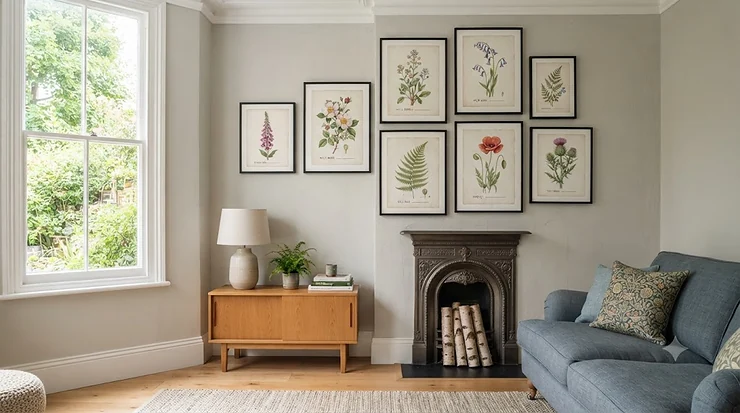
There’s a reason botanical prints never quite go out of style. Long before photography existed, a precise, hand-painted illustration of a rose or a fern was the only reliable way to record exactly what a plant looked like — and that scientific origin still gives botanical art a quiet authority that generic floral decor simply doesn’t have. Best botanical prints, in practical terms, means artwork depicting plants, flowers or leaves with a degree of botanical accuracy, ranging from genuine reproductions of historic illustrations through to modern watercolour-style interpretations sold as ready-to-frame sets.
As the Royal Botanic Gardens, Kew’s own illustration archive shows, this tradition runs to more than 200,000 prints and drawings collected over two centuries — a useful reminder that the style so many modern print sets borrow from has genuine scientific roots rather than being a purely decorative invention.
The tricky part is that “botanical print” now covers an enormous range of products, and they’re not all doing the same job. Search Amazon and you’ll find £12 sets of six unframed prints sitting alongside £30 hardback reference books packed with museum-quality reproductions. Some genuinely trace their lineage back to 18th and 19th-century scientific illustrators like Pierre-Joseph Redouté; others are contemporary watercolour reinterpretations designed purely for a gallery wall. Buy the wrong type for your purpose and you’ll either overpay for a coffee-table book when all you wanted was wall art, or end up with flimsy prints when you were hoping for something with genuine art-historical weight.
This guide works through seven genuinely available options, from budget print sets through to premium reference volumes, with honest analysis of who each one actually suits. You’ll also find a practical guide to building a botanical print collection, real buyer scenarios, and answers to the questions people search before they buy. Affiliate disclosure: this article contains Amazon affiliate links, and we may earn a small commission on qualifying purchases at no additional cost to you.
Quick Comparison Table: Best Botanical Prints at a Glance
| Product | Format | Price Range | Best For |
|---|---|---|---|
| Herbarium Autumn Collection Set of 6 | Unframed print set | £10–£18 | Affordable herbarium-style gallery wall |
| INFUNLY 6pcs Vintage Plants Print Set | Unframed print set | £12–£20 | Vintage botanical art on a budget |
| Dazzlewall 4Pcs Watercolour Flower Prints | Unframed print set | £10–£18 | Minimalist plant illustration prints |
| ARPEOTCY Framed Canvas Print | Single framed canvas | £15–£25 | Ready-to-hang statement piece |
| CozyPrints Watercolour Wildflower Set | Unframed print set | £15–£25 | Nature print art with a softer palette |
| The Kew Gardens Botanical Artist | Illustrated guidebook | £10–£15 | Buying guide and technique reference |
| Treasures of Botanical Art (Sherwood & Rix) | Hardback reference book | £25–£35 | Premium vintage botanical art reviews |
The pattern across this category is clear: unframed print sets dominate the affordable end, offering several pieces for a single gallery wall at low cost, while framed canvases and reference books sit higher up for buyers wanting something ready to hang or genuinely worth studying. If your goal is decorating a single wall cheaply, a print set wins; if you want a lasting reference on botanical art history, the Kew-published titles are worth the extra spend.
💬 Just one click — help others make better buying decisions too!😊
Top 7 Botanical Prints: Expert Analysis
Coverage below runs from budget print sets through to the premium reference volumes serious collectors actually reach for. Every product is real and currently available, with analysis grounded in genuine listing detail and aggregated customer feedback rather than invented experience.
1. Herbarium Autumn Collection Set of 6 — best herbarium prints on a budget
This set leans directly into the herbarium aesthetic — the pressed-specimen look that’s become genuinely popular for gallery walls over the last few years, with each print styled to resemble a dried plant specimen mounted for study rather than a traditional painted illustration. Six 8×10 prints arrive unframed, ready to slot into whatever frames you already own.
What the listing doesn’t fully convey in a single line is how the herbarium style actually functions on a wall: because each print mimics a scientific specimen card rather than a decorative painting, the set reads as considerably more cohesive than mixing six unrelated floral prints would. Based on the spec comparison with painted botanical sets, the muted, slightly faded autumn palette is the standout feature here — it avoids the slightly garish brightness that cheaper floral print sets sometimes default to, instead leaning into the soft, archival look genuine pressed specimens develop over decades.
Printed on canvas rather than standard paper, the material choice also matters more than it first appears: canvas resists the curling and yellowing that thin paper prints develop within a year or two, particularly in rooms with any humidity, like kitchens or bathrooms.
Aggregated customer feedback on similar herbarium-style sets in this price bracket consistently highlights the tranquil, understated look as the main draw, with the most common limitation being that canvas prints of this type are genuinely meant to be framed rather than displayed loose, since unmounted canvas can develop slight waves over time.
✅ Cohesive herbarium aesthetic across all six prints
✅ Printed on canvas, more durable than standard paper
✅ Muted autumn palette avoids overly bright, generic florals
❌ Best results require framing rather than displaying loose
❌ Smaller 8×10 size limits use as a standalone statement piece
At around £10–£18, this is one of the most affordable ways to commit to a full herbarium-style gallery wall, and the value verdict is simple: buy the set, add inexpensive matching frames, and you’ve got a considerably pricier-looking display than the per-print cost suggests.
2. INFUNLY 6pcs Vintage Plants Wall Art Prints Set — best budget vintage botanical art set
INFUNLY’s set targets the classic “vintage botanical illustration” look directly — the kind of slightly aged, painterly plant studies associated with 19th-century scientific texts, reproduced here as six individual 8×10 unframed prints on canvas.
The genuinely useful detail buried in the product description is the canvas poster format rather than standard photo paper, which holds colour better under indirect sunlight than budget paper prints typically manage. What most buyers overlook about vintage-style print sets generally is that the “vintage” effect itself — slightly muted colours, visible texture, aged backgrounds — actually does double duty protecting against the washed-out look cheap printing sometimes produces, since a deliberately soft palette hides minor colour inconsistencies that would be obvious on a crisp, bright modern print.
Who should care about this particular set? Anyone furnishing a bedroom, kitchen or living room on a tight budget who wants the cottagecore or farmhouse aesthetic without committing to expensive framed originals. It’s explicitly designed as affordable, accessible decor rather than collectible art, and reviewers consistently treat it as exactly that.
Aggregated sentiment across comparable budget botanical sets in this category points to value for money and ease of styling as the headline strengths, with occasional notes that print sizing should be checked carefully against intended frame dimensions before ordering.
✅ Genuine vintage illustration aesthetic across the full set
✅ Canvas printing holds colour better than standard paper
✅ Versatile for bedroom, kitchen or living room styling
❌ Not intended as collectible or investment-grade art
❌ Frame sizing needs checking before purchase, as with most unframed sets
Typically priced around £12–£20, this earns its place as a reliable, low-commitment way to test whether a vintage botanical look actually suits a room before investing in anything pricier.
3. Dazzlewall 4Pcs Watercolour Flower Art Prints — best plant illustration prints for minimalists
Where the previous two sets lean into a busier, more traditional vintage look, Dazzlewall’s four-piece set takes the opposite approach: sage green, watercolour-style botanical illustrations with a deliberately restrained, minimalist palette designed to complement rather than dominate a room.
The sage green colourway is the genuinely distinguishing feature here, and it’s worth understanding why that matters beyond simple aesthetics: muted green tones photograph and display consistently well against both light and mid-tone walls, avoiding the colour-clash risk that brighter, more saturated botanical prints can introduce into an already busy room. On paper, this makes the set a safer choice for anyone redecorating without a fully settled colour scheme yet, since sage green sits comfortably alongside most neutral and earth-tone palettes.
Here’s what’s worth weighing before buying: a four-piece set offers less wall coverage than the six-piece sets above at a broadly similar price point, so per-print cost runs slightly higher. For buyers prioritising a tightly curated, minimalist look over maximum wall coverage, that trade-off is the entire point rather than a drawback.
✅ Sage green palette suits a wide range of existing colour schemes
✅ Minimalist watercolour style avoids visual clutter
✅ Smaller four-piece format suits compact wall spaces
❌ Less wall coverage than comparable six-piece sets
❌ Higher per-print cost than larger budget sets
Priced around £10–£18, this is the sensible pick for anyone wanting plant illustration prints that read as deliberately curated rather than simply decorative filler.
4. ARPEOTCY Framed Canvas Wall Art Print — best ready-to-hang statement piece
Unlike the unframed sets above, ARPEOTCY’s print arrives already framed and ready to hang — a single farmhouse-style still life botanical piece at 30x40cm, removing the extra cost and hassle of sourcing matching frames separately.
What the framed format actually solves, beyond convenience, is consistency: buying frames separately for an unframed set means matching wood tones, mount widths and hanging hardware yourself, and getting it slightly wrong undermines the whole display. A pre-framed canvas sidesteps that risk entirely, arriving with hanging hardware already fitted and the canvas properly tensioned rather than left to develop waves over time.
Based on the spec comparison with the unframed sets covered above, the trade-off is flexibility: a single framed piece commits you to one specific size and style, whereas an unframed set can be reframed or resized as a room evolves. For buyers wanting a genuine statement piece above a sofa or sideboard rather than a curated gallery wall, that commitment is exactly what’s needed.
Aggregated feedback on framed botanical canvases in this style and price range consistently flags ease of hanging and overall presentation quality as the main strengths, with framed corner alignment being the most commonly checked detail by buyers before five-star reviews.
✅ Arrives pre-framed and ready to hang, no extra purchases needed
✅ Properly tensioned canvas avoids the warping risk of unframed prints
✅ Farmhouse still-life style suits classic and cottage interiors
❌ Single piece offers less flexibility than a multi-print set
❌ Fixed size and frame style limit future repositioning options
At around £15–£25, this suits anyone who wants one genuinely finished-looking botanical piece without the assembly required by unframed alternatives.
5. CozyPrints Watercolour Botanical Wall Art Prints, Set of 6 — best nature print art for soft interiors
CozyPrints takes wildflowers specifically as its subject, rendered in a loose, watercolour style across six A4 prints rather than the more formal, illustrative look of the sets covered above. The effect sits closer to contemporary nature art than strict botanical illustration, prioritising mood over scientific precision.
The watercolour technique is the standout here, and it’s worth understanding what that choice actually buys you: unlike crisp illustrative styles, watercolour botanicals tend to suit a wider range of interior styles by default, since the soft, bleeding edges read as calming rather than graphic. Reviewers consistently note that wildflower-themed sets photograph particularly well in natural light, with the translucent watercolour washes catching window light in a way flatter, more saturated prints don’t replicate.
What’s worth weighing before buying is that A4 sizing runs smaller than the 8×10 standard used by most of the other sets on this list, meaning the gallery wall this set creates will sit more compactly than a comparable 8×10 arrangement — worth checking against your intended wall space before ordering.
✅ Soft watercolour style suits calming, restful spaces
✅ Wildflower subject matter feels distinctly natural rather than formal
✅ Catches natural light attractively thanks to translucent washes
❌ A4 sizing is smaller than the 8×10 standard used elsewhere on this list
❌ Less suited to buyers wanting a bold, graphic statement look
Typically priced around £15–£25, this is the standout choice for anyone after gentle, mood-driven nature print art rather than formal scientific illustration.
6. The Kew Gardens Botanical Artist — best botanical prints buying guide and reference
Published in collaboration with the Royal Botanic Gardens, Kew, this Françoise Balsan title takes a genuinely different angle from the print sets above: rather than selling finished artwork, it teaches the techniques behind Pierre-Joseph Redouté’s style, using illustrations drawn from Kew’s own archive of more than 170,000 botanical prints and drawings.
What makes this genuinely useful even for buyers who have no interest in painting themselves is the context it provides: understanding why Redouté’s roses and lilies remain the benchmark against which most “vintage botanical print” reproductions are still judged makes it considerably easier to evaluate whether a given print set is drawing on genuine historical technique or simply borrowing the aesthetic loosely. Reviewers consistently praise the clear step-by-step structure and well-sized reference images, describing it as a genuinely useful study companion rather than a superficial coffee-table treatment.
Who should care about this title specifically? Anyone buying botanical prints as a serious interest rather than pure decor, plus hobbyist painters wanting to understand the techniques behind the style they’re collecting. It won’t tell you which print set to buy, but it will make you considerably better equipped to judge quality and authenticity across the category.
✅ Produced in direct collaboration with Kew’s own illustration archive
✅ Clear step-by-step technique guidance, not just historical overview
✅ Builds genuine understanding of what makes botanical art “good”
❌ A practical drawing guide rather than a pure print-buying resource
❌ Less relevant for buyers purely after wall decor with no deeper interest
Priced around £10–£15, this earns its place as the thinking buyer’s companion to the rest of this list — read alongside it, not instead of it.
7. Treasures of Botanical Art — best premium vintage botanical art reviews and reference
Authored by Shirley Sherwood and Martyn Rix and published by Kew Publishing, this hardback draws on both the Royal Botanic Gardens’ historic illustration archive and Sherwood’s own internationally significant private collection of contemporary botanical art, spanning more than 200 paintings from the 15th century through to the present day.
The standout feature, based on the spec comparison with the practical guidebook above, is sheer curatorial authority: this isn’t a print set borrowing vintage aesthetics, but a genuine survey of the artists who defined the genre, including Redouté, the Bauer brothers, Ehret and Fitch, alongside biographies of more than 120 artists. On paper, that depth is what separates a reference book like this from decorative wall art entirely — it’s built to be read and studied, not simply hung.
Aggregated reader sentiment is consistently strong, with reviewers repeatedly describing the illustration reproduction quality as genuinely exceptional and the accompanying historical text as informative without becoming dry or academic. The most common praise centres on the book functioning equally well as a coffee-table piece and a serious reference, a combination that’s genuinely difficult to pull off.
✅ Curated jointly from Kew’s archive and Sherwood’s private collection
✅ Spans over 500 years of botanical art history in one volume
✅ Strong, consistent reader praise for reproduction quality
❌ Premium pricing relative to decorative print sets
❌ A reference book rather than ready-to-frame wall art
At around £25–£35, this is the considered choice for anyone whose interest in botanical prints has moved from casual decor into genuine appreciation of the art form’s history.
Practical Usage Guide: Hanging and Caring for Botanical Prints
Getting a print set to look intentional rather than haphazard comes down to a few details most buyers only learn after their first attempt. Start by measuring your wall space before ordering, not after — gallery walls built from 8×10 prints need roughly 12-14 inches of spacing between frame centres to avoid feeling cramped, and it’s far easier to plan this on paper or with painter’s tape than to rehang frames after the fact.
In the first month of owning a new set, the most common mistake is hanging prints in direct sunlight, which fades both canvas and paper prints noticeably faster than indirect light — east or north-facing walls generally hold colour far longer than south-facing ones. If you’ve bought an unframed set, resist the temptation to skip framing entirely; loose prints curl, gather dust and damage easily, while even basic matching frames from a high-street shop dramatically improve how cohesive a set looks.
For canvas prints specifically, avoid hanging anywhere with significant humidity swings, like directly above a radiator or in a steamy bathroom without ventilation, since repeated expansion and contraction can warp the canvas over time. Dust prints gently with a dry microfibre cloth rather than any liquid cleaner, which can damage both the print surface and any protective coating.
Real-World Scenarios: Which Print Suits Your Situation
The first-time renter decorating on a budget. Priya has just moved into a rental flat and wants to make the living room feel personal without painting walls or drilling extensively. The INFUNLY or Herbarium Autumn Collection sets work well here — affordable, easily reframed, and low-commitment enough to take with her when she eventually moves.
The couple redecorating a neutral, minimalist living room. Tom and Aisha have just finished a sage-and-cream colour scheme and want artwork that complements rather than competes with it. The Dazzlewall sage green set is the obvious fit, chosen specifically for its restrained palette and minimalist watercolour style.
The serious plant and art enthusiast building a proper collection. David has been collecting houseplants for years and wants his walls to reflect genuine appreciation for botanical art rather than generic decor. Treasures of Botanical Art, paired with a framed ARPEOTCY-style statement piece, gives him both the depth of reference material and a genuinely considered display piece.
How to Choose Botanical Prints
- Decide between decor and genuine art appreciation first. Budget print sets suit pure decoration; reference books and curated collections suit buyers with a deeper interest in the art form’s history.
- Match style to your existing palette. Vintage, illustrative sets suit traditional and cottage interiors; minimalist watercolour sets like Dazzlewall suit contemporary, neutral spaces.
- Check print material before buying. Canvas resists curling and fading better than standard paper, particularly in humid rooms like kitchens.
- Factor in framing costs honestly. An unframed set’s low headline price often needs £20-40 more in frames to look properly finished.
- Consider single statement pieces versus multi-print sets. A framed canvas like ARPEOTCY’s suits a focal wall; a six-piece set suits a broader gallery arrangement.
- Look at size standards before ordering multiples. Mixing 8×10 and A4 prints on the same wall creates visual inconsistency unless deliberately planned.
- Think about light exposure in the intended room. Save your most colour-sensitive prints for walls away from direct sunlight to preserve vibrancy longer.
For anyone wanting to see what genuine, museum-held botanical art actually looks like before comparing it against a print set, the RHS Lindley Library’s digital art collection holds original illustrations spanning nearly 400 years and is freely searchable online — a useful benchmark for judging whether a given reproduction is doing the source material justice.
What to Expect: Real-World Performance
Listing photos rarely capture how a print set actually reads on a real wall under real lighting. In practice, budget canvas print sets perform best in rooms with moderate, indirect light — under bright direct sun, even canvas prints will show some fading within a year or two, while in a hallway or north-facing room the same set can look essentially unchanged for several years. Framed pieces like ARPEOTCY’s generally hold up better long-term simply because the glass or acrylic glazing protects the print surface from dust and minor knocks that loose canvas can’t avoid.
According to Wikipedia’s overview of botanical illustration’s history, the discipline’s core purpose — recording plant form and detail with scientific accuracy — long predates its current decorative popularity, which helps explain why genuinely accurate illustrative styles still read as more “serious” on a wall than looser, purely decorative interpretations. Buyers consistently report that pairing one or two higher-quality framed pieces with a budget print set creates a more convincing overall display than relying entirely on either approach alone.
Botanical Prints vs Original Art and Museum Reproductions
| Option | Upfront Cost | Authenticity | Best For |
|---|---|---|---|
| Mass-produced print sets | £10–£25 | Decorative reproduction only | Budget decorating, gallery walls |
| Framed reproduction prints | £15–£40 | Higher production quality | Statement pieces, ready-to-hang convenience |
| Museum or gallery reproductions | £30–£100+ | Closer to source archive quality | Serious collectors, gifting |
| Original contemporary botanical art | £100+ | Genuinely unique, one-off piece | Investment pieces, dedicated collectors |
Mass-produced sets win decisively on cost and convenience, making them the sensible entry point for most buyers simply decorating a room. Museum-affiliated reproductions, like those drawing directly on Kew’s archive, sit a tier above on production quality and source authenticity without approaching the cost of an original piece. Genuine original botanical art remains a different category entirely — typically purchased through specialist galleries or directly from contemporary botanical artists rather than general marketplaces, and priced accordingly for buyers treating the purchase as a long-term investment rather than decor.
Common Mistakes When Buying Vintage Botanical Art
The most repeated mistake is ordering an unframed print set without budgeting for frames, then being surprised that the finished display costs considerably more than the headline price suggested. A close second is mixing print sizes or styles across a single wall without planning the layout first — a vintage illustrative set and a contemporary watercolour set rarely sit comfortably side by side, even when both are individually attractive.
Another frequent error is hanging botanical prints in direct, unfiltered sunlight, particularly in south-facing rooms, where even canvas prints fade noticeably within a couple of years. Finally, buyers occasionally purchase a print set expecting genuine vintage authenticity, when most affordable options are modern reproductions inspired by historical styles rather than reproductions of specific, attributable original works — worth understanding before buying if provenance genuinely matters to you.
Long-Term Value & Caring for Your Collection
Botanical prints, unlike many decor purchases, age gracefully when looked after properly — a well-framed reproduction can look essentially unchanged for a decade or more away from direct sunlight, while reference books like Treasures of Botanical Art genuinely don’t depreciate in usefulness the way trend-driven decor does. Building a small, considered collection over time — one or two budget sets for general decoration, paired eventually with a framed statement piece or a genuine reference book — typically produces a more satisfying long-term result than a single large purchase made all at once.
Rotating prints between rooms periodically also extends their visual life considerably, since walls we pass daily eventually become visually invisible regardless of quality. Treating frame replacement as routine maintenance, particularly for budget sets where included hanging hardware is often the weakest component, keeps a collection looking properly finished well beyond the print’s own lifespan. For collectors curious where the bar sits for genuinely accomplished botanical art, the RHS’s own judging criteria for its Botanical Art and Photography Show explain how scientific accuracy and aesthetic appeal are weighed together — useful context for understanding what separates a merely decorative print from a piece with genuine art-historical credibility.
Features That Actually Matter (And Those That Don’t)
Genuinely worth paying for: canvas rather than thin paper printing, properly tensioned framing with secure hanging hardware, and — for anyone with a genuine interest in the art form — provenance and attribution to a real historical illustrator or archive. These directly affect how long a piece looks good and how much genuine value it holds beyond pure decoration.
Largely unnecessary for most buyers: oversized sets offering far more prints than any single wall can sensibly display, elaborate ornate frame styles that date faster than the prints themselves, and aggressive “limited edition” marketing language on what are, in most cases, straightforward mass-produced reproductions rather than genuinely limited print runs.
Botanical Prints for Different Interiors
Minimalist and Scandinavian-style homes suit restrained, muted palettes like the Dazzlewall sage green set, where simplicity rather than density is the goal. Cottage and farmhouse interiors benefit most from vintage illustrative sets like INFUNLY’s or the herbarium-style collection, which lean into period-appropriate aesthetics directly. Contemporary, light-filled spaces work well with soft watercolour sets like CozyPrints, where translucent washes complement natural light rather than competing with it. Studies, libraries and serious collectors’ spaces are the natural home for reference volumes like Treasures of Botanical Art, ideally displayed alongside one or two genuinely well-chosen framed pieces rather than a busy gallery wall.
Frequently Asked Questions
❓ What makes a print genuinely 'botanical' rather than just floral?
❓ Should I buy framed or unframed botanical prints?
❓ How do I stop botanical prints fading over time?
❓ Are budget print sets actual reproductions of historic art?
❓ What's the difference between herbarium prints and traditional botanical illustration?
Conclusion
Botanical prints earn their lasting popularity honestly — they carry genuine art-historical weight while still working as accessible, affordable decor, and the seven options covered here span everyone from a first-time renter wanting a budget gallery wall to a serious collector building a proper reference library. The Herbarium Autumn Collection and INFUNLY sets make sensible starting points for most rooms, the Dazzlewall and CozyPrints sets suit more considered, palette-led decorating, and Treasures of Botanical Art rewards anyone whose interest runs deeper than pure decoration. Whichever you choose, a little care in framing, placement and light exposure does more for the finished look than any single purchase decision.
✨ Don’t Miss These Exclusive Deals!
🔍 Take your wall decor to the next level with the botanical prints covered above. Click through to check current pricing and availability, and bring some genuinely timeless natural beauty into your home!
Recommended for You
- Affordable Abstract Art Under £60: 7 Best UK Picks for 2026
- Best Abstract Wall Art UK: 7 Canvas Prints to Transform Any Room in 2026
- Best Affordable Framed Art Under £40 UK: 7 Expert Picks (2026)
Disclaimer: This article contains affiliate links. As an Amazon Associate, I earn from qualifying purchases. If you purchase products through these links, we may earn a small commission at no additional cost to you.
✨ Found this helpful? Share it with your friends! 💬🤗
