
In This Article
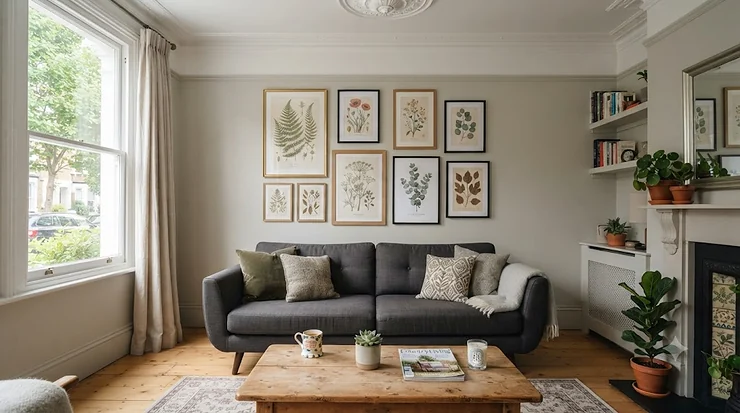
Right, let’s be honest about something first: a bare wall is a missed opportunity. You know the one — that stretch above the sofa or along the stairs that’s been “waiting for something” since you moved in. A botanical gallery wall set is one of the fastest, least fussy ways to fix that, and it’s exactly what it sounds like: a coordinated group of nature-inspired prints — leaves, florals, botanical illustrations — designed to be hung together as a single, considered display rather than one lonely poster doing all the work. Unlike buying a single statement print, a set gives you built-in cohesion: matching palettes, complementary subjects, and (usually) a sizing system that takes the guesswork out of arranging things yourself.
This guide walks through seven real sets currently available, from budget-friendly unframed prints you can pop into your own frames to museum-sourced fine art from Kew’s own archive. We’ll compare them properly — not just list specs, but talk about who each one actually suits, what the reviews tend to say, and where your money’s best spent depending on your room, your wall space, and how committed you are to the botanical look. The style itself has deep roots — botanical illustration has been used for centuries to record plants with scientific accuracy, long before it became a decor staple, and that heritage is part of why the look reads as timeless rather than trend-driven. It’s a category with real staying power rather than a passing algorithm-driven fad, so it’s worth getting the choice right.
Prices below are given as ranges rather than exact figures, since Amazon pricing shifts constantly — always check the current price on the listing itself before buying.
Quick Comparison Table
Before we dig into the full reviews, here’s the fast version — useful if you’re short on time or just want a steer before committing to reading 4,000-odd words about wall art (fair enough).
| Set | Piece Count | Style | Price Range | Best For |
|---|---|---|---|---|
| ArtbyHannah 9-Piece Set | 9 | Sage green botanical, wood frames | £35–£55 | Large statement gallery walls |
| ArtbyHannah 6-Piece Set | 6 | Botanical + typography | £25–£40 | Living rooms wanting text mixed in |
| Dazzlewall 4pcs Unframed | 4 | Watercolour leaf illustrations | £10–£18 | Budget starters, custom framing |
| ANERZA 16-Piece Set | 16 | Mixed abstract/botanical, framed | £35–£55 | Maximalist, densely layered walls |
| PLKMN Set of 4 | 4 | Wildflower, farmhouse | £12–£20 | Bathrooms and country-style rooms |
| William Morris Set of 3 | 3 | Arts & Crafts heritage pattern | £15–£30 | Period homes, traditional interiors |
| Kew Gardens Fine Art Prints | Build your own (2–4) | Museum-grade botanical illustration | £25–£80+ per print | Premium, collector-grade display |
Looking at the spread here, there’s a genuinely useful budget-to-premium ladder rather than seven versions of the same thing. The unframed Dazzlewall and PLKMN sets are the entry point if you already own frames or fancy a DIY finish, while the Kew prints sit at the top for anyone who wants provenance and archival quality behind the artwork, not just a pretty leaf shape. Notably, piece count and price don’t move in a straight line — the 16-piece ANERZA set can land in a similar bracket to the 6-piece ArtbyHannah set, which tells you frame quality and finish matter more to cost than sheer volume of prints.
💬 Just one click — help others make better buying decisions too!😊
Top 7 Botanical Gallery Wall Sets: Expert Analysis
1. ArtbyHannah 9-Piece Botanical Gallery Wall Art Set — best for an instant, oversized display
The headline feature here is scale: nine pieces across three sizes gives you enough material to fill a genuinely large wall without hunting down extra prints elsewhere. The set ships in 11×14in, 8×10in, and 6×8in pieces (three of each), so you get a natural size hierarchy rather than nine identical rectangles marching across your wall.
Each print sits inside an MDF wood frame with a slide-open back, and Amazon lists pre-installed hanging hooks, which genuinely matters if you’ve ever fought with a picture wire and a spirit level at 9pm on a Sunday. The sage green botanical illustrations are paired with a few uplifting text prints, so the “gallery” reads as considered rather than repetitive.
Based on the spec comparison with cheaper unframed alternatives, this set earns its price premium through the ready-to-hang frames alone — buying nine individual frames separately would likely cost more than the set itself. It suits renters and first-time gallery-wall builders who want a foolproof, one-box solution rather than a DIY framing project. Reviewers commonly flag frame quality and true-to-photo colour matching as the details worth checking on the current listing, since lighting and monitor calibration can affect how “sage” a green actually looks once it arrives.
Pros:
- ✅ Nine pieces in three sizes for instant wall coverage
- ✅ Pre-installed hooks make hanging genuinely straightforward
- ✅ Lightweight MDF frames are easy to handle and reposition
Cons:
- ❌ Fixed layout limits how much you can customise the arrangement
- ❌ Colour accuracy can vary by screen — check current photos closely
At this price range, the value case is strong for anyone who wants the gallery-wall look without buying frames separately or spending a weekend arranging things.
2. ArtbyHannah 6-Piece Sage Green Framed Wall Art Set — best for mixing botanicals with typography
This smaller sibling set trims the piece count to six but keeps the multi-size format (6×8in, 8×10in, and 11×14in), which is the detail that actually makes a gallery wall look intentional rather than accidental. What most buyers overlook about mixed sets like this is that combining a couple of quote prints with the botanical illustrations does more visual work than adding another leaf print would — it breaks up pattern repetition and gives the eye somewhere to land.
The frames are the same lightweight MDF construction as the nine-piece set, finished for bedroom, living room, and home office use. For a smaller wall — above a console table, in a hallway, or beside a bed — six pieces is often the more proportionate choice than nine, and it’s noticeably cheaper too.
Aggregated feedback for sets in this format tends to cluster around two themes: satisfaction with how easy the pieces are to install, and the odd note about frame depth feeling slightly shallow for anyone wanting to add their own mount board later. Worth a look at recent photos on the listing before ordering if that matters to you.
Pros:
- ✅ Multi-size format creates a natural visual hierarchy
- ✅ Typography mix adds personality beyond plain botanicals
- ✅ Smaller footprint suits modest wall spaces well
Cons:
- ❌ Fewer statement-size pieces than the nine-piece version
- ❌ Frame depth may feel shallow for custom re-mounting
If your wall space is on the smaller side, this is the more sensibly proportioned pick of the two ArtbyHannah sets.
3. Dazzlewall 4pcs Botanical Watercolour Flower Art Prints — best budget entry point for DIY framing
Here’s what the spec sheet won’t tell you outright: buying unframed is often the smarter move if you already have (or want) a specific frame style, because you’re not paying for frames you’ll later replace. This Dazzlewall set delivers four 8×10in watercolour botanical prints, unframed, at a price point that undercuts most framed alternatives by a wide margin.
The watercolour illustration style leans softer and more painterly than the crisper line-art look of some competitors, which suits shabby-chic, cottagecore, or softly romantic interiors particularly well. Because it’s unframed, you’ll need to budget separately for frames or clip-style hangers — factor that into your total spend before assuming this is automatically the cheapest option overall.
Reviewers of Dazzlewall’s wider botanical range commonly mention print quality holding up well relative to the price, though as with any unframed poster-style product, careful handling during unpacking and framing matters to avoid creased corners. Given the set’s low cost, it’s a sensible way to test whether botanical prints suit a room before committing to a pricier framed version.
Pros:
- ✅ Genuinely low entry price for four prints
- ✅ Soft watercolour style suits romantic, cottage interiors
- ✅ Easy to customise with your own frame choice
Cons:
- ❌ No frames included — factor that cost in separately
- ❌ Unframed prints need careful handling to avoid creasing
This is the pick for anyone who wants to try the botanical trend without a big upfront commitment.
4. ANERZA 16-Piece Framed Wall Art Decor Gallery Wall Set — best for a maximalist, densely layered wall
If the ArtbyHannah sets are a considered, curated gallery wall, this ANERZA set is the “more is more” option — sixteen framed pieces mixing abstract shapes with botanical and nature motifs, designed to be arranged as a dense, collage-style display. On paper, this means significantly more coverage per pound spent than any of the smaller sets, provided you have a wall large enough to actually host sixteen frames without them looking cramped.
The mixed abstract-and-botanical approach means you’re not locked into a purely leafy aesthetic — there’s more visual variety to play with, which suits eclectic or maximalist interior styles better than the more restrained sage-green sets above. Because there are so many pieces, arranging them well takes noticeably more planning; laying the set out on the floor first, or sketching the grid on paper, is worth the extra ten minutes before you start drilling.
Common feedback for large multi-piece sets like this tends to focus on the sheer volume delivered for the price, alongside the practical note that with sixteen separate frames, occasional minor inconsistencies in frame finish are more likely simply due to scale of production — worth a quick check of each piece on arrival.
Pros:
- ✅ Sixteen framed pieces deliver serious wall coverage
- ✅ Mixed abstract and botanical styles suit eclectic decor
- ✅ Strong value per piece compared with smaller framed sets
Cons:
- ❌ Needs a genuinely large wall to avoid looking cluttered
- ❌ Arranging sixteen pieces takes real planning time
For anyone with an oversized stairwell or double-height wall crying out for content, this is the set built for the job.
5. PLKMN Sage Green Botanical Wall Art Set of 4 — best for farmhouse and country-style rooms
This set leans into modern wildflower illustration rather than tightly botanical line work, and it shows in the finished look: looser, more casual, and distinctly farmhouse in feel. Four unframed 8×10in prints in sage green tones make it a close cousin to the Dazzlewall set above, though the wildflower subject matter (rather than pure leaf illustration) gives it a slightly different personality — softer and more meadow-like than jungle-inspired.
Bathrooms and farmhouse-style bedrooms are where this set tends to work hardest, according to how it’s marketed and the room-type tags attached to similar listings — the casual wildflower style doesn’t compete with busy patterned tiles or exposed brick the way a bolder graphic print might. Being unframed keeps the price accessible but again means budgeting separately for frames or clips.
What most buyers overlook when comparing wildflower sets to structured botanical line art is that the looser illustration style forgives slightly imperfect alignment when hanging — a small but genuinely useful bit of forgiveness for anyone nervous about a perfectly symmetrical grid.
Pros:
- ✅ Wildflower style suits farmhouse and cottage interiors
- ✅ Sage green palette works with most neutral schemes
- ✅ Forgiving of small alignment imperfections when hung
Cons:
- ❌ Unframed, so additional cost for framing applies
- ❌ Looser style less suited to formal or minimalist rooms
If your décor leans country kitchen rather than city apartment, this set fits that brief comfortably.
6. William Morris Set of 3 Art Prints — best heritage pattern choice for period homes
Stepping away from watercolour realism entirely, this set brings genuine Arts and Crafts heritage to the wall — reproductions of three of William Morris’s most recognised patterns (Marigold, Willow Bough, and Wild Tulip), available across a range of sizes. Reviewers consistently note that Morris prints read as more “designed” than illustrative botanical sets, since the patterns were originally created for textiles and wallpaper rather than as standalone illustrations.
Here’s what the spec sheet won’t tell you: because these are pattern reproductions rather than realistic plant portraits, they suit period and traditional homes — Victorian terraces, older cottages — noticeably better than they suit ultra-modern new-builds, where the dense repeat patterns can feel visually at odds with clean minimalist lines. Available as art prints only in various sizes, framing is a separate decision, giving you flexibility to match existing frame styles elsewhere in the room.
Because Morris’s work sits firmly in the public domain and is widely reproduced, quality varies more between sellers than with most other entries on this list — checking print resolution and paper weight on the specific listing before buying matters more here than with the newer, purpose-designed sets above.
Pros:
- ✅ Iconic, instantly recognisable Arts and Crafts patterns
- ✅ Suits period and traditional interiors particularly well
- ✅ Flexible sizing to match existing frames
Cons:
- ❌ Pattern-heavy style may clash with minimalist decor
- ❌ Reproduction quality varies more between sellers
For anyone restoring or decorating a period property, this is the set that feels historically appropriate rather than trend-driven.
7. Kew Gardens Fine Art Prints — best premium, museum-grade botanical art collection
At the top of this list sits an entirely different proposition. Rather than a pre-packaged set, the official print shop run by Royal Botanic Gardens, Kew lets you build a coordinated collection from the institution’s own archive — giclée fine art reproductions sourced from a working scientific and horticultural institution rather than a generic decor manufacturer. Based on the spec comparison with mass-market sets, the difference is provenance: these are fine art prints and canvases drawn directly from Kew’s own art and photography collection, which is a meaningfully different starting point to a stock illustration licensed for wall art.
Because you’re selecting individual prints rather than buying a fixed bundle, building a genuinely “coordinated” botanical print collection takes more effort — you’ll want to pick two to four prints with a shared colour palette or botanical family to avoid an unintentionally mismatched result. Sizes and finishes vary by print, and pricing sits well above the mass-market sets on this list, reflecting the archival sourcing and print quality involved.
This is squarely the pick for buyers who see wall art as a long-term investment rather than a quick decor refresh — collectors, plant enthusiasts, or anyone furnishing a “forever home” living room where budget sets might feel disposable in five years. Reviewers of museum print shops generally cite packaging care and print fidelity as strong points, though it’s worth noting individual archive prints don’t carry the large volume of aggregated star ratings that mass-market Amazon listings do, simply due to lower sales volume.
Pros:
- ✅ Genuine museum archive provenance and print fidelity
- ✅ Fully customisable — build your own coordinated set
- ✅ Feels like an investment piece rather than disposable decor
Cons:
- ❌ Meaningfully higher price than any other option here
- ❌ Requires more effort to curate a cohesive final set
If budget allows and you want artwork with a genuine story behind it, this is where that money is best spent.
Practical Usage Guide: Hanging & Arranging Botanical Gallery Wall Sets
Buying the set is the easy part — getting it on the wall so it actually looks intentional is where most people stumble. Start by laying the full set out on the floor first, in the rough shape you’re planning for the wall. This single step prevents the single most common mistake: hanging pieces one at a time and improvising the spacing as you go, which almost always ends in a crooked, unevenly gapped result.
For spacing, aim for roughly 5–7cm between frames — tight enough to read as one cohesive display, loose enough that each print gets breathing room. Use painter’s tape to mark frame corners on the wall before committing to any nails or hooks; it’s removable, and it lets you step back and check the arrangement from across the room before it’s permanent. If your set includes mixed sizes, anchor the largest piece first and build outward, rather than starting with a small print and hoping the bigger ones fit around it.
A quick maintenance note worth flagging early: unframed prints, in particular, are sensitive to direct sunlight, which can fade watercolour pigments over months rather than years. Positioning your gallery wall away from a south-facing window that gets unfiltered afternoon sun will meaningfully extend how long the colours stay true. For framed sets, a soft, dry microfibre cloth every few weeks keeps glass or acrylic fronts free of dust without risking scratches.
Real-World Scenarios: Matching Botanical Print Collections to Your Home
Rather than treating every buyer the same, it helps to think in terms of a few common scenarios. If you’re a renter in a one-bedroom flat trying to make a magnolia-walled living room feel like yours without annoying your landlord, the ArtbyHannah 6-piece set is a sensible match — lightweight, easy to remove without heavy wall damage using adhesive hooks, and proportioned for a smaller room.
If you’ve just bought your first house and you’re furnishing a stairwell that climbs two full storeys, that’s a different problem entirely — one that calls for volume. The ANERZA 16-piece set or a generously sized botanical print collection built from multiple smaller sets suits that scale far better than a modest four-piece bundle, which would look lost on a wall that size.
And if you’re decorating a period cottage where you’ve already invested in original fireplaces and skirting boards, going straight for a manufactured “botanical set” can feel slightly at odds with the house’s character — this is where the William Morris prints, or a slow-built Kew Gardens collection, tend to sit far more comfortably with the existing architecture than a mass-produced sage-green bundle would.
How to Choose Botanical Gallery Wall Sets: 7 Expert Criteria
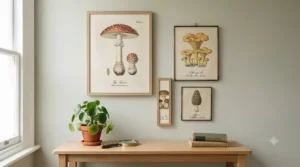
What is a botanical gallery wall set? In short, it’s a coordinated group of nature-themed prints — leaves, florals, or botanical illustrations — sold or curated together so they form a single cohesive wall display rather than a scattering of unrelated artwork.
Choosing between the options above comes down to a handful of practical questions:
- Wall size first. Measure the actual space before choosing a piece count — a 16-piece set on a small landing will look cramped, and a 3-piece set on a stairwell will look sparse.
- Framed or unframed. Framed sets save time and hassle; unframed sets save money and let you match existing frame styles.
- Colour palette. Sage green is everywhere for a reason — it’s genuinely neutral — but check it against your existing wall colour and soft furnishings before committing.
- Room lighting. Rooms with strong direct sunlight suit framed, UV-protected prints better than delicate unframed watercolour paper.
- Interior style. Farmhouse wildflowers, heritage Morris patterns, and clean modern botanical line art each suit different existing decor — match the set to what’s already in the room, not just to what looks good on the listing photo.
- Budget ceiling, honestly assessed. Decide whether this is a five-year decor refresh or a longer-term investment piece before you shop, since that genuinely changes which end of this list makes sense.
- Hanging hardware included. Check whether hooks, wire, or adhesive strips are included, particularly if you’re renting and can’t drill freely.
Working through these in order — rather than starting with “which one looks nicest in the thumbnail” — tends to save a returns-and-reorder cycle later.
Coordinated Botanical Prints: Building a Cohesive Colour Story
The word “coordinated” is doing real work in this category, and it’s worth unpacking. A genuinely coordinated set isn’t just several botanical images sold in one box — it’s a group of prints sharing a consistent palette, illustration style, and ideally a loosely related subject (all leaves, all wildflowers, all one botanical family) so the eye reads them as one composition rather than several separate pictures that happen to be nearby.
This matters most when you’re building your own collection rather than buying a pre-packaged set — the Kew Gardens route, for example. Picking prints purely because each one is individually beautiful, without checking they share tonal warmth or a consistent illustration era, is the single most common way a “coordinated” wall ends up looking accidentally mismatched instead. A simple test: photograph your shortlisted prints together on your phone, in black and white. If the tonal values look wildly inconsistent — one very dark, one very light, one busy, one minimal — that mismatch will show up in colour too, just less obviously.
Pre-made sets solve this problem for you by design, which is precisely their appeal over curating individually. But even with a pre-made set, checking the palette against your existing sofa, curtains, or rug fabric before ordering avoids the fairly common scenario of a lovely gallery wall that simply doesn’t sit well with everything else in the room.
Features That Actually Matter (And Those That Don’t)
Not every spec on a wall art listing is equally important, and it’s worth being blunt about which details genuinely affect the finished look versus which are largely marketing filler. Frame material matters more than most buyers assume — MDF frames are lighter and cheaper but can feel less substantial than solid wood, which matters if you’re going for a higher-end look. Paper or card weight (measured in gsm) genuinely affects how flat unframed prints sit once mounted; anything under roughly 200gsm tends to curl at the corners over time.
By contrast, exact piece dimensions to the millimetre rarely matter as much as listings suggest — a print that’s 27cm rather than exactly 28cm wide will not meaningfully change how a gallery wall looks once hung. Similarly, “museum quality” is a phrase used loosely across this entire category; it’s worth treating as marketing language unless the seller specifies actual paper stock, ink type, or archival certification, rather than taking it at face value.
Where it genuinely pays to spend more is frame glazing — acrylic fronts resist shattering and are lighter for shipping, but genuine glass tends to show colour more accurately and resists yellowing over time, which matters if the set is going somewhere with strong natural light.
Common Mistakes When Buying Botanical Gallery Wall Sets
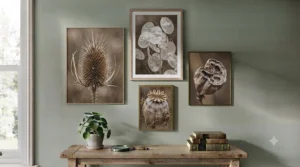
The single most frequent mistake is buying based on the listing thumbnail alone without checking actual dimensions — a nine-piece set photographed on a huge white studio wall can look deceptively small once the real centimetre measurements are checked against your own space. Always cross-reference the stated frame sizes against a rough sketch of your wall before ordering.
A second common misstep is mixing warm-toned and cool-toned greens across different sets bought separately — sage, olive, and forest green all read as “green” in a thumbnail but clash noticeably once hung side by side in natural light. Sticking to prints from the same set, or explicitly checking undertones before combining sets, avoids this.
Thirdly, buyers regularly underestimate hanging hardware needs — assuming adhesive strips will hold heavier framed pieces on textured or older plaster walls, when a proper picture hook rated for the frame’s weight is the safer choice. Finally, skipping the “lay it out first” step from our usage guide above remains the most avoidable cause of a wonky, unevenly spaced finished wall.
Botanical Gallery Wall Sets vs Single Statement Botanical Prints
It’s worth directly comparing the gallery-wall approach against simply buying one large, striking botanical print instead, since both are genuinely valid routes to the same nature-inspired look.
| Approach | Visual Impact | Flexibility | Typical Cost | Best For |
|---|---|---|---|---|
| Gallery Wall Set | Layered, collected feel | Harder to change later | £10–£80+ | Larger walls, feature areas |
| Single Statement Print | Bold, immediate focal point | Easy to swap or relocate | £15–£100+ | Smaller walls, minimalist rooms |
A single statement print wins on flexibility — it’s trivial to move to a different room or swap out when you fancy a change, and it suits minimalist interiors where a busy multi-print wall would feel cluttered. A gallery wall set, by contrast, delivers more visual density and works harder to fill a genuinely large wall, but repositioning nine or sixteen individually hung frames later is a far bigger job than taking down one print. Neither is objectively “better” — the right choice depends almost entirely on wall size and how often you like to redecorate.
Botanical Art Collections in the Real World: What to Expect
Specs and studio photography only tell half the story — it’s worth being honest about how these sets actually perform once they’re living on a real wall rather than a marketing photo. Colour tends to read slightly cooler in rooms with north-facing light and slightly warmer under standard warm-white bulbs, which is worth bearing in mind if you’re matching a set to a specific existing palette rather than choosing the wall art first.
Framed sets generally hold up well day-to-day, though the lightweight MDF construction common across budget and mid-range sets means they’re more prone to minor dings if knocked than heavier solid wood frames — worth factoring in for hallways or stairwells where they’re more likely to be brushed past. Unframed prints, once properly mounted, perform closer to expectations than many buyers assume, provided they’re kept out of consistently damp bathrooms without adequate ventilation, where paper-based prints can ripple over time.
On the whole, botanical art collections in this price bracket deliver a genuinely transformative visual change for relatively modest spend — the gap between a bare wall and a considered gallery wall is one of the more dramatic before-and-afters achievable in home decor without structural work or a full redecoration.
Nature-Themed Gallery Walls for Every Room in the House
Nature-themed gallery walls aren’t limited to living rooms, and matching the specific room to the right style of set makes a genuine difference. In bedrooms, softer wildflower or watercolour sets — like the PLKMN or Dazzlewall options — tend to suit the calmer atmosphere better than bold graphic botanical prints, which can feel visually busy somewhere meant for winding down.
Bathrooms are a slightly trickier environment: humidity is the real enemy here, so framed sets with sealed backs generally outperform unframed paper prints unless you’ve got genuinely good extractor ventilation. Home offices benefit from structured, line-art style botanical prints — the William Morris patterns or a curated Kew selection both read as more “professional” on a video call background than a casually arranged wildflower cluster.
Hallways and stairwells, meanwhile, are where larger sets like the ANERZA 16-piece collection genuinely earn their keep, filling wall space that would otherwise stay permanently bare simply because it’s awkward to shop for. Matching room function to set style, rather than buying the same aesthetic for every space in the house, consistently produces a more considered final result.
Long-Term Cost & Maintenance
Thinking beyond the initial purchase price changes the value calculation meaningfully. A £15 unframed set that needs £30 of separate framing has a genuine total cost of £45 — worth comparing honestly against a £40 pre-framed set rather than assuming “unframed is always cheaper.” Over a five-year horizon, frame durability also factors in: solid wood frames generally outlast MDF, which can mean a slightly pricier set upfront avoids a full replacement purchase down the line.
Maintenance costs are genuinely minimal across this entire category — a soft cloth and avoiding direct sunlight covers most of what’s needed. The V&A’s own conservation guidance for paper-based art is a useful general reference point for anyone wanting to properly understand best practice for looking after works on paper, even at a domestic decor scale rather than museum conservation level.
For premium purchases like the Kew Gardens prints, cost-per-year of enjoyment tends to look more favourable than the upfront price suggests, provided the piece stays with you long-term rather than being swapped out with the next decor trend — genuinely archival prints, properly framed, are designed to outlast several redecorating cycles.
Safety, Materials & Sustainability: What UK Buyers Should Check
For anyone buying wall art with young children or pets in the home, frame weight and mounting hardware matter more than they might initially seem to. Lightweight MDF-framed sets are generally the safer choice for higher-traffic areas or rooms where a frame could realistically be knocked, since a lighter frame causes less damage — and less risk — if it does come down.
On sustainability, timber-framed wall art varies considerably in sourcing transparency between sellers. Where it’s stated, frames using FSC-certified or similarly traceable timber are a meaningfully better environmental choice than unspecified sourcing, and it’s a detail worth checking on the listing rather than assuming by default. Print inks and paper stock also vary; sellers who specify archival or vegan inks tend to be more transparent generally about their production process, which is worth weighing if sustainability factors into your buying decision alongside aesthetics.
There are no specific UK regulatory requirements governing decorative wall art in the way there are for, say, furniture flammability standards, so this comes down to seller transparency and your own judgement rather than a compliance checklist.
Frequently Asked Questions
❓ What is the best botanical gallery wall set for a small room?
❓ Are unframed botanical prints worth buying over framed sets?
❓ How do I arrange a botanical gallery wall set evenly?
❓ Do botanical print sets fade in direct sunlight?
❓ What's the difference between botanical print collections and single statement prints?
Conclusion
There’s no single “best” botanical gallery wall set here — and honestly, that’s the point of comparing them properly rather than just picking the top result on Amazon. If you want a genuinely foolproof, ready-to-hang solution, the ArtbyHannah nine-piece set does the heavy lifting for you. If budget is tight and you’re happy to source your own frames, the Dazzlewall or PLKMN unframed sets get you into the botanical look for a fraction of the price. Period homes suit the William Morris patterns far better than a mass-produced sage-green bundle, and anyone treating wall art as a long-term investment piece rather than a quick refresh should seriously consider building a coordinated collection from Kew’s own archive instead.
What all seven have in common is the core appeal of this whole category: a handful of well-chosen prints can lift an ordinary room into something considerably more polished, without needing a full renovation to get there. Measure your wall, be honest about your budget and your patience for DIY framing, and choose accordingly — the right set from this list should genuinely last you years, not months.
✨ Ready to Transform Your Walls?
🔍 Take your gallery wall from “bare and boring” to genuinely considered with any of the seven sets above. Click through to check current pricing and availability, and give that stretch of empty wall the treatment it’s been waiting for!
Recommended for You
- Best Botanical Prints: 7 Top Picks for Your Walls in 2026
- Affordable Abstract Art Under £60: 7 Best UK Picks for 2026
- Best Abstract Wall Art UK: 7 Canvas Prints to Transform Any Room in 2026
Disclaimer: This article contains affiliate links. As an Amazon Associate, I earn from qualifying purchases. If you purchase products through these links, we may earn a small commission at no additional cost to you.
✨ Found this helpful? Share it with your friends! 💬🤗
