
In This Article
Empty wall staring back at you? A gappy hallway that feels like a corridor in a budget hotel? Large wall mirrors solve that problem faster than almost anything else you can buy, and they do it without a single lick of paint. A generously sized mirror bounces daylight around a room, tricks the eye into believing a boxy flat has ceilings a foot higher than it does, and gives you an actual honest look at your outfit before you leave the house — no more guessing whether those trousers work from the knees down. This guide is built for a British audience shopping amazon.co.uk, and it leans on real product specs, genuine aggregated review sentiment, and straightforward comparative reasoning rather than recycled marketing fluff.
So, what is a large wall mirror? In UK interiors terms, it’s generally any wall-mounted mirror with a longest edge above roughly 90-100cm — big enough to become a genuine focal point rather than a functional afterthought above a sink. The basic optical principle hasn’t changed since the earliest silvered glass mirrors were developed, but the sizes and styles available to British shoppers today have moved on considerably. Below, you’ll find seven real products spanning budget frameless slabs to designer-grade arched pieces, three comparison tables with proper analysis attached, a full walkthrough of large mirror installation, and a safety section that could save you a nasty accident. Mirrors do more than reflect — used well, they amplify light, create drama and frame views, which is exactly the brief for anything hanging on a bare feature wall.
Whether you’re chasing statement mirror styles for a period hallway or you just want the cheapest way to make a rented flat feel bigger, there’s a genuinely useful option ahead — including a full breakdown of large mirrors over 100cm UK buyers actually rate well, not just the ones with the flashiest listing photos.
Quick Comparison Table
| Mirror | Size | Shape | Best For |
|---|---|---|---|
| MirrorOutlet Large Frameless Mirror | 178 x 76cm | Rectangular, frameless | Sheer size on a tight budget |
| Yearn Classic Bevelled Mirror | Approx. 120 x 90cm | Rectangular, bevelled | UK-made craftsmanship |
| Dripex Gold Arched Mirror | 60 x 90cm | Arched | Budget statement piece |
| Umbra Hubba Round Mirror | 86cm diameter | Round | Modern entryway focal point |
| MirrorOutlet The Crown Mirror | 102 x 80cm | Arched, ornate | Traditional living rooms |
| SONGMICS Full-Length Arched Mirror | 160 x 50cm | Arched, full-length | Dual bedroom/hallway use |
| Umbra Hub Arched Mirror | 175 x 60cm | Arched, designer | Design-led premium buyers |
Looking across this table, the spread runs from a frameless slab that’s essentially all glass and no fuss, right up to a designer-grade arched piece with a proper brand pedigree behind it. Size and price track together fairly closely here, but shape is the real differentiator: arched and round mirrors tend to soften a room with lots of hard lines, while the big rectangular frameless options do the heavy lifting when your priority is maximum reflective surface for minimum spend. If you’re specifically hunting large mirrors over 100cm UK stockists carry, note that only three of these seven clear that threshold on their longest edge — worth checking before you fall in love with a photo.
💬 Just one click — help others make better buying decisions too!😊
Top 7 Large Wall Mirrors: Expert Analysis
1. MirrorOutlet Large Single Edge Frameless Mirror — best value for sheer size
At 178 x 76cm, this is a genuinely enormous mirror for the money, and that scale is the whole pitch. The frameless bevelled edge means there’s no bulky surround eating into your wall space or fighting with your existing decor, and the bevel itself catches light along the rim rather than just at the flat surface, which is a small detail that makes the glass look considerably more expensive than it is. Based on the spec comparison with framed alternatives at this size, going frameless typically shaves £40-60 off the price simply because there’s no timber or metal moulding to manufacture and ship.
This is squarely a mirror for anyone who wants a wall of reflection — dance studios, home gyms, narrow hallways, or a statement piece leaning behind a sofa — and it’s less suited to anyone nervous about handling large glass panels solo. Reviewers consistently note that the mirror looks and feels premium once hung, with several customers on Amazon describing it as “beautiful” and better than expected for the price, though a recurring theme across UK reviews is breakage in transit, with more than one buyer mentioning a replacement was needed after the first delivery arrived damaged.
Pros:
- ✅ Exceptional size-to-price ratio for a 178cm mirror
- ✅ Frameless bevelled edge suits almost any decor style
- ✅ Genuinely brightens dark hallways and living rooms
Cons:
- ❌ Breakage-in-transit is a recurring theme in reviews
- ❌ Needs two people and heavy-duty fixings, sold separately
In the £90-£140 range at the time of research, it’s hard to beat for sheer glass area — just budget for proper wall fixings on top, since standard picture hooks won’t cut it.
2. Yearn Classic Bevelled Rectangle Mirror — best British-brand craftsmanship
Yearn mirrors are handmade in Hackney, London, and that regional manufacturing story isn’t just a marketing line — <cite index=”27-1″>the brand has built its reputation on a stepped frame with bevelled edges, using recycled extruded polystyrene (polcore) as a wood alternative that resists warping</cite>. What that means in practice is a frame that looks and photographs like painted timber but won’t crack or swell in a humid bathroom or a draughty Victorian hallway the way real wood sometimes does over a decade.
What most buyers overlook about this model is the finish detail: in warmer artificial lighting, the silver frame can shift toward a champagne hue, which is either a lovely subtlety or a mild annoyance depending on how precisely you’re colour-matching your room. It suits anyone furnishing a period property who wants a traditional silhouette without paying antique-shop prices, and it’s a strong pick for buyers who specifically want “Made in Britain” on the label. Aggregated customer sentiment across Dunelm and Amazon listings for the Yearn range is strongly positive on build quality and finish, with the polcore frame frequently singled out as sturdier than expected.
Pros:
- ✅ Handmade in the UK with a traceable manufacturing story
- ✅ Polcore frame resists warping better than real wood
- ✅ Bevelled glass adds a genuine sense of depth and light
Cons:
- ❌ Frame colour can shift under warm artificial lighting
- ❌ Made-to-order lead times run longer than mass-produced rivals
Priced in the £150-£220 range depending on size, this earns its premium over generic frameless options through provenance and finish rather than raw dimensions alone.
3. Dripex 60 x 90cm Gold Arched Mirror — best budget arched statement piece
Arched mirrors have been the dominant statement mirror styles trend in UK living rooms for a few years running now, and Dripex has made the look accessible without the designer price tag. The 60 x 90cm size sits right at the edge of “large” for many rooms, and the slim aluminium alloy frame keeps the whole thing visually light even though the glass itself is substantial. Two rear hanging brackets, rather than the single central hook found on cheaper rivals, make it noticeably less likely to tilt or twist on the wall over time.
Here’s what to weigh: this is a mirror built for leaning as much as hanging, and reviewers frequently mention using it propped against a wall above a console table or fireplace rather than drilled in. It’s a smart pick for renters who can’t drill, or for anyone testing whether an arched shape actually suits their space before committing to something pricier. Reviewers consistently report that the shatterproof glass and dual-bracket back plate feel sturdier than the price suggests, with several UK buyers specifically praising the thin frame profile as looking “expensive” rather than budget.
Pros:
- ✅ Dual rear brackets prevent the common single-hook tilt issue
- ✅ Works equally well leaning or wall-mounted
- ✅ Slim frame photographs and reads as premium in person
Cons:
- ❌ At 60 x 90cm, some buyers wanted a larger footprint
- ❌ Gold finish shows fingerprints more than a matte black would
Sitting in the £40-£70 range, this is the mirror to buy if you want the arched trend without the arched-trend price.
4. Umbra Hubba 34-inch Round Mirror — best modern entryway focal point
Umbra’s design pedigree runs deep — the brand distributes in more than 120 countries and has built its reputation on original, in-house design rather than copying whatever’s trending. The Hubba round mirror translates that into an 86cm circle with a decorative metallic frame in brass or titanium, and the round shape does something rectangular mirrors can’t: it softens a room full of hard architectural lines, which matters more than people expect in new-build flats with boxy proportions.
On paper this means the mirror works best as a singular statement rather than part of a cluster, and that’s borne out in how people actually use it — as an entryway anchor, above a console, or centred on a stairwell landing. What the spec sheet won’t tell you, but reviewers note, is how much lighter the rubber-backed frame feels off the wall compared with metal-only rivals, which makes installation genuinely a one-person job rather than a two-person wrestling match. The recurring complaint across UK reviews, unfortunately, is transit damage; more than one buyer received a mirror with a cracked pane despite Umbra’s reinforced packaging.
Pros:
- ✅ Distinctive round shape breaks up boxy room proportions
- ✅ Lightweight rubber-backed frame simplifies solo installation
- ✅ Strong design pedigree from an established global brand
Cons:
- ❌ Transit breakage is a recurring theme in customer feedback
- ❌ Round shape isn’t a drop-in replacement for a rectangular gap
Expect to pay in the £130-£160 range, which is fair for a design-led piece but firmly mid-range rather than budget.
5. MirrorOutlet The Crown Black Metal Framed Mirror — best ornate arched statement
This one leans hard into drama. At 102 x 80cm with a distinctive crown-topped arch and a black metal frame roughly 2cm wide, it’s built to be noticed rather than to blend in. The 3cm frame depth gives it real presence off the wall, which matters in rooms with high ceilings where a flat, thin mirror can look lost against a large expanse of plaster.
Reviewers consistently note that the black finish reads as more sophisticated than the price implies, and it’s a genuinely good fit for anyone furnishing a Victorian or Edwardian terrace where a plain rectangular mirror would feel out of period. What most buyers overlook here is scale planning: the crown detail adds height beyond the stated dimensions, so measure the full silhouette, not just the glass, before you commit to a spot above a fireplace. Based on the spec comparison with plainer arched rivals, the extra ironwork at the top is exactly what justifies this sitting slightly above entry-level pricing.
Pros:
- ✅ Distinctive crown detail suits period and traditional interiors
- ✅ Solid frame depth gives real presence on the wall
- ✅ Strong perceived value relative to similarly styled rivals
Cons:
- ❌ Ornate detailing won’t suit minimalist or Scandi interiors
- ❌ Overall silhouette is taller than the glass dimensions suggest
At around £110-£160, it occupies a useful middle ground between budget frameless slabs and full designer pieces.
6. SONGMICS Full-Length Arched Mirror with Stand — best dual-purpose wall or floor option
Not every “large wall mirror” search is actually about wall mounting, and SONGMICS covers both bases with a 160 x 50cm arched mirror on an aluminium alloy frame that stands freely or hangs on the wall depending on your fixings and preference. The rounded top softens the otherwise rectangular full-length silhouette, and the tempered glass construction means it’s built to the safety standard you’d want in a household with kids or pets bumping into furniture.
Here’s what to weigh: buyers renting or planning to move within a couple of years consistently favour the standing option because it travels without a drill, while homeowners tend to switch it to wall-mounted once they’ve settled on a permanent spot. Reviewers frequently mention the ease of assembly — no tools beyond adjusting the back legs — and several specifically call out the versatility of switching between orientations as the standout feature. The main gripe in aggregated feedback is that the stand’s footprint needs slightly more floor clearance than the product photos suggest.
Pros:
- ✅ Genuinely works as both a floor-standing and wall mirror
- ✅ Tempered glass meets a proper safety standard for the home
- ✅ Tool-free assembly straight out of the box
Cons:
- ❌ Standing footprint needs more floor space than photos imply
- ❌ Aluminium frame feels lighter-duty than premium arched rivals
Typically priced in the £70-£110 range, this is the pick for anyone who genuinely can’t decide between full-length and wall-mounted.
7. Umbra Hub Arched Wall Mirror — best premium design-led statement
At the top of this list sits Umbra’s Hub Arched Mirror, a 175 x 60cm piece that trades the brand’s usual playful geometry for a more restrained, gallery-style arch. This is the mirror to reach for when you want something that looks specified by an interior designer rather than picked off a shelf, and the scale — tall enough to double as a genuine full-length mirror — makes it flexible across hallway, bedroom and living room placements.
What the spec sheet won’t tell you, but design commentary consistently notes, is that arched mirrors at this height perform a specific trick: they visually extend a wall upward, which is worth knowing if you’re working with a lower-than-average ceiling and want to counteract that without structural work. Reviewers describe the finish and construction as noticeably heavier-duty than the brand’s smaller round mirrors, consistent with the jump in both size and price. Given Umbra’s 45-day satisfaction guarantee, it’s also one of the lower-risk premium purchases on this list if the size or finish doesn’t suit once it’s home.
Pros:
- ✅ Tall arched profile visually lifts lower ceilings
- ✅ Doubles as a genuine full-length mirror at 175cm
- ✅ Backed by a 45-day satisfaction guarantee from Umbra
Cons:
- ❌ Premium pricing puts it out of reach for budget shoppers
- ❌ Oversize shipping surcharges can apply at checkout
Expect to pay in the £170-£220 range at the time of research, which reflects genuine design provenance rather than inflated branding.
Top 7 Products: Full Comparison
| Mirror | Price Range | Shape | Frame | Best For |
|---|---|---|---|---|
| MirrorOutlet Frameless | £90-£140 | Rectangular | None | Maximum size on a budget |
| Yearn Classic Bevelled | £150-£220 | Rectangular | Polcore | UK-made period style |
| Dripex Gold Arched | £40-£70 | Arched | Aluminium | Renters, budget trend-chasers |
| Umbra Hubba Round | £130-£160 | Round | Metal | Modern entryways |
| MirrorOutlet The Crown | £110-£160 | Arched | Metal | Traditional statement rooms |
| SONGMICS Full-Length | £70-£110 | Arched | Aluminium | Dual wall/floor use |
| Umbra Hub Arched | £170-£220 | Arched | Metal | Design-led premium buyers |
The clearest pattern here is that frame material, not just size, drives most of the price gap: frameless and slim aluminium options sit under £140, while anything with a considered metal frame or a UK-manufactured backstory pushes past £150. If your priority is raw square footage of glass for the least outlay, the MirrorOutlet frameless piece wins outright; if you’re building a considered scheme around a specific style, the Yearn or Umbra Hub options justify their premiums through finish and provenance rather than size alone.
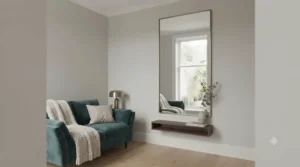
Large Mirror Installation: A Practical Usage Guide
Buying the mirror is the easy part. Getting a heavy sheet of glass safely and permanently onto a wall is where most of the actual risk in this whole category lives, so it’s worth treating installation as seriously as the purchase itself.
Start by identifying what’s behind your plaster. Stud walls need fixings that bite into the timber stud itself wherever possible, not just the plasterboard, because plasterboard alone will not hold a 15kg mirror through a house full of slammed doors and hoovering. Solid masonry walls are more forgiving but still need the correct wall plugs rated for the mirror’s weight, not the generic multipack from the bottom shelf. For anything over roughly 20kg — which most mirrors above 150cm will be — two fixing points spread across the width of the mirror, rather than one central hook, dramatically reduce the risk of it swinging or twisting loose over months of minor vibration.
Before you drill anything, mark the fixing points with the mirror held (carefully, with help) against the wall at the intended height, rather than measuring from the floor and hoping. Common mistakes in the first 30 days include hanging a heavy mirror on a single picture hook rated for framed prints, skipping a spirit level and only noticing the tilt once furniture is arranged around it, and mounting directly above a radiator where heat cycling can eventually loosen adhesive-backed fixings. If you’re leaning rather than hanging, always use the anti-tip strap or wall tether most large mirrors ship with — leaning alone is not a substitute for securing it.
Real-World Scenarios: Who Should Buy Which Mirror
Picture three genuinely different households, because the “best” large wall mirror really does depend on who’s buying it.
Take a renter in a shared flat with a strict no-drilling clause in the tenancy agreement. For them, the Dripex arched mirror or the SONGMICS full-length model make the most sense — both can lean against a wall with a tether rather than being drilled in, and neither represents a huge financial loss if it needs to move house twice in eighteen months.
Now picture a family in a Victorian terrace doing a full living room refresh, with a fireplace begging for a statement piece above it. The MirrorOutlet Crown mirror, with its ornate arch and period-appropriate silhouette, suits that brief far better than anything minimalist would, and the household almost certainly has solid masonry walls capable of taking a proper fixing.
Finally, consider a couple in a new-build flat with low ceilings and a design-conscious eye, furnishing a hallway that currently feels more corridor than entrance. The Umbra Hub Arched mirror’s height-extending trick and design-led finish directly address both the ceiling problem and the aesthetic ambition, even at a premium price point that the Victorian-terrace family might balk at.
How to Choose Large Wall Mirrors
- Measure the wall, not just the gap. A mirror should generally occupy no more than two-thirds of the available wall width to avoid overwhelming the room.
- Decide frameless or framed first. Frameless suits contemporary rooms and stretches your budget further per square inch; framed pieces anchor more traditional schemes.
- Check the shape against your ceiling height. Arched and full-length mirrors visually extend low ceilings; wide rectangular mirrors suit rooms already generous in height.
- Confirm the fixing weight rating. Cross-check the mirror’s stated weight against the wall fixings you’ll actually use, not the ones pictured in the listing.
- Think about light source, not just wall space. Positioning opposite or adjacent to a window multiplies the brightening effect far more than positioning it on a windowless wall, a principle also echoed in general interior design guidance on using mirrors.
- Budget for fixings separately. Heavy-duty wall plugs and anti-tip straps routinely add £10-£20 on top of the mirror’s own price.
- Read UK-specific reviews, not just star ratings. Delivery damage rates vary noticeably between suppliers, and UK reviews flag courier-specific issues that overseas reviews won’t.
Common Mistakes When Buying Large Wall Mirrors
The single most common error is buying on dimensions alone without checking frame depth, which can make a mirror protrude further than expected and clash with light switches, dado rails or door frames nearby. A close second is underestimating weight: a 178cm frameless mirror can weigh well over 20kg, and plenty of buyers discover this only once it’s arrived and needs carrying upstairs. Shoppers also frequently skip reading the fixing kit contents before ordering, then discover on delivery day that the included screws are unsuitable for their particular wall type. Finally, style mismatches are rife — an ornate crown-topped arch dropped into a stark minimalist new-build looks like a mistake rather than a statement, so it pays to picture the mirror in situ, not just admire it in isolation on a product page.
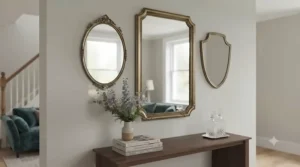
Large Wall Mirrors vs Multiple Small Mirrors
There’s a persistent debate in UK interior forums about whether one large statement mirror beats a cluster of smaller ones, and the honest answer is that it depends on wall shape more than personal taste. A single large mirror creates one strong focal point and is far easier to hang level and keep level, since there’s only one fixing arrangement to get right. A gallery of smaller mirrors, by contrast, can fill an awkward or irregularly shaped wall that no single large piece would fit cleanly, and it distributes weight across multiple lighter fixings rather than concentrating it in one spot.
Where a single large mirror clearly wins is light distribution — one continuous reflective surface bounces daylight more predictably than several smaller panes interrupted by frames and gaps. Where clusters win is flexibility and lower individual replacement cost if one piece is damaged. For most straightforward rectangular walls, the single large mirror approach delivers a cleaner result with less ongoing fuss.
Benefits vs Traditional Alternatives
| Approach | Light Boost | Installation Effort | Cost | Best For |
|---|---|---|---|---|
| Single large mirror | High | Moderate-high | Low-moderate | Clean, focal-point walls |
| Mirror gallery cluster | Moderate | High (multiple fixings) | Moderate | Irregular or gallery walls |
| Wall art (no mirror) | None | Low | Varies | Rooms with ample natural light already |
| Mirrored furniture | Moderate | Low | Moderate-high | Bedrooms needing storage + reflection |
Comparing these approaches side by side, a single large mirror consistently delivers the best light-to-effort ratio for most standard rectangular rooms, while galleries only pull ahead on genuinely awkward wall shapes. Wall art never matches a mirror’s brightening effect, which matters most in north-facing or windowless spaces, and mirrored furniture is really solving a different problem — storage — with reflection as a secondary benefit rather than the main event.
What to Expect: Real-World Performance
Specs on a listing page rarely translate directly into lived experience, so here’s the honest everyday reality. A well-placed large mirror genuinely does make a small room feel noticeably bigger within the first few days of living with it — this isn’t just marketing language, it’s a consistent theme across UK customer reviews regardless of which specific product they bought. What’s less discussed is maintenance: large glass surfaces show dust and smudges more visibly than small mirrors simply because there’s more surface area to catch light at an angle, so expect to wipe it down weekly rather than monthly if you want it looking its best.
Temperature matters more than most buyers expect too. Mirrors hung near exterior walls in unheated hallways can develop faint condensation in winter, which won’t damage tempered or toughened glass but can leave temporary streaking. And weight settling is real — even a correctly fixed mirror can develop a very slight tilt over its first few months as fixings bed in, so it’s worth rechecking the level after about six weeks rather than assuming day-one installation is the final word.
Statement Mirror Styles for Different Rooms
Living rooms tend to suit the boldest statement mirror styles — arched, ornate, or oversized rectangular pieces above a fireplace or sofa, since the room is usually large enough to absorb a dramatic focal point without feeling cluttered. Hallways, by contrast, generally call for something narrower but tall, since width is often the scarcest resource in a British hall, and a full-length arched mirror like the SONGMICS or Umbra Hub options solves the “no room to swing a cat” problem while still delivering a genuine style statement. Bedrooms sit in between — full-length mirrors earn their keep functionally for getting dressed, but a round or arched piece above a dressing table adds softness that a stark rectangle doesn’t. Open-plan kitchen-diners are the trickiest brief, since heat and occasional grease in the air mean a simpler, easier-to-clean frameless or slim-framed mirror generally outperforms an ornate piece that traps grime in its detailing.
Long-Term Cost & Maintenance
A large wall mirror is close to a one-off purchase rather than an ongoing cost, which is part of its appeal against, say, wallpaper or artwork that can fade and need replacing. The main long-term costs are indirect: proper wall fixings if you didn’t buy heavy-duty ones initially, occasional re-tightening as fixings settle, and glass cleaner, which costs pennies over years of use. Where total cost of ownership genuinely diverges between products is breakage risk during the original delivery — a £90 frameless mirror that arrives cracked and needs a replacement shipment effectively costs more in hassle than a slightly pricier option with better UK-based packaging and a smoother returns process. Factoring in likely replacement risk, not just the sticker price, is a more honest way to compare value across this category than price-per-centimetre alone.
Oversized Mirror Safety: Regulations & Compliance Guide
Large mirrors are, in blunt terms, sheets of glass that weigh a genuine amount and hang above head height in rooms full of people and pets — so safety deserves more than a passing mention. UK Building Regulations Approved Document K covers protection from falling, collision and impact, and while most domestic wall mirrors sit outside its strictest “critical locations” definitions, the safe-breakage principle it sets out — that glass should either resist breakage or break into pieces unlikely to cause serious injury — is worth applying voluntarily when choosing mirror glass for a busy household. Tempered or toughened glass, which several products in this guide specify, breaks into small, relatively blunt fragments rather than large shards, and it’s the safer choice near stairwells, low-level furniture, or anywhere children are climbing on things they shouldn’t be.
Fixing security matters just as much as glass type. RoSPA’s home safety guidance recommends securing heavy furniture and fixtures to walls, and the same logic extends directly to oversized mirrors: a mirror that isn’t anchored into a stud or solid masonry with weight-rated fixings is a genuine tip-over and laceration risk, not a theoretical one. Practical steps include using at least two fixing points on anything over roughly 15kg, checking fixings annually rather than assuming a single installation lasts forever, and positioning mirrors away from the foot of beds or the top of stairs where a fall would have the worst possible consequences. None of this is complicated, but skipping it is the single biggest real risk in this entire category.
Buyer’s Decision Framework
If you’re renting and can’t drill, choose a leaning or free-standing option with a wall tether, because it protects your deposit and still delivers most of the brightening benefit. If you’re furnishing a period property, choose an ornate or bevelled framed mirror over anything frameless, because frameless pieces tend to look anachronistic against cornicing and skirting boards. If your ceiling feels low, choose an arched or full-length shape over a wide rectangle, because vertical lines do more to lift a room than horizontal ones. If budget is the overriding constraint, choose frameless over framed every time, since the frame itself is usually the single biggest cost driver at any given size. And if you have young children or pets in the house, prioritise tempered glass and double fixing points over any other single feature, because that combination addresses the real safety risk directly rather than as an afterthought.
Frequently Asked Questions
❓ What size counts as a large wall mirror in the UK?
❓ Can I hang a large mirror on plasterboard alone?
❓ Do large mirrors really make small rooms look bigger?
❓ Is frameless or framed better for a large wall mirror?
❓ How much should I budget for fixings on a large mirror?
Conclusion
A genuinely large wall mirror is one of the few purchases in home decor that pays back its cost in daily usefulness almost immediately — more light, more perceived space, and one less excuse for leaving the house looking scruffy. Across the seven real products compared here, the honest takeaway is that budget and style matter more than any single “best” pick: the MirrorOutlet frameless option wins on pure size-for-money, the Yearn Classic earns its premium through genuine UK craftsmanship, and the Umbra Hub Arched mirror justifies its top-end pricing through design pedigree and a ceiling-lifting silhouette that budget pieces simply can’t replicate. Whichever you choose, the installation and safety guidance above matters just as much as the product itself — a beautiful mirror badly fixed to a wall is a liability, not a statement piece.
Take the time to measure properly, buy fixings rated for the actual weight, and match the shape to your room’s proportions rather than just the trend of the moment, and a large wall mirror will likely be one of the longest-lasting, best-value pieces in your home.
✨ Ready to Transform Your Walls?
🔍 Compare the seven picks above against your own wall dimensions before you buy, and always check current pricing and stock on amazon.co.uk — availability on statement pieces like these shifts quickly.
Recommended for You
- Botanical Gallery Wall Sets 2026: 7 Stunning Picks
- Best Botanical Prints: 7 Top Picks for Your Walls in 2026
- Affordable Abstract Art Under £60: 7 Best UK Picks for 2026
Disclaimer: This article contains affiliate links. As an Amazon Associate, I earn from qualifying purchases. If you purchase products through these links, we may earn a small commission at no additional cost to you.
✨ Found this helpful? Share it with your friends! 💬🤗
