
In This Article
What most UK buyers overlook about Oriental rugs is this: you don’t need to spend hundreds to capture that timeless, exotic charm. In my years reviewing home textiles, I’ve watched the market shift dramatically — machine-washable Persian-style pieces now sit comfortably in the £50-£150 range on Amazon.co.uk, bringing traditional craftsmanship within reach of anyone with a washing machine and a bit of floor space.
The British home presents unique challenges for rug buyers. Our compact flats and terraced houses demand clever thinking. A 160 x 230 cm rug might look stunning in the catalogue, but will it actually fit through your narrow hallway? And with our six months of drizzle — that peculiarly British combination of rain that’s never quite heavy enough for proper gear but persistent enough to soak everything — traditional wool rugs can become rather problematic. According to Met Office data, the UK experiences an average of 133 days of rainfall annually, making moisture-resistant textiles particularly valuable. Mud from the garden, wet paw prints from the dog’s constitutional, the inevitable spill during Sunday roast — these aren’t hypothetical concerns for UK households.
This is precisely where affordable Oriental rugs under £150 shine. Modern manufacturing techniques have cracked the code: intricate Persian and Turkish-inspired patterns rendered in durable, washable polyester blends. You get the visual impact of a £500 hand-knotted piece at a fraction of the cost, with the practical advantage of tossing it in the washing machine when life gets messy. For families in Birmingham navigating high-traffic living rooms, students in Manchester bedsits seeking character on a budget, or anyone who’s ever worried about red wine on expensive textiles — these rugs represent remarkable value.
Quick Comparison: Top Oriental Rugs Under £150
| Rug Style | Size Range | Best For | Price Range (£) | Key Feature |
|---|---|---|---|---|
| Traditional Persian | 80-230cm | Living rooms, formal spaces | £45-£140 | Intricate medallion patterns |
| Machine Washable Runner | 60-300cm | Hallways, narrow spaces | £35-£95 | Easy maintenance |
| Vintage Distressed | 120-200cm | Bohemian, eclectic interiors | £55-£130 | Faded, aged aesthetic |
| Geometric Turkish | 100-180cm | Modern, minimalist homes | £40-£125 | Bold patterns, primary colours |
| Low-Pile Entry Mat | 60-120cm | Entryways, bathrooms | £25-£75 | Non-slip backing |
💬 Just one click — help others make better buying decisions too! 😊
Top 7 Affordable Oriental Rugs Under £150: Expert Analysis
1. Surya Vintage Persian Washable Rug
The Surya name carries weight in the rug world, and their vintage Persian collection delivers precisely what British buyers need: proper visual depth without the maintenance headache. What strikes me first about this piece is the colour saturation — rich terracottas, muted blues, and cream tones that photograph beautifully but, more importantly, hide the inevitable British mud tracked in from the garden.
Key Specifications: Machine-washable polyester construction, available in sizes from 80 x 150 cm up to 200 x 290 cm, OEKO-TEX Standard 100 certified (meaning no nasty chemicals that’ll aggravate allergies or harm children crawling about). The OEKO-TEX certification tests for over 1,000 harmful substances, providing peace of mind for UK families. The low 5mm pile height makes it suitable for placing under furniture without creating trip hazards.
Here’s what the spec sheet won’t tell you: this rug performs brilliantly in high-traffic areas precisely because it’s designed for abuse. The distressed vintage pattern means new wear blends invisibly with the intended aesthetic. Wash it at 30°C on a delicate cycle — I’d recommend every 2-3 months for a living room placement — and it emerges looking refreshed rather than bedraggled. Several UK reviewers specifically mention using it with pets, which speaks volumes about durability.
The central medallion design works particularly well in smaller British living rooms (the 120 x 170 cm size is ideal for a standard semi-detached lounge) because it creates a focal point without overwhelming the space. Pair it with neutral furniture and you’ve got instant character; use it to ground a more eclectic mix and it provides visual cohesion.
Customer Feedback: UK buyers consistently praise the soft feel underfoot and accurate colour representation. One Southampton reviewer noted it “makes the bedroom look warm and expensive” — rather high praise for something in the £75-£95 range.
✅ Pros:
- Machine washable at 30°C — genuinely transformative for UK homes
- OEKO-TEX certified safe for children and pets
- Multiple size options fit various UK room dimensions
❌ Cons:
- Lighter colours show dirt between washes in high-traffic areas
- Requires rug gripper on hard floors (sold separately)
Price Range: Around £75-£95 for 120 x 170 cm size. Exceptional value when you consider the cost of professional cleaning a traditional wool rug (£80+ annually in most UK cities).
2. The Rug House Traditional Persian Runner
Hall runners occupy a peculiar niche in British homes — we need them desperately (narrow hallways, wet climate, constant foot traffic from door to kitchen) but rarely want to spend serious money on something that’s essentially a mud-catcher. The Rug House solves this with their traditional Persian runner series.
Key Specifications: Available in 60 x 230 cm and 80 x 300 cm lengths, power-loomed polypropylene construction, stain and moisture resistant, virtual non-shedding. The 7mm pile provides enough cushioning to feel substantial without creating a tripping hazard when you’re stumbling to the loo at 3am.
What most Amazon.co.uk listings won’t emphasise: polypropylene handles British weather remarkably well. Unlike wool, which absorbs moisture and can develop that musty smell in damp conditions, polypropylene sheds water. This matters enormously in the UK. Your hallway rug sits directly in the line of fire — wet coats dripping, muddy boots, rain blown in when you’re wrestling with shopping bags. A wool runner would be sodden within a month; this one dries quickly and cleans with a damp cloth.
The design features a classic Heriz-inspired pattern — bold geometric medallions in deep reds and blues that hide dirt beautifully. It’s not hand-knotted authenticity, obviously, but in a dim hallway at 6pm in February, the visual impact is remarkably similar to pieces costing ten times as much.
Customer Feedback: Multiple UK reviewers mention fast delivery and accurate descriptions. One noted it “looks really good in my hall” with an underlay — that’s an important detail, as runners on laminate or tile can shift dangerously without proper gripping.
✅ Pros:
- Ideal dimensions for typical UK terraced house hallways
- Moisture and stain resistant — critical for entryways
- Virtually no shedding (unlike budget wool alternatives)
❌ Cons:
- Definitely requires underlay on hard floors
- Pattern can feel busy in very narrow spaces
Price Range: Typically £55-£85 depending on length. Remember to budget an extra £15-£25 for a decent rug gripper — non-negotiable for safety.
3. Vernal Washable Persian Collection
The Vernal range represents the next evolution in affordable Oriental rugs: pieces designed from the ground up for modern British living rather than attempting to mimic traditional construction. What catches my attention here is the colour range — they offer everything from rich rust reds to soft beiges, recognising that not every UK home wants bold statement pieces.
Key Specifications: Machine washable at 30°C, made from polyester blend, available in nine different colourways and sizes ranging from 80 x 150 cm to 200 x 290 cm. The medium 8mm pile strikes a nice balance between comfort and practicality.
The genius of the Vernal approach lies in understanding British constraints. Their Milagros design in beige, cream, and grey tones suits the neutral Scandi-minimal aesthetic that dominates UK interiors right now, whilst their Senglea pattern in rust red and blue appeals to those wanting more traditional warmth. You’re not locked into a single style — they’ve created options.
From a practical standpoint, these rugs address the UK’s primary rug-killing culprits: pets and children. The polyester construction resists staining better than natural fibres, and when accidents inevitably occur (spilled Ribena, muddy paws, the remains of a Sunday roast), you can remove and wash the entire rug rather than spot-cleaning indefinitely. This fundamentally changes the relationship British households can have with floor coverings.
Customer Feedback: UK buyers specifically mention the ease of washing and quick drying time. One reviewer noted placing it in a 7kg washing machine successfully with the 160 x 230 cm size, though I’d personally recommend hanging to dry rather than tumble-drying to maintain the shape.
✅ Pros:
- Extensive colour range suits different UK interior trends
- True machine washability confirmed by multiple UK users
- Medium pile comfortable but not excessive for British room heights
❌ Cons:
- No built-in non-slip feature (use gripper pads)
- Some colour fading reported after 15+ washes
Price Range: Generally £70-£110 depending on size and colourway. The investment pays off when you avoid professional cleaning costs.
4. Rugette Artemis Colourful Persian Rug
Rugette’s Artemis sits firmly in the “statement piece” category — this isn’t a rug that blends into the background. With vibrant blues, deep reds, and ornate floral patterns, it’s designed for people who want their floor covering to be a talking point. In my experience, this works brilliantly in UK homes that embrace maximalist or eclectic design, less so in minimalist Scandi spaces.
Key Specifications: Machine washable, crafted in Turkey, low-pile structure (approximately 5mm), hypoallergenic materials, non-slip backing included. Available in sizes from 80 x 150 cm to 200 x 300 cm.
What the Artemis does exceptionally well is deliver genuine visual complexity. The elaborate medallion pattern and intricate border work create depth that cheaper rugs simply can’t match. When placed in a well-lit British living room — admittedly a challenge during our six-month grey season — the colour interplay becomes apparent. This is the sort of rug that makes visitors ask where you got it, assuming you spent considerably more than the £85-£130 actual cost.
The Turkish manufacturing shows in the finishing quality. Fringes are securely attached (critical — poorly attached fringes unravel quickly under British foot traffic), edges lie flat, and the low pile means it works well in dining rooms where chairs need to slide easily. I’d particularly recommend it for Victorian terraces and period properties where the ornate aesthetic complements original features.
Customer Feedback: UK reviews emphasise the soft feel and accurate colour representation, with several noting it transforms formal dining rooms. The built-in non-slip backing receives specific mention — a genuine advantage over competitors requiring separate gripper pads.
✅ Pros:
- Built-in non-slip backing (rare at this price point)
- Turkish craftsmanship shows in finishing details
- Hypoallergenic certification matters for British allergy sufferers
❌ Cons:
- Bold pattern overwhelming in small or already-busy rooms
- Lighter cream areas show dirt faster in entryways
Price Range: Around £85-£130 for mid-sizes. The built-in non-slip feature effectively saves £15-£20 compared to competitors.
5. Lord of Rugs Traditional Oriental Runner
Lord of Rugs targets a specific UK market segment: buyers seeking maximum size for minimum spend. Their traditional Oriental runners stretch up to 300 cm in length — sufficient for even generous British hallways — whilst maintaining prices firmly under £100.
Key Specifications: Power-loomed in Turkey, polypropylene construction, stain-resistant treatment, available in 60 x 230 cm and 80 x 300 cm dimensions. The 6mm pile provides adequate cushioning without excessive bulk.
The trade-off for the aggressive pricing becomes apparent when you examine construction closely. This isn’t the most densely woven rug you’ll encounter — you can see the backing through the pile in certain lights — but for a hallway runner that takes tremendous abuse, the value proposition makes sense. British hallways function as mud rooms, coat storage, and main thoroughfares simultaneously. Expecting a £60 runner to be an heirloom piece is unrealistic; expecting it to look presentable for 3-5 years whilst protecting your flooring is entirely reasonable.
The traditional Tabriz-inspired pattern in burgundy, navy, and cream hides the British household’s primary enemies: mud, dust, and general grime. Darker borders particularly excel at concealing the inevitable dirt accumulation near doorways. Maintenance involves regular hoovering and the occasional wipe with a damp cloth — no professional cleaning required.
Customer Feedback: UK buyers specifically mention value for money and quick delivery. Several note it “does the job” for hallways, which sounds faint but actually represents success for this category.
✅ Pros:
- Exceptional length-to-cost ratio for UK hallways
- Stain-resistant treatment performs well with muddy footwear
- Turkish weaving quality adequate for the price
❌ Cons:
- Less dense pile shows backing in bright light
- Essential to use with underlay for longevity
Price Range: Typically £45-£75 for the longer 300 cm size. Genuinely difficult to beat at this price point for pure functionality.
6. Hafaa Vintage Distressed Oriental Rug
The distressed aesthetic has surged in popularity across UK interiors over the past few years, driven partly by Instagram and partly by the practical reality that “already looks old” means “new wear is invisible.” Hafaa’s vintage collection capitalises on this trend whilst delivering genuine value.
Key Specifications: Available on Amazon.co.uk in sizes from 120 x 170 cm to 200 x 290 cm, machine-made with a distressed finish, low-maintenance polyester/polypropylene blend, approximately 7mm pile height.
What distinguishes the Hafaa approach is colour sophistication. Rather than the garish reds and blues of traditional Oriental patterns, they’ve muted everything — soft greys, faded blues, washed-out creams. This works brilliantly in contemporary UK homes where the Farrow & Ball paint palette dominates. The rug provides pattern and texture without colour conflict, anchoring a room whilst allowing furniture and artwork to take centre stage.
The distressed finish serves double duty: aesthetic and practical. Aesthetically, it suits the shabby-chic and industrial-modern styles popular in converted UK warehouses and renovated Victorian properties. Practically, it means the inevitable wear from British life — scuffed corners from hoovering, faded patches from sunlight through bay windows, general traffic patterns — blend seamlessly with the intentional distressing. Your rug doesn’t deteriorate; it “develops character.”
Customer Feedback: UK reviewers particularly appreciate how well it photographs (important for the Instagram generation) and how easily it integrates with existing neutral décor. One London buyer noted it “blends beautifully with my decor” and looks “luxurious” despite the affordable price.
✅ Pros:
- Sophisticated muted colours suit contemporary UK interiors
- Distressed aesthetic hides new wear brilliantly
- Photographs well for social media-conscious buyers
❌ Cons:
- Lighter overall palette shows spills more readily
- Some find the faded look lacks the boldness of traditional patterns
Price Range: Generally £80-£120 for common sizes. Premium pricing in this category, but the aesthetic delivers.
7. Budget Persian-Style Entry Mat Collection
Sometimes you simply need a functional piece for a specific purpose: protecting flooring in a high-traffic area, providing grip near a doorway, or adding a touch of pattern to a bathroom. The various budget Persian-style entry mats available on Amazon.co.uk fulfil this role admirably.
Key Specifications: Sizes typically 60 x 90 cm to 80 x 120 cm, rubber or TPR non-slip backing, machine washable, thickness around 4-5mm for easy door clearance.
These represent the entry level of affordable Oriental rugs under £150 — you’ll often find decent options in the £25-£50 range. Don’t expect heirloom quality; do expect them to protect your flooring from wet boots whilst adding a decorative element. For UK households, these work particularly well in utility rooms, back entrances (the “boot room” in grander homes, the “muddy disaster zone” in reality), or bathrooms where moisture resistance matters more than aesthetic perfection.
The key consideration here is the backing material. Rubber backing grips well on tile and vinyl but can deteriorate in damp conditions (problematic for UK entryways). TPR (thermoplastic rubber) backing costs slightly more but handles moisture better and won’t leave marks on flooring. Given British weather, the extra £5-£10 for TPR backing represents money well spent.
Customer Feedback: UK reviews for budget entry mats focus heavily on whether they stay in place and wash successfully — basic functionality. Those with proper TPR backing receive praise; cheaper rubber-backed versions attract complaints about slipping.
✅ Pros:
- Extremely affordable entry to Oriental rug aesthetics
- Small sizes perfect for British hallways, bathrooms, entrances
- Machine washable essential for high-dirt areas
❌ Cons:
- Thin pile offers minimal cushioning
- Quality varies significantly between sellers
Price Range: £25-£50 typically. At this price, consider them consumable — 2-3 years of service represents good value.
Machine Washable vs Traditional: The UK Buyer’s Dilemma
The rise of machine-washable Oriental rugs represents perhaps the most significant development in affordable home textiles for British buyers in the past decade. Traditional hand-knotted wool pieces remain beautiful, but they demand a level of maintenance that clashes fundamentally with modern UK lifestyles.
Consider the arithmetic: professional rug cleaning in London, Manchester, or Edinburgh typically costs £60-£100 for a standard living room rug. Recommended frequency? Once or twice yearly. Over five years, you’re spending £300-£1,000 just maintaining a rug, before accounting for the inconvenience of transporting it or waiting for collection services.
Machine-washable alternatives flip this entirely. Spilled wine on Friday evening? Strip the rug, wash it Saturday morning at 30°C with your regular detergent (avoid bleach — it’ll strip colour), and have it back in place by Sunday afternoon. This fundamentally changes the risk calculation. With traditional wool, you’d panic about stains; with washable polyester, you shrug and reach for the washing machine.
The British climate amplifies these benefits. Our persistent damp means rugs near entryways perpetually accumulate moisture, mud, and that peculiar gritty residue that appears from nowhere. Wool absorbs this enthusiastically, potentially developing mould in poorly ventilated Victorian terraces. Polyester sheds moisture, dries quickly, and resists mould growth — practically designed for British conditions.
However, authenticity matters to some buyers. A hand-knotted Persian rug from Tabriz carries cultural weight, historical significance, and genuine craftsmanship that a Turkish-made polyester reproduction cannot match. The Victoria and Albert Museum in London houses an exceptional collection of historical carpets and textiles, demonstrating the artistic heritage of authentic Oriental rug-making. If you’re furnishing a period property and seeking heirloom pieces, the machine-washable category won’t satisfy. But if you’re a family in Croydon with two children under five and a Labrador, the washable option represents sanity itself.
Oriental Rug Styles Decoded: Finding Your Aesthetic Match
Persian Medallion Rugs
The classic choice, featuring an ornate central medallion surrounded by intricate floral or geometric patterns. According to Wikipedia’s comprehensive guide to Oriental rugs, medallion designs have been central to Persian rug aesthetics for centuries. These work brilliantly in traditional British homes — Victorian terraces, Edwardian semis, Georgian townhouses — where the formal aesthetic complements period features. The symmetry appeals to those who want structure and visual balance. Expect rich reds, deep blues, and ivory backgrounds.
Best for: Formal living rooms, dining rooms, master bedrooms in period properties.
Turkish Geometric Patterns
Bolder, more angular than Persian styles, Turkish rugs feature repeating geometric motifs often in primary colours. The symmetrical patterns and striking colour contrasts suit modern British interiors — new builds, contemporary renovations, industrial loft conversions. They provide visual interest without the fussy detail of floral patterns.
Best for: Modern living spaces, home offices, minimalist interiors seeking a focal point.
Vintage Distressed Styles
The artificially aged aesthetic — faded colours, worn appearance, subtle patina. This category has exploded in popularity among UK buyers, particularly younger homeowners embracing eclectic or bohemian design. The muted colours work with neutral palettes whilst the “pre-worn” look means actual wear becomes invisible.
Best for: Contemporary homes, shabby-chic interiors, Instagram-worthy spaces.
Runner Patterns
Elongated designs specifically for hallways and narrow spaces. British homes — especially Victorian terraces and period conversions — often feature long, narrow hallways that demand specialised dimensions. Runners typically feature repeating patterns or simplified versions of larger rug designs.
Best for: Hallways, landings, galley kitchens, alongside beds in narrow bedrooms.
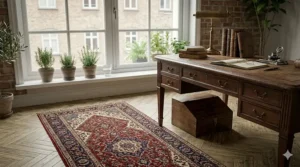
How to Choose Affordable Oriental Rugs Under £150 for Your UK Home
The sheer variety available on Amazon.co.uk can feel overwhelming. Rather than defaulting to whichever has the prettiest picture, work through this decision framework systematically:
Size First, Always: British rooms run smaller than American equivalents. Measure your space carefully, accounting for furniture placement. A rug should either sit entirely under furniture (larger rugs in open-plan spaces) or entirely in front (smaller accent rugs). The awkward middle ground — rug half-under sofa — looks messy and creates trip hazards. For standard UK living rooms (roughly 4m x 5m), 160 x 230 cm represents a versatile size. Terraced house hallways typically need 60-80 cm width.
Traffic Level Determines Material: High-traffic areas (hallways, family room entrances, under dining tables) demand polypropylene or polyester construction. These synthetics handle abuse better than wool at this price point. Low-traffic areas (bedrooms, formal dining rooms used weekly) can accommodate less durable materials if you prefer natural fibres.
Colour Strategy for British Conditions: Our climate means mud. Accept this fundamental truth and choose accordingly. Solid light colours (cream, white, light grey) look stunning in magazines but show every speck of British dirt within a week. Multi-coloured patterns with darker tones (burgundy, navy, deep green) hide grime between cleanings. The distressed aesthetic excels here — intentional irregularities camouflage new ones.
Washing Machine Reality Check: If you’re buying specifically for machine washability, verify your washing machine capacity. A 160 x 230 cm rug occupies considerable space when wet. UK washing machines typically range from 6-9 kg capacity; larger rugs might require a launderette’s commercial machines. Also confirm the rug fits through your machine’s door when bunched — I’ve heard nightmare stories of buyers unable to actually wash rugs they purchased for washability.
Pile Height Matters in British Homes: Our room heights average 2.4m (8 feet), lower than North American builds. High-pile shag rugs that look cosy in photography can make British rooms feel cave-like. For standard ceiling heights, stick to low or medium pile (5-10mm). Save high pile for exceptionally spacious or high-ceilinged properties.
Non-Slip Requirements: British homes feature more hard flooring — laminate, engineered wood, tile — than their European counterparts. Rugs on hard surfaces require gripping, non-negotiable. Some include this; most don’t. Budget an extra £15-£25 for quality underlay or gripper pads. The Royal Society for the Prevention of Accidents (RoSPA) reports thousands of UK hospital admissions annually from slips and trips, with loose rugs being a significant contributor — don’t become a statistic.
Common Mistakes When Buying Affordable Oriental Rugs in the UK
Ignoring British Room Proportions
The most frequent error I encounter: UK buyers selecting rug sizes based on foreign design advice. American interior design blogs recommend 8′ x 10′ (roughly 240 x 300 cm) as “standard living room size.” For a typical British semi-detached lounge measuring 4m x 4.5m, that’s catastrophically oversized — the rug would touch all four walls, overwhelming rather than anchoring the space. Our homes demand modesty in rug dimensions.
Overlooking Door Clearance
British internal doors typically provide 15-20mm clearance over flooring. Pile height exceeding 8-10mm creates problems — doors catch, scrape, potentially damage the rug. Always check pile height against your door clearances, particularly for bedroom and bathroom placements. This seems obvious until you’ve spent £100 on a beautiful rug that prevents your bedroom door from opening properly.
Trusting Amazon Photographs Blindly
Rug photography represents perhaps the most unreliable category on Amazon. Professional lighting, colour grading, and styling create images that bear only passing resemblance to the physical product arriving at your door. What appears deep crimson red in the listing might be pale pink in reality. Always read UK reviewer comments about colour accuracy and examine customer-uploaded photographs — these provide more reliable expectations.
Forgetting British Electrical Standards
This applies specifically to heated rugs or rugs with electrical components (rare in this price bracket, but they exist). Products designed for US markets operate on 120V; UK electrical supply provides 230V. Plugging in the wrong voltage can damage products or create fire hazards. Always verify UKCA marking (UK Conformity Assessed) or confirm UK voltage compatibility before purchasing anything electrical. The UK government mandates UKCA marking for products sold in England, Scotland, and Wales.
Skipping the Underlay
Roughly 60% of rug buyers skip purchasing proper underlay, assuming the rug itself provides sufficient grip or cushioning. This proves false within days when the rug shifts, bunches, or creates trip hazards on laminate flooring. Quality underlay costs £15-£30 but extends rug life significantly by reducing wear and preventing movement. Consider it mandatory, not optional.
Seasonal Misjudgment
British homes experience dramatic seasonal changes in both temperature and humidity. A rug perfect for summer — light colours, thin pile, breathable — might feel inadequate come November when you’re desperate for warmth and cosiness. If purchasing during summer, mentally simulate how the rug will feel during a grey February. The cosy Persian rug that seems excessive in July will feel perfectly pitched during winter.
Maintaining Your Rug in British Conditions: The Reality Check
British weather presents unique challenges for textile maintenance. Our persistent damp, frequent rain, and muddy gardens mean rugs near entrances face constant assault. Here’s what actually works:
Weekly Maintenance: Vacuum using suction only (no rotating brush bars that can damage pile). For runners in hallways, vacuum both sides weekly — British mud travels both directions. Give particular attention to edges where dirt accumulates.
Spot Cleaning Strategy: Act immediately when spills occur. Blot (never rub) with clean white cloth and cold water. For British favourites like tea, coffee, and red wine, a solution of white vinegar and water (1:2 ratio) works remarkably well. The crucial word is “blot” — rubbing spreads stains and damages pile. For machine-washable rugs, spot cleaning might seem unnecessary, but treating stains before full washing improves results.
Full Washing (Machine-Washable Rugs): Every 2-3 months for high-traffic placements, 4-6 months for low-traffic areas. Use 30°C delicate cycle, mild detergent (no bleach, no fabric softener which degrades water resistance). Hang to dry outdoors in rare British sunshine, or use a clothes airer indoors. Never tumble dry unless specifically approved — heat can shrink polyester and damage backing.
Professional Cleaning (Traditional Rugs): For non-washable rugs under £150, professional cleaning represents a significant cost relative to the rug’s value. At £60-£100 per clean, you might reasonably consider replacing budget rugs every 3-4 years rather than maintaining them indefinitely. This sounds wasteful, but the arithmetic favours replacement when the rug itself costs £80.
Dealing with Damp: British homes, particularly older properties, can feel perpetually damp November through March. The English Heritage organisation provides guidance on managing moisture in period properties, which applies equally to rug care. Never place rugs on damp flooring — they’ll develop mould or that musty smell that never quite disappears. Ensure adequate ventilation, use dehumidifiers if necessary, and periodically lift rugs to check the underside for moisture or mould development. Prevention vastly easier than cure.
Storage Considerations: If rotating rugs seasonally or storing during renovations, roll them (never fold — creases become permanent) with the pile facing inward. Store in a dry location wrapped in breathable fabric (old sheets work perfectly). Avoid plastic bags which trap moisture and encourage mould. Include moth deterrents if storing wool rugs; synthetics don’t require this.
Budget Traditional Rugs: When to Upgrade Beyond £150
The £150 price point represents a sweet spot for machine-made Oriental-style rugs, but it’s worth understanding what you gain by spending more. This helps you decide whether £150 is your ceiling or just a stepping stone.
£150-£300 Range: You’re primarily buying larger dimensions and potentially better construction density. A £250 rug isn’t fundamentally different from a £100 rug in materials or manufacturing, but it might measure 240 x 340 cm versus 160 x 230 cm, or feature tighter weaving that increases durability. For specific large-space needs, this makes sense. For most British living rooms, it’s unnecessary.
£300-£600 Range: This is where you encounter entry-level hand-knotted pieces, typically from India or Pakistan rather than Iran. Construction quality improves notably — you’re getting actual knots rather than power-looming. Expect wool rather than synthetic materials, natural dyes instead of synthetic. These rugs develop genuine patina over decades rather than manufactured distressing. If you’re furnishing a period property long-term and want heirloom potential, this category merits consideration.
£600+ Range: Authentic hand-knotted Persian and Turkish rugs from renowned regions. These transcend mere floor coverings and become collectible artworks. Completely unnecessary for most UK households, but if rug collecting interests you as a hobby, this is where it begins.
For the vast majority of British buyers, the under-£150 category provides everything actually needed: decent aesthetics, functional durability, and practical maintenance. The higher categories offer diminishing returns unless you’re pursuing specific goals (collecting, period property authenticity, heirloom quality).
Frequently Asked Questions
❓ Are Oriental rugs suitable for UK homes with underfloor heating?
❓ Can I use affordable Oriental rugs in British bathrooms and kitchens?
❓ How do I prevent Oriental rugs fading in British sunlight?
❓ Are Oriental rugs under £150 safe for homes with pets and children?
❓ Do I need to declare Oriental rugs for UK home insurance purposes?
Conclusion: Your Perfect Oriental Rug Awaits
The transformation of the affordable rug market over the past five years has been nothing short of remarkable for UK buyers. Where once Oriental aesthetics demanded either serious expenditure or acceptance of obviously cheap knock-offs, we now enjoy genuine middle ground: machine-made pieces that capture traditional designs whilst embracing modern practicality.
For British households navigating our unique challenges — compact spaces, persistent damp, muddy gardens, high-traffic living — the affordable Oriental rugs under £150 category delivers precisely what’s needed. You’re not buying heirlooms or investment pieces; you’re acquiring functional home textiles that happen to look rather good whilst protecting your flooring and warming your space.
The sweet spot sits around £70-£95 for a decent 120 x 170 cm rug suitable for a standard British living room or bedroom. At this price point, you access machine washability, adequate pile density for comfort, and sufficient pattern complexity to create visual interest. Going cheaper risks disappointment; spending more delivers diminishing returns unless you’re chasing specific dimensions or upgrading to hand-knotted construction.
The Amazon.co.uk marketplace provides remarkable access to these products, but success demands realistic expectations. You’re not getting hand-knotted Tabriz quality for £80. You are getting decent Turkish or Chinese power-looming that will serve your household well for 5-10 years with proper care. That represents excellent value in the context of British home furnishing costs.
As you browse options, remember the fundamentals: measure your space carefully, choose colours that hide British dirt, verify washing machine compatibility if that’s your priority, and budget for proper underlay. Avoid the common mistakes outlined above, and you’ll find affordable Oriental rugs that genuinely enhance your home whilst surviving the reality of British living.
The perfect rug for your space exists somewhere in that vast Amazon.co.uk catalogue. Armed with this guide, you’re now equipped to find it.
Recommended for You
- Best Persian Rugs UK: 7 Stunning Picks for 2026
- 7 Best Affordable Wool Rugs Under £200 | 2026 UK
- 7 Best New Zealand Wool Rugs UK 2026: Premium Quality Guide
Disclaimer: This article contains affiliate links. As an Amazon Associate, I earn from qualifying purchases. If you purchase products through these links, we may earn a small commission at no additional cost to you.
✨ Found this helpful? Share it with your mates! 💬🤗
