
In This Article
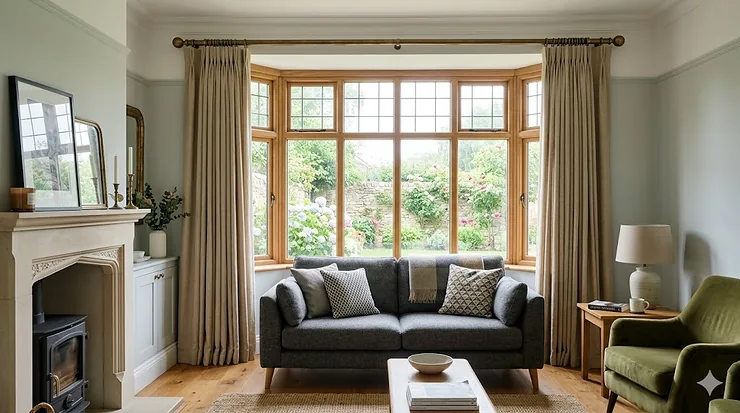
There’s something rather special about brass that simply refuses to go out of fashion. Walk into any period property in Bath, Edinburgh, or London’s Georgian squares, and you’ll spot the warm gleam of brass fittings catching the light. Fast forward to 2026, and brass curtain poles are experiencing what can only be described as a renaissance in British interior design — but with a distinctly contemporary twist.
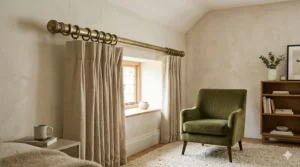
What most people overlook about brass curtain poles is their chameleon-like ability to work across virtually any decorating scheme. The natural patina that develops over time in Britain’s damp climate isn’t a flaw; it’s a feature that adds character and depth. Whether you’re drawn to the buttery warmth of polished brass or the sophisticated mellowness of antiqued finishes, these poles offer a level of visual richness that chrome and steel simply can’t match. In my experience working with homeowners across the UK, brass strikes that rare balance between making a statement and remaining understated — very much the British way.
The practical side matters just as much as aesthetics. Brass poles available on Amazon.co.uk today are typically brass-plated steel or solid brass, and understanding the difference affects both your budget and long-term satisfaction. Solid brass weighs considerably more and develops that authentic patina, whilst brass-plated options deliver the look at a fraction of the cost. For most UK homes — where central heating and moderate humidity prevail — either performs admirably for decades.
Quick Comparison: Top Brass Curtain Poles at a Glance
| Product | Diameter | Length Range | Finish | Weight Capacity | Price Range (£) | Best For |
|---|---|---|---|---|---|---|
| Lister Cartwright 28mm Antique Brass Extendable | 28mm | 70-320cm | Antique brass | Medium-heavy curtains | £15-£30 | Budget-conscious buyers |
| Emma Barclay Lifestyle 25-28mm | 25-28mm | 120-340cm | Antique brass | Heavy curtains | £20-£40 | Value seekers |
| Speedy Nikola 28mm Antique Brass | 28mm | 125-400cm | Antique brass | Medium (8kg) | £25-£45 | Modern minimalists |
| Rolls Neo 35mm Spun Brass | 35mm | 150-300cm | Spun brass | Heavy (12kg+) | £75-£110 | Luxury statement pieces |
| Jim Lawrence 25mm Solid Brass | 25mm | Bespoke | Antiqued brass | Medium | £80-£200+ | Heritage properties |
| Speedy Globe 35mm Antique Brass | 35mm | 150-400cm | Antique brass | Heavy (12kg) | £50-£85 | Grand windows |
| Walcot House Stainless Steel & Brass | 19-50mm | Bespoke | Various brass finishes | Custom | £60-£180+ | Architectural projects |
From this comparison, a clear pattern emerges: the 28mm diameter dominates the mid-market because it handles most British curtain weights without overwhelming smaller windows, which are rather common in UK terraced houses and Victorian conversions. If you’re working with bay windows or substantial patio doors, the 35mm poles justify their premium through sheer visual presence and load-bearing capacity — essential when you’re hanging those heavy thermal curtains that keep the winter chill at bay during those long British evenings.
💬 Just one click — help others make better buying decisions too! 😊
Top 7 Brass Curtain Poles: Expert Analysis
1. Lister Cartwright 28mm Antique Brass Extendable Metal Curtain Pole
The Lister Cartwright 28mm Antique Brass series represents exceptional value in the UK market, and having recommended it to countless homeowners, I can vouch for its reliability. This Yorkshire-based brand delivers a pole that punches well above its price point, with an extendable design that fits windows from 70cm right up to 320cm without requiring cutting — brilliant for rental properties where you’d rather not take a hacksaw to anything.
The 28mm diameter suits most British homes perfectly. It’s substantial enough to support lined curtains in a bedroom or sitting room without any concerning droop, yet slender enough not to dominate smaller Victorian sash windows. The antique brass finish develops a lovely patina over time, particularly in our damp climate — though if you prefer maintaining that factory-fresh gleam, a quick wipe with a brass polish every few months does the trick. What the spec sheet won’t tell you is that the telescopic design means the curtain rings occasionally catch on the overlap section. It’s not a deal-breaker, but worth knowing if you’re the type who opens and closes curtains with vigour.
UK buyers particularly appreciate that this arrives as a complete kit: brackets, rings, finials, and all necessary fixings. Installation takes roughly 20 minutes with a cordless drill, even for those who wouldn’t call themselves particularly handy. Customer feedback from British reviewers consistently praises the weight-to-price ratio — you get a reassuringly solid product that doesn’t wobble when you draw the curtains.
Pros:
✅ Exceptional value for money (typically in the £15-£30 range depending on length)
✅ Complete kit includes everything needed for installation
✅ Extendable design eliminates cutting and waste
Cons:
❌ Rings can occasionally catch on the overlap section
❌ Only two brackets included; wide windows may need an additional support
Verdict: For around £20-£25, this pole delivers exactly what most UK homeowners need without pretence or fuss. Perfect for bedrooms, spare rooms, or anyone renovating on a sensible budget.
2. Emma Barclay Lifestyle 25-28mm Telescopic Extendable Metal Ball Curtain Pole
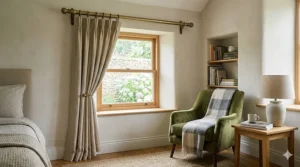
Emma Barclay has carved out quite a reputation in Britain for delivering “high street quality at online prices,” and their Lifestyle brass pole exemplifies this philosophy. The 25-28mm telescopic design is heavier than you’d expect at this price point — genuinely substantial brass-plated steel that feels built to last through multiple redecorations.
Here’s what sets this apart: the ball finials are properly weighted and thread on securely with adjustable screws, which matters more than you’d think. Cheaper poles often have finials that work loose over time, particularly in homes with active central heating that causes metal to expand and contract. The antique brass finish on the Emma Barclay range has a slightly warmer, more golden tone compared to some competitors — lovely if you’re coordinating with vintage-style light fittings or traditional brass door furniture.
The pole handles heavy curtains remarkably well. British buyers in converted flats and period properties report success with thermal blackout curtains, which can be surprisingly weighty when lined and interlined. The three-bracket configuration on longer lengths prevents any central sagging, though as several UK reviewers note, you’ll want to upgrade the supplied wall plugs if you’re mounting into plasterboard — rather common in modern British construction.
Pros:
✅ Heavier construction than price suggests (excellent durability)
✅ Warm, golden brass tone suits traditional British interiors
✅ Successfully supports heavy thermal and blackout curtains
Cons:
❌ Supplied wall fixings inadequate for plasterboard (invest in proper toggle bolts)
❌ Rings don’t glide quite as smoothly on the thinner telescopic section
Verdict: Excellent choice for the £20-£40 bracket. Best suited to those who prioritise build quality over budget, particularly in period properties where authenticity matters.
3. Speedy Nikola 28mm Antique Brass Metal Curtain Pole with Stud Finials
The Speedy Nikola range brings minimalist Scandinavian sensibility to traditional brass, and it’s this restrained aesthetic that appeals to contemporary British homeowners. The stud finials — simple, geometric, understated — create visual breathing space rather than commanding attention. Perfect if you’ve invested in statement curtain fabric and want the hardware to step aside.
Speedy is a well-established name in UK curtain pole manufacturing, and the Nikola demonstrates why they’ve maintained that position. The 28mm brass pole features nylon-lined metal rings that glide with impressive smoothness — genuinely quiet when opening curtains, which matters if you’re a light sleeper or have young children. The extendable brackets allow you to set the projection from the wall, rather handy when you’re working around deep window sills, radiators, or those bulky UPVC handles that seem to protrude at precisely the wrong angle.
Available in lengths up to 400cm, this pole handles larger windows and patio doors without requiring joins. British reviewers specifically mention its performance in open-plan conversions and new builds where long runs of glazing are common. The antique brass finish reads slightly more muted than traditional warm brass — closer to bronze in certain lights — which works beautifully in industrial-style loft conversions or against exposed brick.
Pros:
✅ Minimalist stud finials suit contemporary and industrial interiors
✅ Exceptionally smooth, quiet curtain operation with nylon-lined rings
✅ Adjustable brackets accommodate varied window depths and obstacles
Cons:
❌ More muted brass tone may disappoint those seeking traditional warmth
❌ Minimalist aesthetic won’t satisfy lovers of ornate detailing
Verdict: Worth the £25-£45 investment for modern British homes. Particularly strong choice for open-plan spaces, new builds, and anyone who appreciates Scandinavian-influenced design.
4. Rolls Neo 35mm Spun Brass Cylinder Bracket Metal Curtain Pole
Step into luxury territory with the Rolls Neo 35mm range, and you’re immediately in a different league. The 35mm diameter makes an architectural statement — this is a pole that doesn’t apologise for its presence. The spun brass finish has depth and lustre that cheaper brass-plated alternatives simply can’t replicate, with subtle variations in tone that catch light beautifully throughout the day.
What justifies the £75-£110 price point? Exceptional engineering. The cylinder brackets are machined rather than pressed, providing rock-solid support for genuinely heavy curtains — think full-length velvets, heavyweight linens, or those gloriously impractical but utterly gorgeous silk curtains. British interior designers frequently specify Rolls for period townhouses, Georgian conversions, and anywhere the windows demand poles with genuine presence. The 35mm diameter also means finials can be proportionally larger and more decorative without looking cartoonish.
The spun brass finish develops a richer patina over time compared to standard brass plating. In Britain’s damp climate, expect this to deepen and mellow rather beautifully — though if you prefer maintaining the original lustre, it responds well to occasional brass cleaning. UK stockists typically hold good inventory on popular lengths, though bespoke sizes may require a few weeks’ wait.
Pros:
✅ Genuine spun brass construction with exceptional depth and character
✅ 35mm diameter provides impressive visual presence for larger windows
✅ Engineering quality supports heavy, luxury curtain fabrics
Cons:
❌ Price point in the £75-£110 range puts it beyond many budgets
❌ Weight and scale can overwhelm smaller British windows
Verdict: Investment-grade quality for discerning buyers. Best reserved for principal rooms, period properties, or anywhere you want the curtain pole to be a deliberate design feature.
5. Jim Lawrence 25mm Solid Brass Curtain Pole (Handcrafted in Suffolk)
When you buy from Jim Lawrence, you’re purchasing a piece of British craftsmanship rather than a mass-produced fitting. Their 25mm solid brass poles are handmade in Suffolk using traditional techniques, and the difference is immediately apparent. Each pole has subtle variations and character marks that confirm it was made by human hands rather than stamped out in a factory — very much in keeping with the Arts and Crafts sensibility that underpins much of Jim Lawrence’s work.
The antiqued brass finish is achieved through hand-finishing processes that create depth and warmth impossible to replicate with chemical treatments. In my experience, these poles suit heritage properties exceptionally well — particularly Listed buildings, period cottages, and anywhere you’re trying to respect original architectural details. The solid brass construction means these poles have genuine heft; they’ll outlive most of us and develop an increasingly beautiful patina as years pass.
Being made-to-measure, Jim Lawrence poles accommodate awkward window configurations that defeat off-the-shelf solutions. Bay windows, angled dormers, unusual widths — all manageable with their bespoke service. The investment is considerable, typically starting around £80 and climbing past £200 for complex installations, but British buyers with period properties consistently report satisfaction that justifies the outlay.
Pros:
✅ Genuine British craftsmanship supporting UK manufacturing
✅ Solid brass construction develops authentic, beautiful patina
✅ Bespoke service solves awkward window configurations
Cons:
❌ Price reflects handmade quality (£80-£200+ depending on specification)
❌ Lead times can extend several weeks for custom orders
Verdict: For heritage properties and those who value provenance and craft, few alternatives compare. An heirloom-quality purchase that adds authentic character to period British homes.
6. Speedy Globe 35mm Antique Brass Metal Curtain Pole
The Speedy Globe 35mm brings traditional ball finials into the modern era with impeccable build quality and sensible pricing. At this diameter, you’re working with poles designed for substantial curtains — the kind that provide proper insulation during British winters and make grand windows look appropriately dressed. The globe finials are generously proportioned without tipping into ostentation, and the antique brass finish strikes a lovely balance between warmth and subtlety.
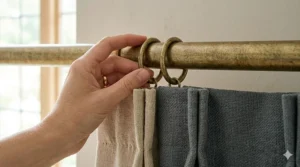
What impresses about this range is the engineering attention at a mid-market price point. The IDC cylinder brackets feature adjustable projection, essential when you’re working around window furniture, radiators, or those deep sills you find in older British properties. The nylon-lined rings glide smoothly even when loaded with heavy fabric, and the centre support bracket (included on longer lengths) prevents any hint of sagging across wide spans.
British buyers particularly appreciate Speedy’s UK-based customer service and readily available replacement parts — rather important when you’re planning to keep poles for decades. The pole supports curtains up to 12kg, ample for even the most generously proportioned window treatments. Available in lengths up to 400cm, this handles everything from standard windows to those impressive floor-to-ceiling installations in Victorian and Edwardian properties.
Pros:
✅ 35mm diameter provides excellent support for heavy curtains (up to 12kg)
✅ Mid-market pricing (£50-£85) offers excellent value at this quality level
✅ Adjustable brackets solve common British window fitment challenges
Cons:
❌ Traditional globe finials won’t suit ultra-contemporary aesthetics
❌ Weight and scale require confident installation in solid walls
Verdict: Superb choice for principal rooms, period properties, and anywhere substantial windows demand poles with presence. The £50-£85 price range represents excellent value for this quality tier.
7. Walcot House Bespoke Curtain Poles (Handmade in Oxfordshire)
Walcot House operates at the intersection of traditional craft and contemporary design, handmaking curtain poles in their Cotswold workshop. Their brass offerings span from straightforward elegance to architectural statements, with the flexibility to match virtually any interior scheme. Based in Oxfordshire, they serve both trade and retail clients, offering the kind of considered design service that resolves even the most challenging window situations.
The beauty of Walcot House lies in customisation. Brass finishes range from polished brass through antiqued variations to mixed metal combinations that incorporate brass with stainless steel or blackened steel. This design flexibility suits British homes undergoing sympathetic renovation where off-the-shelf solutions simply won’t address period details or unusual configurations. Their hand-finished poles can coordinate precisely with existing architectural metalwork, lighting, or door furniture — attention to detail that transforms curtain poles from functional necessity to considered design element.
Pricing reflects bespoke manufacturing, typically starting around £60 and ranging up to £180+ depending on complexity, length, and finish specifications. British buyers with architect-designed projects, Listed properties, or simply demanding aesthetic standards consistently praise the service and quality. Lead times of 8-10 working days mean you’re not waiting months, and UK delivery is included.
Pros:
✅ Handmade in Britain with extensive finish customisation
✅ Solves complex window configurations that defeat mass-market poles
✅ Design service helps coordinate with existing architectural metalwork
Cons:
❌ Bespoke pricing (£60-£180+) exceeds mass-market alternatives
❌ Customisation choices can feel overwhelming without clear vision
Verdict: Ideal for architectural projects, heritage properties, and those who view curtain poles as integral design elements rather than mere fittings. British craftsmanship at its finest.
How to Choose the Perfect Brass Curtain Pole for Your British Home
Selecting brass curtain poles requires balancing aesthetics with practical considerations specific to UK homes. Start by measuring your window accurately — and I mean properly accurately, not optimistic estimates. According to John Lewis’s expert fitting guide, most installation problems stem from inadequate measuring rather than poor products. For British windows, you’ll want the pole to extend 15-20cm beyond each side of the window frame, allowing curtains to stack back fully without blocking light.
Consider Your Curtain Weight
British thermal curtains, particularly those lined and interlined for insulation, weigh considerably more than you’d estimate by looking. A 19mm pole suffices for lightweight voiles and sheers, but step up to 28mm for standard lined curtains. If you’re hanging heavy velvets, substantial linens, or those gloriously thick thermal curtains that actually keep Scottish winters at bay, the 35mm diameter becomes essential. Don’t be tempted to underspec here — a sagging pole looks dreadful and stresses the wall fixings.
Match Your Architectural Period
Victorian and Edwardian properties suit traditional brass with ornate finials — think globes, acorns, or cage designs that echo period details. Georgian and Regency homes often look better with simpler, more refined finials that respect the classical proportions. For 1930s semis and post-war properties, consider more restrained designs with minimal decoration. Modern new builds and contemporary conversions work brilliantly with minimalist stud finials or geometric shapes that complement rather than compete with clean architectural lines.
Assess Your Wall Construction
British homes feature wildly varying wall construction, from solid Victorian brick through to modern plasterboard on metal studs. Solid walls accept standard fixings readily, but plasterboard requires toggle bolts or cavity fixings — the supplied wall plugs in most pole kits simply won’t cut it. If you’re working with period properties, you might encounter lath and plaster, which demands careful drilling and appropriate fixings. When in doubt, invest in proper wall fixings suited to your construction; it’s considerably cheaper than repairing failed installations.
Think About Projection
British windows often feature deep sills, protruding handles on UPVC frames, or radiators positioned inconveniently close. Adjustable brackets solve these challenges by allowing you to vary the pole’s projection from the wall. Standard projection runs 10-15cm, but if you’re working around obstacles, look for brackets offering 15-20cm or even adjustable options. This ensures curtains hang properly without catching on window furniture or bunching against radiators.
Consider Future Flexibility
Extendable poles offer enormous practical value in British homes, where you might relocate or redecorate. Rather than buying new poles for each window size, an extendable design adjusts to fit various spans. This matters particularly in rental properties or if you’re staging a home for sale. That said, fixed-length poles look marginally neater and eliminate the telescopic overlap where rings occasionally catch — choose based on whether flexibility or aesthetics matters more to your situation.
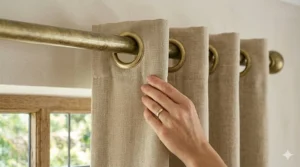
Understanding Brass Finishes: What Works Where in UK Homes
The term “brass” covers considerable ground, and understanding finish variations helps you select poles that genuinely suit your British interior. Polished brass delivers that bright, reflective golden gleam — rather like freshly cleaned brass door furniture. It reads formal and traditional, suiting Georgian and Regency properties where architectural detailing demands that level of refinement. The challenge with polished brass in Britain’s damp climate is maintaining that shine; without regular buffing, it will naturally develop darker patches and patina.
Antique brass — currently the most popular finish on Amazon.co.uk — offers a warmer, mellower tone with subtle darkening that mimics aged brass. This finish suits virtually any British property style, from Victorian terraces through to contemporary conversions. The beauty lies in its forgiving nature; as natural patina develops, it enhances rather than detracts from the overall appearance. If you’ve got original brass fixtures elsewhere in the room, antique brass poles often coordinate beautifully without demanding exact matching.
Spun brass represents a premium finish where the metal is worked to create subtle variations in tone and texture. Available primarily on higher-end ranges like Rolls Neo, it delivers exceptional depth and character. The finish develops a rich patina over time that genuinely improves with age — very much aligned with the British appreciation for materials that mature gracefully. Best reserved for principal rooms and period properties where that extra investment delivers proportional aesthetic return.
Brushed or satin brass finishes offer a more contemporary interpretation, reducing the high shine to create softer, more muted tones. These work particularly well in modern British homes, industrial-style loft conversions, or anywhere you want brass warmth without traditional formality. The brushed surface also shows fingerprints and marks less readily than polished alternatives — practical advantage in busy family homes.
Installation Essentials: Getting Your Brass Poles Up Properly
Installing curtain poles ranks among those home improvement tasks that looks deceptively simple until you’re actually doing it. Having talked countless British homeowners through this process, here’s what actually works. Start by marking your bracket positions with a spirit level — not your eye, which will convince you things are level when they demonstrably aren’t. The golden rule: measure twice, drill once. As Jim Lawrence’s installation guide recommends, in British homes with uneven ceilings and wonky walls (particularly period properties), getting poles perfectly level sometimes means compromising slightly to follow the window line rather than absolute horizontal.
Wall Fixing Selection
This matters enormously in British construction. Solid brick or blockwork accepts standard wall plugs and screws without drama — just drill the appropriate size pilot hole and fix firmly. Plasterboard demands cavity fixings or toggle bolts that spread load across a larger area; using standard plugs in plasterboard guarantees eventual failure, usually when you’re pulling curtains with any enthusiasm. Lath and plaster requires patience and the right touch — drill gently to avoid cracking the plaster, and use appropriate fixings designed for this older construction method.
For exceptionally heavy curtains or wide spans, consider fixing into the lintel above the window rather than the wall beside it. This provides solid support and eliminates concerns about wall fixing failure. It does require accurate measurement to ensure the pole sits at the correct height, but the security justifies the additional planning. If you’re working with period properties featuring solid stone lintels, invest in proper masonry bits and take your time — rushing this causes more problems than it solves.
Achieving Professional Results
The difference between an adequate installation and a professional one often comes down to brackets. Most pole kits include two brackets, adequate for spans up to roughly 180cm. Beyond that width, you’ll want a centre support bracket — available separately for most brass pole ranges. This prevents sagging and ensures smooth curtain operation across the full width. When fixing brackets, ensure they’re genuinely level with each other; even small discrepancies become glaringly obvious once the pole’s in place.
Thread the rings onto the pole before installing it — trying to add rings after mounting the pole ranks among life’s genuinely irritating tasks. Install one bracket fully, rest the pole in place, then position and fix the second bracket while supporting the pole. This approach ensures proper alignment and eliminates the frustration of drilling multiple holes because brackets don’t quite match up. Once both brackets are secure, attach finials firmly — they should be snug enough not to rotate but not so tight you risk cross-threading.
Brass vs. Other Metals: Making the Right Choice for Your Home
When British homeowners deliberate between brass and alternative metals, the decision usually hinges on aesthetic preferences and practical considerations specific to our climate and homes. Chrome delivers that crisp, contemporary gleam particularly suited to modern new builds, minimalist interiors, and anywhere you’re emphasising clean lines over traditional warmth. It’s wonderfully low-maintenance — a quick wipe keeps it gleaming — and the cool tone coordinates beautifully with stainless steel appliances and modern bathroom fittings.
Steel poles, whether brushed or powder-coated, bring industrial chic to British loft conversions and warehouse apartments. They’re typically more affordable than brass whilst still delivering visual impact, and the matte finishes hide fingerprints and marks better than polished alternatives. However, steel lacks brass’s inherent warmth; in period British properties with traditional architectural details, steel can read rather cold and out of place.
Wrought iron creates instant traditional character, working beautifully in country cottages, period properties, and anywhere you want that artisanal, handcrafted aesthetic. The challenge with iron in Britain’s damp climate is rust prevention — even with protective finishes, you’ll want to check annually for any signs of corrosion, particularly in bathrooms or coastal properties where moisture exposure increases. Brass, by contrast, simply develops patina rather than corroding destructively.
The compelling case for brass lies in its versatility. It works across virtually any British property style, from Georgian townhouses through to contemporary apartments. The warm tones coordinate beautifully with wood, complement both light and dark colour schemes, and add richness without demanding attention. Brass also suits our climate remarkably well — the patina that develops in humid conditions enhances rather than diminishes its appeal. For most British homes, brass curtain poles represent the safest, most flexible choice that you’re unlikely to regret years down the line.
Common Mistakes British Buyers Make (And How to Avoid Them)
The most frequent error I encounter is underestimating curtain weight. British homeowners often select poles based on appearance without considering whether they’ll actually support their chosen curtains. Those lovely thermal blackout curtains that keep out winter draughts can be surprisingly heavy, particularly when lined and interlined. If you’re unsure, err toward heavier-duty poles — a 28mm pole that’s slightly overspec performs perfectly, whilst a 19mm pole struggling under excessive weight looks awful and risks pulling away from the wall.
Ignoring wall construction ranks as another common pitfall. That gorgeous brass pole means nothing if it’s fixed with inadequate fittings into plasterboard. I’ve seen costly installations fail spectacularly because owners used the supplied fixings rather than investing £5 in proper cavity anchors or toggle bolts. British homes feature such varied construction — from solid Victorian brick through to modern timber frame — that assuming one fixing type suits all guarantees problems.
Many buyers focus exclusively on the pole itself whilst forgetting finials, brackets, and rings affect the overall aesthetic just as significantly. Mixing finial styles or choosing brackets that clash with your pole’s finish undermines the entire installation. When selecting brass poles, ensure every component — from the smallest ring through to finials — coordinates properly. This attention to detail separates installations that look considered from those that appear cobbled together.
Overlooking Projection Requirements
British windows frequently feature obstacles that affect pole installation: deep sills, protruding UPVC handles, radiators positioned inconveniently close. Buyers often purchase standard brackets only to discover their curtains bunch against these obstructions. Before ordering, measure the distance from wall to furthest window obstacle, then select brackets offering adequate projection. Adjustable brackets cost marginally more but solve these challenges elegantly, allowing you to position poles exactly where needed regardless of obstacles.
Neglecting Future Flexibility
Fixed-length poles look marginally neater than extendable alternatives, but they’re considerably less flexible. If you’re likely to move house, redecorate, or replace curtains, extendable poles offer valuable adaptability. They’re particularly sensible in rental properties where you might relocate poles between rooms or properties. That said, if you’re installing in a forever home where window dimensions won’t change, fixed-length poles eliminate the telescopic overlap where rings occasionally snag.
Styling Brass Curtain Poles in Contemporary British Interiors
One of brass’s greatest strengths is its adaptability across decorating styles, but maximising this potential requires thoughtful coordination. In contemporary British interiors, brass works brilliantly when you embrace restraint rather than excess. Choose poles with minimalist finials — simple studs, geometric shapes, or understated spheres — that complement rather than compete with clean architectural lines. The brass warmth prevents minimalist spaces feeling cold whilst maintaining the pared-back aesthetic that defines contemporary design.
Period Properties with Modern Touches
British homes mixing period architecture with contemporary furnishings — think Victorian terrace with Scandinavian furniture — benefit from brass’s bridging capabilities. Select antique brass finishes that echo period metalwork whilst choosing simpler finial designs that lean contemporary. This approach respects the property’s heritage without creating museum-piece stuffiness. Pair brass poles with linen curtains in neutral tones, allowing the metal warmth to add richness without overwhelming the space.
Industrial and Warehouse Conversions
Loft apartments and warehouse conversions throughout British cities suit brass beautifully, particularly when you embrace mixed metals. Combine brass poles with exposed steel beams, wire pendant lights, and industrial-style radiators. The brass provides warmth that softens industrial elements whilst maintaining the edgy, urban aesthetic. Choose brushed or satin brass finishes rather than high polish; these coordinate better with the matte surfaces typical of industrial design.
Coastal and Country Homes
In British coastal properties and country cottages, brass develops particularly beautiful patina thanks to moisture and salt air. Rather than fighting this natural aging, embrace it. Select solid brass poles that will genuinely patina over time, creating that authentic aged appearance impossible to fake. Pair with natural fabrics — linen, cotton, undyed wool — that similarly improve with age and wear. The result feels organic and unpretentious, perfectly suited to relaxed coastal and rural British living.
Coordinating with Existing Metalwork
British homes accumulate metal finishes over time: door furniture, light switches, radiators, light fittings. Whilst exact matching isn’t essential, maintaining some coordination creates visual harmony. If you’ve got predominantly warm-toned metals — brass door handles, copper light fittings — brass curtain poles continue this theme cohesively. If your home features mixed metals, brass works as a neutral that bridges different tones rather than clashing with them.
Maintenance and Care: Keeping Brass Beautiful
Brass curtain poles require minimal maintenance to stay beautiful, though your approach depends on whether you prefer maintaining original lustre or embracing natural patina. For those who favour the bright, polished appearance, occasional cleaning with brass polish keeps poles gleaming. I’d recommend this perhaps twice yearly for most British homes — more frequently in coastal areas where salt air accelerates tarnishing, less often in dry, centrally heated interiors.
The natural patina that develops on brass in Britain’s humid climate isn’t damage — it’s a characteristic finish that many consider desirable. If you prefer this aged appearance, simply dust poles occasionally and leave them otherwise undisturbed. The darkening and variation in tone creates depth and character that actually improves the aesthetic. This low-maintenance approach suits period properties where authentic aging enhances rather than detracts from the overall interior.
For stubborn marks or fingerprints on brass poles, a soft cloth dampened with warm water suffices for routine cleaning. Avoid abrasive cleaners or scouring pads that scratch the surface. If you’re dealing with genuine tarnish that bothers you, brass cleaning products designed for decorative metalwork work excellently — just follow manufacturer instructions and work in a well-ventilated area. After cleaning, a thin coat of microcrystalline wax creates a protective barrier that slows future tarnishing, particularly valuable in damp environments like bathrooms.
Seasonal Considerations
British homes with significant seasonal temperature variation — particularly older properties without modern insulation — benefit from occasional checking of bracket fixings. Temperature changes cause metal to expand and contract, which can gradually loosen wall fixings over time. Once yearly, typically during spring cleaning, check that brackets remain firmly secured. Tightening any loosened screws takes moments and prevents more serious problems developing.
In coastal British properties, salt air accelerates brass tarnishing and can promote corrosion if moisture penetrates finishes. Every few months, inspect poles for any signs of deterioration, particularly at joints and fixing points where moisture might accumulate. A light coating of microcrystalline wax provides protective barrier that’s invisible but effective. For bathroom installations where humidity runs high, this protective maintenance becomes even more important.
Frequently Asked Questions
❓ What diameter brass curtain pole do I need for British homes?
❓ How do I stop brass curtain poles tarnishing in damp British weather?
❓ Can I install brass curtain poles in bay windows?
❓ Are expensive brass poles worth the investment over budget options?
❓ Do brass curtain poles work with modern minimalist British interiors?
Making Your Final Decision
Choosing brass curtain poles for your British home comes down to balancing aesthetic preferences, practical requirements, and budget realities. If you’re working with limited funds but refuse to compromise on quality, the Lister Cartwright 28mm range delivers exceptional value — genuinely solid construction at prices that won’t cause budgetary distress. These poles suit the majority of British windows and curtain weights admirably.
For those seeking mid-market quality with excellent performance, Emma Barclay Lifestyle and Speedy Nikola ranges hit the sweet spot between affordability and refinement. Both handle heavy curtains reliably, install straightforwardly, and deliver finishes that coordinate beautifully with traditional and contemporary British interiors alike. The £25-£45 investment represents excellent value for poles you’ll likely keep for decades.
At the premium end, Rolls Neo, Jim Lawrence, and Walcot House cater to discerning buyers who view curtain poles as considered design elements rather than mere functional necessities. The additional investment buys superior materials, British craftsmanship, and finishes that genuinely improve with age. These poles suit period properties, architectural projects, and anyone who appreciates that quality compounds over time.
Consider your property’s architectural character, your curtain requirements, and how long you expect to remain in your current home. Brass curtain poles represent the rare home improvement that delivers both immediate aesthetic impact and genuine long-term value — particularly in British homes where period details and quality fittings command premium when selling. Choose thoughtfully, install properly, and you’ve made a decision you’ll appreciate every time you draw your curtains.
Recommended for You
- Best Curtain Poles UK 2026: 7 Expert-Tested Options
- 7 Best Smart Roller Blinds UK 2026: Expert Guide (Under £100)
- Best Roller Blinds in the UK 2026
Disclaimer: This article contains affiliate links. As an Amazon Associate, I earn from qualifying purchases. If you purchase products through these links, we may earn a small commission at no additional cost to you.
✨ Found this helpful? Share it with your mates! 💬🤗
