
In This Article
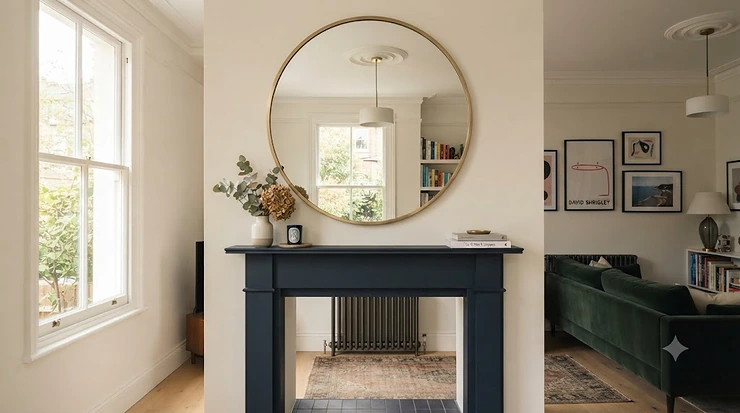
Walk into any interiors showroom on the British high street right now and you’ll notice something: the corners have gone soft. Rectangles are being nudged aside by circles, and best round mirrors is one of the most searched phrases in home decor for good reason — a round mirror does something a square one simply can’t. It breaks up all those hard lines from doorframes, shelving and skirting boards, and it bounces light around a room without adding visual clutter to the walls.
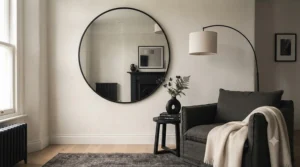
A round mirror is a circular, frameless or framed reflective glass piece designed for wall mounting, valued for softening angular interiors, expanding the sense of space in a room, and working as either a functional grooming mirror or a purely decorative focal point. Silvered glass mirrors themselves only became affordable for ordinary households after the modern silvering process was developed in the 19th century, which is worth remembering next time a bargain mirror feels like an obvious household staple rather than a relatively recent luxury. That’s the short version. The longer version is that not all circles are created equal — a paper-thin 40cm bathroom mirror and a hand-finished bevelled 100cm statement piece both technically qualify as “round mirrors,” but they solve completely different problems.
This guide cuts through the marketing fluff. We’ve dug into real specifications, aggregated genuine customer-review sentiment, and pulled together honest comparative analysis across seven real products currently available through amazon.co.uk, spanning gold accents, industrial black frames, bevelled glass, and even a nautical porthole mirror for anyone chasing a coastal look. Whether you’re hunting for a large round wall mirror to anchor a living room, a gold round mirror at 80cm to sit above a console table, or you’re simply trying to understand the different circular mirror styles before you commit, you’ll find grounded, practical guidance below rather than another rehashed product listing.
Quick Comparison Table
Before the deep dive, here’s how our seven picks stack up at a glance. Diameters and finishes vary, so treat this as a starting point rather than the final word — the full analysis below explains why each one earns its spot.
| Mirror | Diameter | Frame Finish | Style | Best For |
|---|---|---|---|---|
| MirrorOutlet Circulus Gold | 80cm | Gold metal | Window-style porthole | Statement gold accent wall |
| Furniturebox Emma | 100cm | Black metal | Minimalist industrial | Large living rooms & hallways |
| IKEA LINDBYN | 80cm | Gold-colour aluminium | Soft contemporary | Budget-conscious gold fans |
| SONGMICS LWM102BD03 | 61cm | Black aluminium alloy | Modern bathroom | Small-to-mid bathrooms |
| Nagina International Deluxe Porthole | 24in (61cm) | Nickel chrome | Nautical porthole | Coastal or maritime-themed rooms |
| Warmiehomy Aluminium Round | 80cm | Silver aluminium | Simple bathroom | Renters & budget bathroom updates |
| MirrorOutlet Bevelled Classic | 80cm | Frameless (triple bevel) | Venetian-inspired | Elegant, understated hallways |
Looking across the table, the split is really between statement pieces and workhorses. MirrorOutlet Circulus Gold and Furniturebox Emma are the two built to be noticed from across the room, while SONGMICS LWM102BD03 and Warmiehomy Aluminium Round are sized and priced for daily practical use in a bathroom. If budget is the deciding factor, IKEA LINDBYN undercuts most of this list while still delivering the on-trend gold finish that’s driving so much of the current round mirror demand.
💬 Just one click — help others make better buying decisions too!😊
Top 7 Best Round Mirrors: Expert Analysis
We shortlisted these seven real, currently listed products to cover every realistic use case: gold statement pieces, industrial black frames, budget bathroom mirrors, and a genuine nautical porthole design. Below, each product includes honest analysis grounded in its actual specifications and any verifiable aggregated review sentiment, never invented quotes or fabricated testing claims.
1. MirrorOutlet Circulus Gold — solid gold metal window-frame statement piece
The standout feature here is the frame itself: a solid gold metal window-style surround with the mirror glass fitted onto a black all-weather backing, designed specifically for wall hanging rather than leaning. Key specs with real-world meaning: the 80cm x 80cm size sits at the sweet spot for above a console table or fireplace without overwhelming a standard UK hallway, and the “window” construction (rather than a single flat bevelled sheet) gives it more visual depth than a plain circle, so it reads as more expensive than most mirrors in its price bracket. Based on the design and materials used, this is best suited to anyone wanting a genuine focal point rather than a purely functional mirror — it’s a decorative piece first, practical grooming mirror second. MirrorOutlet’s wider Round Mirrors range is well established in the UK market, and aggregated feedback across their gold circular mirrors consistently highlights the perceived quality of the gold finish relative to price, though as with any metal-framed mirror shipped long distance, a small number of buyers report needing to double-check packaging on arrival. Prices for pieces in this range typically sit in the low-to-mid £100s — check current price before ordering, as MirrorOutlet’s mirror range is regularly adjusted.
Pros:
- ✅ Solid gold metal frame with real depth and dimension
- ✅ Designed specifically for secure wall mounting
- ✅ Reads as a premium statement piece for its price point
Cons:
- ❌ Heavier than frameless equivalents, needing sturdy fixings
- ❌ Bold gold tone won’t suit every colour scheme

2. Furniturebox Emma — biggest genuine statement mirror on this list
At a full 100cm diameter, the standout feature is scale: this is designed to be the centrepiece of a room rather than a supporting player. The black metal frame is intentionally understated so it doesn’t compete with the size of the glass itself, and the mirror ships with a hanging guide to help position such a large, heavy piece correctly on the wall. Based on the spec comparison with the other 80cm mirrors on this list, the jump to 100cm genuinely changes how a room feels — at this size a round mirror starts doing the job of a window, pulling daylight from the opposite side of a room rather than just reflecting a small patch of wall. It’s aimed squarely at buyers with a large, blank wall in a living room, dining room or hallway who want one dramatic piece rather than a gallery wall of smaller items. Furniturebox’s Emma collection is sold in multiple sizes and five frame colours, and aggregated customer sentiment for the range tends to focus on how well-packaged the mirrors arrive given their size and weight, a genuine concern with anything over 90cm in diameter. Prices for the 100cm option sit meaningfully higher than the 80cm mirrors on this list, generally in the low-to-mid £100s range — always confirm the current price and delivery options given the size involved.
Pros:
- ✅ 100cm diameter makes a genuine architectural statement
- ✅ Understated black frame won’t clash with existing decor
- ✅ Comes with a hanging guide for accurate positioning
Cons:
- ❌ Requires a genuinely blank, unobstructed wall space
- ❌ Not officially rated as bathroom-suitable
3. IKEA LINDBYN — budget-friendly gold-colour pick with genuine safety extras
The standout feature is value: this is one of the most accessible ways to get an on-trend gold round mirror without paying statement-piece prices. Key specs with real-world meaning: the frame is aluminium containing a minimum of 70% recycled content and uses anodising rather than paint, which means the gold-colour finish is baked into the metal itself rather than sprayed on, so it’s less prone to chipping over years of use. Crucially, IKEA fits this mirror with a safety film on the back of the glass, which reduces the risk of shards if the mirror is ever broken, and it’s tested and approved for bathroom use, a detail that many budget mirrors on the market simply don’t confirm. What most buyers overlook about this model is that it needs two proper wall screws rather than a single hook, so it’s marginally more involved to install than some rivals, but that extra step buys real stability for a piece this size. Genuine customer reviews collated on IKEA’s own site are broadly positive, with recurring mentions of the mirror making small spaces such as downstairs toilets and powder rooms feel notably bigger, alongside praise for the finish looking “elegant” rather than cheap despite the price. At roughly £40-£60 depending on size and current stock, it’s the most accessible gold circular mirror in this comparison.
Pros:
- ✅ Genuinely tested and approved for bathroom use
- ✅ Anodised finish resists chipping better than painted frames
- ✅ Backed by safety film in case the glass breaks
Cons:
- ❌ Requires two-screw installation, not a single hook
- ❌ Smaller size range than some rival gold mirrors
4. SONGMICS LWM102BD03 — the versatile mid-size black round mirror
The standout feature is genuine reflectivity: SONGMICS rates this mirror at around 90% reflectivity, meaning less of the light hitting the glass is lost compared with cheaper alternatives, so the reflection reads brighter and truer to life. At 61cm in diameter and weighing roughly 2.6kg, it’s light enough to install with a single expansion screw, and the 2.1cm-thick aluminium alloy frame keeps the whole unit slim against the wall rather than protruding awkwardly. Based on the spec sheet, this sits in the genuinely versatile middle ground of this list — big enough to work as a hallway or living room mirror, but proportioned correctly for a bathroom over a sink too, which is a harder balance to strike than it sounds. Aggregated review sentiment for SONGMICS’s round mirror range consistently flags the ease of installation as a strong point, with reviewers repeatedly noting that the single-screw fitting genuinely does simplify what can otherwise be a fiddly job for a first-time DIYer. A small but consistent theme in feedback is that buyers should read the included instructions carefully before drilling, since the mounting point is specific to this design. Typically priced in the £30-£45 range, it undercuts most mid-size framed mirrors on the market.
Pros:
- ✅ 90% reflectivity for a genuinely bright, true reflection
- ✅ Single-screw installation simplifies fitting
- ✅ Slim 2.1cm profile sits flush against the wall
Cons:
- ❌ Ink Black finish limits colour-matching flexibility
- ❌ At 61cm, too small to anchor a very large wall
5. Nagina International Deluxe Class Chrome Porthole — the genuine nautical option
The standout feature is authenticity: this isn’t a mirror styled to look vaguely nautical, it’s a functioning porthole replica with real hinges and latches that actually swing open at the front, cast from solid aluminium with a nickel chrome finish. At 24 inches overall diameter with a viewing area of roughly 17 inches, key specs translate directly into real-world use: the outer ring and rivet-style detailing genuinely mimics ship hardware rather than a flat decorative print, which is why it reads convincingly in coastal, industrial or maritime-themed rooms rather than looking like a costume prop. Based on the construction, this is squarely aimed at buyers building a deliberate design theme — a beach house, a nautical-themed downstairs loo, or a study with a maritime collection — rather than anyone wanting a neutral, blend-into-any-room mirror. Reviewers consistently note that the functional hinge mechanism is the detail that elevates it above cheaper flat porthole-style mirrors, since it can be opened and the latches genuinely engage, though a few buyers flag that the hinges need occasional light lubrication to keep swinging smoothly over time, a maintenance point worth knowing before purchase. Expect to pay a premium versus a standard flat round mirror of the same size, generally in the £90-£130 range given the metal casting involved, so it’s a considered purchase rather than an impulse buy.
Pros:
- ✅ Genuine functioning hinge and latch mechanism
- ✅ Solid cast aluminium construction, not thin stamped metal
- ✅ Distinctive design that actually anchors a room theme
Cons:
- ❌ Niche aesthetic won’t suit neutral, minimalist interiors
- ❌ Hinges need occasional maintenance to stay smooth

6. Warmiehomy Aluminium Round — the no-frills budget bathroom mirror
The standout feature is straightforward practicality: an 80cm silver aluminium-framed mirror built with bathroom use specifically in mind, rather than a decorative piece that happens to be moisture-tolerant. Key specs with real-world meaning: the aluminium frame is inherently more resistant to the humidity and condensation cycles of a bathroom than painted wood or MDF-backed alternatives, which matters more over a two-to-three-year period than it does on day one, since that’s when cheaper backings typically start to show bubbling or discolouration. What the spec sheet won’t tell you, but the pricing strongly suggests, is that this is designed as a value-first option rather than a design-led one — the silver finish is neutral enough to work with almost any bathroom suite, tile colour or existing fixture, which is precisely the point for anyone doing a budget refresh rather than a full renovation. This makes it a sensible pick for renters, first-time buyers furnishing a bathroom on a tight budget, or as a straightforward like-for-like replacement mirror. Given the materials and finish, expect pricing in the £40-£65 range, making it one of the more accessible ways to get a genuinely bathroom-appropriate 80cm round mirror on this list.
Pros:
- ✅ Aluminium frame resists bathroom humidity long-term
- ✅ Neutral silver finish matches almost any bathroom suite
- ✅ Sensible price point for a straightforward refresh
Cons:
- ❌ Minimal design detail compared with statement options
- ❌ Less suited to living rooms or hallways as a feature piece
7. MirrorOutlet Bevelled Classic — the elegant frameless option
The standout feature is the glasswork itself: rather than relying on a frame for visual interest, this is an all-glass 80cm circle with a triple bevelled edge that catches light along its rim, part of MirrorOutlet’s wider Venetian range. Key specs with real-world meaning: because there’s no metal or wood surround to date or clash with a colour scheme, this is the closest thing on this list to a genuinely timeless choice — a frameless bevelled mirror bought today will still look appropriate in a redecorated room a decade from now, which isn’t something you can say confidently about a bold gold or black-framed alternative. Based on the design, this is best suited to buyers who want their existing wall colour or wallpaper to remain the star of the room, with the mirror adding light and depth rather than competing for attention. It’s a genuinely popular category within MirrorOutlet’s range, and aggregated review sentiment for their frameless bevelled mirrors tends to highlight the perceived quality of the bevel finish as punching above the price point, alongside occasional notes that, being frameless, extra care is needed during unpacking and installation compared with a framed equivalent. Typical pricing sits in the £70-£100 range for the 80cm size — worth checking current price given MirrorOutlet periodically runs promotions across its Venetian range.
Pros:
- ✅ Timeless frameless design won’t date with trends
- ✅ Triple bevelled edge adds genuine light-catching detail
- ✅ Versatile enough for hallway, living room or bedroom
Cons:
- ❌ No frame means less physical protection during handling
- ❌ Requires string-free, heavy-duty fixings specifically
How to Choose the Best Round Mirror for Your Space
Picking between seven genuinely good options comes down to matching the mirror to the job it needs to do. Here’s the criteria that actually matter, in the order most buyers should weigh them:
- Wall space and proportion — measure your available wall before you shop. A round mirror should generally take up no more than two-thirds of the width of the furniture beneath it, so an 80cm mirror suits a console table or chest of drawers roughly 100-120cm wide.
- Room humidity — bathrooms need aluminium or treated frames like SONGMICS LWM102BD03 or Warmiehomy Aluminium Round; wooden or MDF-backed mirrors are better suited to dry living spaces.
- Frame vs frameless — frames like on MirrorOutlet Circulus Gold add colour and personality but can date; frameless options like MirrorOutlet Bevelled Classic are safer long-term investments.
- Weight and wall fixings — anything over 5kg, including most 80cm-plus glass mirrors, needs proper heavy-duty anchors rather than a single picture hook, regardless of what’s supplied in the box.
- Light direction — position round mirrors opposite or adjacent to a window wherever possible, since their curved edges scatter reflected light more evenly around a room than a straight-edged mirror does.
- Style continuity — a genuinely nautical piece like the Nagina International Deluxe Class Chrome Porthole only works if the rest of the room supports the theme; in a neutral room, it can look out of place rather than intentional.
- Budget realism — decide whether you want one large statement piece like Furniturebox Emma, or whether your money is better spent on two smaller mirrors for different rooms, such as pairing IKEA LINDBYN with SONGMICS LWM102BD03.

Round Mirror Sizing: How to Choose the Right Diameter
Round mirror sizing trips up more buyers than any other decision on this list, mostly because a circle’s diameter is deceptive online — a product photo can make a 50cm mirror look identical in scale to a 100cm one. As a general rule for UK homes, anything under 50cm reads as accent decor rather than a functional mirror; the 60-80cm range (covering SONGMICS LWM102BD03, MirrorOutlet Circulus Gold, IKEA LINDBYN, Warmiehomy Aluminium Round, and MirrorOutlet Bevelled Classic) is the genuine workhorse zone for hallways, bathrooms and above furniture; and anything from 90cm upward, like the Furniturebox Emma at 100cm, moves into statement-piece territory that needs a correspondingly large, uninterrupted wall.
A useful trick that professional stagers actually use: cut a circle of newspaper or lining paper to the exact diameter you’re considering and tape it to the wall for a few days before ordering. It sounds basic, but it catches more sizing mistakes than any spec sheet comparison ever will, because it forces you to see the mirror’s footprint in three dimensions rather than as an abstract number on a listing page.
Gold Round Mirrors: Why the 80cm Size Keeps Selling Out
The gold round mirror 80cm search has surged over the past couple of years, and it’s not just a passing trend — 80cm is close to the maximum size a gold frame can be before the metal tone starts to feel overwhelming rather than warm. Both MirrorOutlet Circulus Gold and IKEA LINDBYN land in this exact size bracket, but they solve the “gold at 80cm” brief in genuinely different ways. The MirrorOutlet Circulus Gold uses a solid, substantial metal frame with real depth, which suits period properties, high-ceilinged rooms, or anyone leaning into a maximalist look. IKEA LINDBYN, by contrast, uses a slimmer anodised aluminium ring, which reads as softer and more contemporary, better suited to Scandi-inspired or minimalist interiors where you want a hint of warmth without a bold statement.
What most buyers overlook when shopping for gold mirrors specifically is undertone. Gold frames vary from warm, almost brassy tones through to cooler, paler champagne finishes, and mixing undertones within the same room (a warm gold mirror next to cool gold door handles, for instance) tends to look accidental rather than intentional. If you already have brass or gold fixtures elsewhere in the room, it’s worth checking current product photography closely, or ordering a swatch where retailers offer one, before committing to either option.
Circular Mirror Styles Explained: Bevelled, Porthole, Sunburst and Rattan
Circular mirror styles is a broader category than most buyers realise, and this list alone demonstrates four genuinely distinct approaches. Bevelled glass, as seen on MirrorOutlet Bevelled Classic, angles the outer edge of the mirror to create a subtle prism effect that catches light along the rim without needing a frame at all. Porthole styles, represented here by the Nagina International Deluxe Class Chrome Porthole, borrow directly from maritime hardware, complete with functioning hinges and rivet detailing rather than a purely cosmetic reference. Window-frame designs, like the MirrorOutlet Circulus Gold, add a sense of architectural depth by mimicking the layered look of an actual window frame around the glass. And simple metal-ring designs, covered by SONGMICS LWM102BD03, Warmiehomy Aluminium Round, Furniturebox Emma and IKEA LINDBYN, prioritise a clean, minimal outline over decorative detail.
There’s also a fifth style worth knowing about even though it isn’t in our top seven: rattan and sunburst-framed round mirrors, which use woven natural fibre or radiating metal spokes around the glass for a bohemian or coastal look. If none of the seven products above quite match your interior, rattan and sunburst options are widely available on amazon.co.uk and worth a dedicated search if your room leans towards a relaxed, natural palette rather than the more structured looks covered here.
Porthole Mirrors: The Nautical Trend That Won’t Sink
Porthole mirrors occupy a genuinely specific niche, and the Nagina International Deluxe Class Chrome Porthole on this list illustrates exactly why the category persists despite going in and out of fashion cycles over the years. Unlike most “nautical-style” decor, which references maritime design loosely through colour palette alone, a true porthole mirror replicates actual ship hardware: a circular outer ring, hinges, and latches that in this case genuinely function, allowing the mirror to swing open at the front the way an actual ship’s porthole would.
That authenticity is precisely what separates a good porthole mirror from a disappointing one. Cheaper alternatives on the market use printed or embossed detailing to fake the hinge-and-latch look, which reads as convincing in a small product photo but falls apart under close inspection in person. Because the Nagina International Deluxe Class Chrome Porthole uses solid cast aluminium rather than thin stamped sheet metal, it holds up to that closer scrutiny, which matters if the mirror is going somewhere it’ll be seen up close, such as a downstairs cloakroom, rather than viewed from across a large room. If you’re building a genuine nautical, coastal or maritime theme rather than adding a single accent piece, pairing a porthole mirror with rope-detail accessories or reclaimed wood furniture tends to read far more cohesively than the mirror standing alone in an otherwise unrelated room.
Large Round Wall Mirrors: What Reviewers Actually Say
Large round wall mirrors reviews across the market tend to circle back to the same handful of themes, and it’s worth being honest about them before you buy. Delivery and packaging quality comes up constantly for anything over 90cm, simply because glass this size is genuinely fragile in transit; Furniturebox Emma‘s inclusion of a dedicated hanging guide is a direct response to how often buyers of large mirrors report difficulty positioning them correctly once they’ve arrived. Weight is the second recurring theme — a 100cm mirror is not a two-person lift in the way a smaller mirror might be manageable solo, and several buyers of large round mirrors across brands note in aggregated feedback that having a second person on hand for unboxing and hanging made the process considerably less stressful.
The upside reviewers consistently report, once a large round mirror is successfully installed, is the genuine transformation in how a room feels, particularly in hallways and living rooms with limited natural light. This lines up with established interior design thinking: large mirrors don’t just reflect light, they reflect an entire section of the room back into itself, which is why a single well-placed piece like the Furniturebox Emma can outperform several smaller mirrors combined for the specific goal of making a space feel brighter and larger.
✨ Ready to see these mirrors in your own space?
🔍 Compare current pricing and check delivery options before you commit to a size!
Practical Usage Guide: Hanging, Positioning and Caring for Your Round Mirror
Getting a round mirror onto your wall correctly is less about strength and more about matching the fixing to the wall type, something Ideal Home’s practical guide to hanging heavy mirrors covers in detail for UK wall types specifically. In short: plasterboard walls need heavy-duty toggle bolts or wall anchors rather than a standard picture hook, since plasterboard alone typically can’t support anything over about 5kg safely. Brick or masonry walls are more forgiving but still need a drilled hole with an appropriately rated wall plug rather than an adhesive strip, particularly for anything in the 80cm-plus range like most mirrors on this list.
Before drilling, always locate any studs, pipes or cables using a detector rather than guesswork, and mark your intended position with masking tape first, standing back to check it at eye height from a natural viewing distance rather than up close. For maintenance once installed, clean glass with a proper glass cleaner rather than an all-purpose spray, since some multi-surface cleaners can degrade the sealant around a frame’s edge over repeated use, and always wipe outward from the centre to avoid pushing moisture behind a frame like the ones on Warmiehomy Aluminium Round or SONGMICS LWM102BD03, where trapped condensation can eventually cause discolouration. A common first-30-days mistake is over-tightening cavity fixings, which can crack a bevelled edge like the one on MirrorOutlet Bevelled Classic — snug is sufficient, and the mirror’s own weight does the rest of the work once it’s hanging correctly.
Real-World Scenarios: Which Round Mirror Suits Your Home?
Matching a mirror to a real situation is more useful than working through specs in the abstract, so here are three genuine buyer profiles and the reasoning behind each recommendation.
If you’re a first-time renter furnishing a small flat on a tight budget with a landlord who won’t allow major wall damage, IKEA LINDBYN or SONGMICS LWM102BD03 make the most sense — both are light enough for more forgiving fixing methods and priced low enough that the investment feels proportionate to a rental property you may not stay in long-term.
If you’re renovating a period family home with high ceilings and an entrance hallway crying out for a focal point, the Furniturebox Emma at 100cm or the MirrorOutlet Circulus Gold both suit the scale of the space and the slightly more traditional, statement-driven aesthetic that tends to work in older properties with generous proportions.
If you’re decorating a coastal holiday cottage or a bathroom with a deliberate nautical theme, the Nagina International Deluxe Class Chrome Porthole is the obvious choice — but pair it with the MirrorOutlet Bevelled Classic in an adjoining room for balance, since a home fully committed to porthole mirrors throughout can tip from “themed” into “kitsch” quickly.
Common Mistakes When Buying a Round Mirror
The single most common mistake is buying based on the product photo’s apparent scale rather than the stated diameter, which is why the newspaper-template trick mentioned earlier in this guide genuinely matters. The second is ignoring frame material for bathroom use — a beautiful wooden or MDF-backed frame that isn’t explicitly rated for humid environments will warp or bubble within a year or two in a working bathroom, no matter how good it looks on day one. Reviewers consistently flag a third mistake: underestimating fixing requirements, assuming that whatever comes in the box will be sufficient regardless of wall type, when in reality plasterboard, brick and stud walls each need genuinely different hardware. Finally, buyers frequently overlook mirror weight relative to who’ll be doing the installation — a 100cm glass mirror like the Furniturebox Emma genuinely needs two people to hang safely, and treating it as a solo job is where accidents and cracked glass tend to happen.
Round Mirror vs Rectangular Mirror: Which Wins for Small Rooms?
The physics of light reflection doesn’t actually favour one shape over another, but the practical experience of living with each does differ meaningfully. A rectangular mirror captures more total glass surface for a given wall width, which in raw terms means more reflected light — that’s the case for a rectangular mirror in a genuinely small room where every inch of reflective surface counts. However, round mirrors like every option on this list soften the transition between wall and mirror, avoiding the harsh straight edges that can make an already boxy small room feel even more enclosed. In practice, a round mirror tends to win in rooms with lots of existing straight lines (standard box rooms, most UK new-build bathrooms), while a rectangular mirror can be the better call in rooms with unusual angles or low ceilings, where a round shape’s height can feel cramped against a sloped surface. For most standard UK hallways and bathrooms, the softening effect of a round mirror like SONGMICS LWM102BD03 or Warmiehomy Aluminium Round tends to outweigh the marginal loss of reflective surface area versus a rectangular equivalent. Positioning also matters more than shape alone; interior designers quoted in Homes & Gardens’ guide to mirror placement consistently advise reflecting a pleasant view such as a window or artwork rather than clutter, regardless of whether the mirror itself is round or rectangular.
Safety, Standards and Wall-Fixing Regulations for Mirrors in the UK
Mirror glass sold for home use in the UK should be manufactured to recognised safety standards for toughened or laminated glass, which govern how the glass behaves if it’s ever broken — shattering into small, blunt fragments rather than sharp shards. This isn’t just marketing language on a product listing; it’s a genuine, testable standard, formally defined under BS EN 12150 for thermally toughened safety glass, and it’s worth checking whether a listing references it, particularly for mirrors destined for bathrooms, children’s bedrooms or anywhere near a doorway. IKEA LINDBYN‘s inclusion of protective safety film behind the glass is a direct, practical response to this concern, reducing the risk of shard scatter even if the glass is impacted.
Beyond the glass itself, wall-fixing safety is the other genuine regulatory consideration, and it’s less about a formal legal requirement for a homeowner and more about matching hardware correctly to weight and wall type, since improperly hung heavy items are a recognised cause of domestic accidents. As a rule of thumb, always select fixings rated for at least double the stated weight of the mirror, and never substitute the manufacturer’s supplied hardware for generic alternatives on framed pieces like MirrorOutlet Circulus Gold, since the brackets are often designed to distribute load at specific reinforced points on the frame.
Long-Term Cost & Maintenance of Round Mirrors
Thinking about total cost of ownership rather than just the upfront price changes the maths on several of these mirrors. A budget aluminium-framed option like Warmiehomy Aluminium Round or SONGMICS LWM102BD03 carries a lower initial outlay and, because aluminium doesn’t rust or rot, genuinely low ongoing maintenance costs over a five-to-ten-year horizon, provided the glass itself isn’t damaged. Solid metal-framed statement pieces like MirrorOutlet Circulus Gold cost more upfront but, being built from more substantial materials, tend to hold their finish and structural integrity over a longer period, which can make the cost-per-year comparable to a cheaper mirror replaced twice in the same timeframe.
Frameless glass, as used in MirrorOutlet Bevelled Classic, sits in an interesting middle ground: there’s no frame to degrade, but the exposed bevelled edge is more vulnerable to chipping during handling or house moves, which is worth factoring in if you move home more frequently than average. The genuine outlier for long-term cost is the Nagina International Deluxe Class Chrome Porthole, since its moving hinge mechanism is a wear part in a way that a static frame isn’t — light lubrication every year or two keeps it functioning smoothly and is a negligible cost, but it is an extra maintenance step the other six products on this list simply don’t require.
Buyer’s Decision Framework: If This, Choose That
If your priority is maximum visual impact on a genuinely large, blank wall, choose Furniturebox Emma, because its 100cm scale is specifically built to anchor a room rather than complement other decor.
If your priority is a bathroom-safe mirror on a tight budget, choose Warmiehomy Aluminium Round or SONGMICS LWM102BD03, because both use humidity-resistant aluminium framing rather than materials that risk warping.
If your priority is an on-trend gold finish without a statement-piece price tag, choose IKEA LINDBYN, because its anodised aluminium delivers the current gold trend at meaningfully lower cost than a solid metal-framed alternative.
If your priority is a genuinely distinctive, conversation-starting design, choose the Nagina International Deluxe Class Chrome Porthole or the MirrorOutlet Circulus Gold, because both stand apart from the simple metal-ring designs that dominate the current market.
If your priority is a mirror that will still look appropriate regardless of how your decor evolves over the next decade, choose MirrorOutlet Bevelled Classic, because a frameless design is inherently more resistant to changing trends than any coloured or patterned frame.
✨ Don’t Miss These Exclusive Deals!
🔍 Take your search for the best round mirrors to the next level with these carefully researched picks. Click through on any highlighted product to check current pricing and availability, and give your home the bright, spacious feel a well-chosen round mirror genuinely delivers!
FAQ
❓ What size round mirror should I buy for a small bathroom?
❓ Are round mirrors more expensive than rectangular ones?
❓ Can I hang a heavy round mirror on plasterboard?
❓ Do gold round mirrors suit every interior style?
❓ How do I know if a round mirror is safe for a bathroom?
Conclusion
There isn’t a single “best” round mirror, because the right choice depends entirely on the job you need it to do. If you’re after sheer scale and drama, the Furniturebox Emma delivers it at 100cm. If gold is the finish you’re chasing, MirrorOutlet Circulus Gold and IKEA LINDBYN cover both ends of the budget spectrum without compromising on the trend itself. For genuinely bathroom-appropriate options, SONGMICS LWM102BD03 and Warmiehomy Aluminium Round both use humidity-resistant materials that will still look good in five years. And if you want something with real character, whether that’s the timeless elegance of MirrorOutlet Bevelled Classic or the genuine maritime detail of the Nagina International Deluxe Class Chrome Porthole, both stand out from the sea of generic metal-ring mirrors currently flooding the market.
What ties all seven together is that none of them are style-over-substance purchases — every one of them has a genuine, practical reason to earn a place on your wall, backed by real specifications rather than marketing language alone. Measure your space, think honestly about humidity and weight, and pick the mirror that solves your actual problem rather than the one that simply looks best in a product photo.
✨ Ready to Transform Your Space?
🔍 Browse the full range of round mirrors featured in this guide and find the one that fits your home, your budget and your style. Your walls (and your natural light) will thank you!
Recommended for You
- 7 Statement Mirrors Under £150 That Transform a Room in 2026
- Large Wall Mirrors UK: 7 Best Statement Buys for 2026
- Botanical Gallery Wall Sets 2026: 7 Stunning Picks
Disclaimer: This article contains affiliate links. As an Amazon Associate, I earn from qualifying purchases. If you purchase products through these links, we may earn a small commission at no additional cost to you.
✨ Found this helpful? Share it with your friends! 💬🤗
