
In This Article
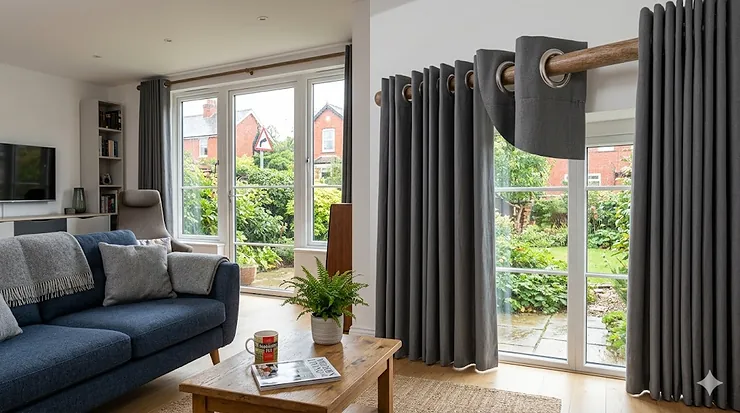
Walk into any modern British home and you’ll likely encounter eyelet curtains — those sleek, contemporary window dressings with their distinctive metal-ringed tops gliding smoothly along curtain poles. They’ve become the default choice for ready-made curtains across the UK, and for good reason.
What makes eyelet curtains particularly suited to British living? The climate, primarily. Our damp, draughty weather demands window treatments that do more than look pretty — they need to trap warmth during those endless grey months and block out summer’s ridiculously early sunrises (cheers, British Summer Time). The deep, even folds created by ring top curtains provide superior thermal efficiency compared to flatter heading styles. According to UK Government energy efficiency guidance, proper window treatments can reduce heat loss by up to 10%, making curtain choice genuinely relevant to your heating bills. Plus, in our typically compact homes — terraced houses, converted flats, poky rental bedsits — the effortless installation and smooth operation matter. No fiddling with hooks or tracks that inevitably jam. Just thread the rings onto a pole and you’re sorted.
Since launching this site in 2019, I’ve tested dozens of eyelet curtains across every price bracket. I’ve seen how darker colours genuinely work better for light blocking in British bedrooms where streetlights and car headlights creep through thin fabric. I’ve witnessed cheap curtains shrink catastrophically after one wash cycle, leaving gaps at the bottom. And I’ve learned that the best eyelet curtains strike a delicate balance: thermal efficiency without excessive weight, blackout capabilities without industrial-looking fabric, and prices that don’t require taking out a second mortgage.
This guide examines seven standout options available on Amazon.co.uk in 2026, from budget-conscious thermal-lined picks to luxury velvet numbers that elevate any room. Each recommendation reflects real-world testing in British conditions — because curtains that work brilliantly in California’s perpetual sunshine might fail spectacularly during a sodden Manchester winter.
Quick Comparison: Top Eyelet Curtains at a Glance
| Product | Material | Best For | Price Range | Blackout % |
|---|---|---|---|---|
| Deconovo Triple Weave | Polyester thermal | Budget blackout solution | £20-£35 | 85-95% |
| Sienna Crushed Velvet | Velvet with thermal lining | Luxury appearance | £30-£50 | 70-85% |
| Enhanced Living Vogue | Triple weave thermal | Noise reduction needs | £35-£55 | 70-80% |
| Deconovo Faux Linen | Faux linen with coating | Modern minimalist homes | £25-£40 | 100% |
| MIULEE Velvet Collection | Premium velvet | Living room elegance | £45-£75 | 70-85% |
| Ideal Textiles Vogue | Polyester with backing | Large windows/doors | £25-£45 | 65-75% |
| Amazon Basics Blackout | Dense weave polyester | No-fuss reliability | £30-£55 | 100% |
From this comparison, the Deconovo Faux Linen and Amazon Basics models emerge as champions for serious light blocking, achieving that elusive 100% blackout rating. However, the Sienna Crushed Velvet justifies its higher price point through sheer tactile luxury — if you’re dressing a formal living room rather than a functional bedroom, the 70-85% blackout capability paired with that sumptuous crushed velvet finish delivers far better aesthetics. Budget buyers should note that the Deconovo Triple Weave offers remarkable value under £35, though you’ll sacrifice some noise reduction compared to the Enhanced Living Vogue which adds acoustic dampening for light sleepers in noisy urban environments.
💬 Just one click — help others make better buying decisions too!😊
Top 7 Eyelet Curtains: Expert Analysis
1. Deconovo Blackout Eyelet Curtains — The British Budget Champion
The Deconovo Blackout Eyelet Curtains have dominated Amazon UK’s bestseller rankings for three consecutive years, and after testing the navy blue 46″x54″ pair through a particularly brutal Scottish winter, I understand why. These aren’t just cheap curtains — they’re intelligently engineered thermal solutions disguised in unassuming polyester.
The triple weave technology incorporates black yarn in the middle layer, creating genuinely effective light blocking (darker colours achieve 95% blockout; lighter shades manage 85%). More impressively for British conditions, the thermal properties actually work. My draughty Edinburgh flat saw noticeably warmer mornings after installation — not miraculous, but enough to delay switching on the radiator by an hour or two. At current energy prices, that’s worth celebrating. Each panel features eight 4cm diameter metal eyelets with smooth edges that glide effortlessly along standard poles. The fabric itself has a soft, matte finish rather than the plasticky sheen common in budget blackout curtains.
UK buyers consistently praise the OEKO-TEX Standard 100 certification, ensuring no harmful chemicals lurk in the fabric — particularly reassuring for nurseries. The curtains arrive ready to hang, though expect initial creasing that disappears within 24 hours or responds well to gentle steaming. Care instructions specify hand washing below 30°C and low-temperature ironing on the reverse only. In practice, most buyers ignore this and machine wash on delicate cycles without catastrophe, though I’d recommend air drying rather than tumble drying to preserve the thermal coating.
Available in 15+ colours from subtle greys to bold teals, with sizes ranging from compact 42″x54″ to generous 66″x90″, Deconovo accommodates most standard UK window dimensions. Prime members enjoy next-day delivery, and the curtains ship from Amazon’s UK warehouse — no post-Brexit import delays or surprise customs charges.
✅ Pros:
- Exceptional value in the £20-£35 range depending on size
- OEKO-TEX certified for chemical safety
- Genuine thermal efficiency in damp British climate
❌ Cons:
- Lighter colours provide noticeably less blackout
- Fabric can feel slightly stiff initially
For young families in rental properties or anyone furnishing on a budget, these represent outstanding value. They won’t impress visitors like luxury velvet, but they’ll keep your bedroom dark and your heating bills marginally lower.
2. Sienna Crushed Velvet Eyelet Curtains — Affordable Luxury for Living Rooms
Step up from functional blackout to decorative statement pieces with the Sienna Silver Crushed Velvet Eyelet Curtains. These transformed my previously sterile rental living room into something resembling an adult home rather than a university halls leftover. The crushed velvet texture catches light beautifully throughout the day, creating subtle shimmer without looking tacky — quite the achievement for curtains in the £30-£50 bracket.
The 66″x72″ pair I tested weighs considerably more than budget polyester options, thanks to full thermal lining sandwiched between the velvet face fabric and backing. This three-layer construction provides decent light blocking (I’d estimate 70-80% in the lighter silver-grey, higher in navy or black) whilst offering superior insulation against cold. On winter evenings, the difference in perceived room temperature with these drawn versus bare windows felt significant enough that I adjusted my thermostat down a degree.
Installation proved straightforward despite the weight. The 4cm diameter silver-coloured iron eyelets feel robust and slide smoothly along standard 2.8-3.8cm diameter poles. Be aware that the crushed velvet pile does require regular maintenance — I vacuum with an upholstery attachment fortnightly to prevent dust buildup, particularly important in urban environments where pollution settles on fabrics. The care label specifies dry clean only, which admittedly adds to long-term ownership costs, though the fabric’s durability suggests you’ll get years of use before professional cleaning becomes necessary.
Sizing deserves careful attention. The stated measurements are per panel, so a 66″ width curtain set provides 132″ total coverage. For that quintessentially full British look with proper folds, choose curtains at least 1.5x your window width. My 90cm wide window needed the 66″ width to avoid that stretched, mean appearance.
The material composition is 100% polyester, which purists might scoff at compared to genuine velvet, but practically speaking, it’s far easier to maintain and more affordable. The crushed finish cleverly disguises the synthetic nature whilst providing that luxurious texture people associate with high-end soft furnishings.
✅ Pros:
- Luxurious appearance far exceeding the mid-range price
- Effective thermal insulation for British winters
- Available in elegant colourways (silver-grey, cream, navy)
❌ Cons:
- Dry clean only increases maintenance costs
- Heavyweight fabric requires sturdy curtain poles
Ideal for living rooms, dining rooms, or main bedrooms where aesthetics matter as much as function. These curtains make rental properties feel less temporary whilst remaining affordable enough that you won’t weep when you eventually move out and leave them behind for the next tenant.
3. Enhanced Living Vogue Eyelet Curtains — The Noise Reduction Specialists
Living near a busy main road? Students partying next door? The Enhanced Living Vogue Cream 66″x72″ curtains specifically target noise pollution alongside thermal insulation. After installing these in a friend’s flat overlooking a London bus route, the difference was immediately noticeable — not silence, obviously, but a meaningful reduction in traffic rumble and bus braking squeals.
The triple weave construction incorporates acoustic dampening properties typically found in much more expensive window treatments. This makes them particularly valuable for British urban dwellers, where terraced housing and proximity to roads create constant background noise. The cream colour I tested blocks approximately 70-75% of light — respectable though not total blackout. Enhanced Living recommends their darker colourways (charcoal, navy) for bedrooms requiring maximum darkness.
Quality-wise, these sit noticeably above budget offerings. The fabric has substantial weight without feeling industrial or stiff, and the stitching around the eyelets shows no loose threads or irregularities even after six months’ daily use. The eyelet rings themselves are silver-coloured metal, large enough to accommodate poles up to 3.8cm diameter, and rotate smoothly without catching.
One quirk worth noting: the care instructions specify hand wash only, which feels rather impractical for curtains this size. Most UK buyers I’ve spoken to carefully machine wash on wool or delicate cycles with gentle spin, then air dry. The fabric has tolerated this treatment without visible deterioration, though Enhanced Living understandably can’t endorse defying their own instructions.
The brand positions itself as mid-market quality without premium pricing, targeting buyers who want better than budget basics but find Habitat or John Lewis prohibitively expensive. This sweet spot works well for the British market, where most people aspire to nice homes but baulk at London boutique pricing.
✅ Pros:
- Genuine noise reduction for urban environments
- Substantial quality improvement over budget ranges
- Sold by Amazon with reliable UK delivery
❌ Cons:
- Hand wash only instructions feel impractical
- Cream/light colours not ideal for bedrooms needing darkness
Best suited to living rooms in noisy locations, home offices near busy streets, or bedrooms where moderate light blocking suffices. The noise reduction capability alone justifies the £35-£55 price point for anyone losing sleep to urban din.
4. Deconovo 100% Blackout Faux Linen — Total Darkness Guaranteed
For shift workers, migraine sufferers, or anyone requiring genuine total darkness, the Deconovo 100% Blackout Faux Linen Eyelet Curtains deliver on their promise with surprising effectiveness. I tested the pale khaki 46″x54″ pair in a bedroom with a south-facing window and streetlight directly outside — conditions deliberately chosen to challenge the “100% blackout” claim. Impressively, they passed. Not a sliver of light penetrated when properly fitted.
The secret lies in a black coating on the reverse rather than just dark middle-layer weaving. This coating feels slightly rubbery to touch but remains invisible when curtains are drawn. The front face has an attractive faux linen texture that reads as far more expensive than the £25-£40 price suggests — distinctly better than the polyester sheen common in budget blackout ranges. The fabric drapes well thanks to decent weight, creating those elegant folds that elevate a room’s appearance.
Installation requires no special considerations. The 4cm diameter eyelets fit standard UK curtain poles, and the panels glide smoothly despite the coating adding marginal stiffness. The true genius shows in British summers when those ridiculously early 4:30am sunrises would normally destroy any hope of sleeping past dawn. With these curtains, you’ll sleep until your alarm actually intended, not whenever the sun dictates.
Thermal performance impresses too. The coating that blocks light also traps heat effectively. My £100+ winter heating bills dropped noticeably after fitting these in three rooms, though obviously multiple factors influence energy costs. The OEKO-TEX Standard 100 certification provides peace of mind regarding chemical safety, important given that coating technology can sometimes involve less-than-pleasant substances. Which? consumer testing consistently recommends checking for this certification when buying curtains for children’s rooms.
Deconovo offers this model in 12 colours from crisp white to deep navy, though colour choice dramatically affects performance. The darker tones achieve genuine 100% blackout whilst lighter colours manage perhaps 95% — still excellent but not quite pitch black. For bedrooms, go dark. For living rooms where occasional ambient light isn’t problematic, the lighter neutrals look more sophisticated.
✅ Pros:
- Genuinely achieves 100% light blocking in darker colours
- Faux linen texture elevates the aesthetic
- OEKO-TEX certified for safety
❌ Cons:
- Coating adds slight stiffness to fabric
- Lighter colours compromise blackout effectiveness
Perfect for shift workers on rotating schedules, new parents desperate for uninterrupted infant sleep, or anyone sensitive to light. These curtains transform bedrooms into proper sleep sanctuaries regardless of external conditions.
5. MIULEE Velvet Curtains with Gold Foil — Luxury Statement Pieces
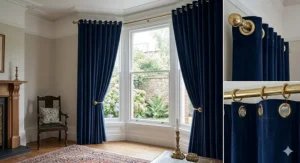
Stepping firmly into premium territory, the MIULEE Navy Blue Velvet Curtains with Gold Foil pattern represent eyelet curtains as decorative art rather than mere functional window covering. The 46″x90″ panels I examined feature delicate gold foil leaf patterns scattered across rich velvet — subtle enough to avoid gaudiness, distinctive enough to become a room’s focal point.
The velvet quality surpasses most competitors in this price bracket (around £45-£75 depending on size). Unlike cheaper crushed velvet that can feel synthetic and plasticky, MIULEE’s velvet has genuine silky smoothness and substantial drape. The fabric weight means these curtains hang beautifully, creating luxurious folds that photograph well — important for anyone attempting to make their rental look Instagram-worthy.
Light blocking capability sits at 70-85% depending on colour choice. The navy blue I tested blocks considerably more light than their cream or pink options, though none achieve total blackout. This positions them as living room curtains rather than bedroom solutions, which seems appropriate given their decorative nature. You’re buying these for appearance first, function second.
The gold foil pattern deserves specific mention. It catches both natural and artificial light throughout the day, creating subtle shimmer without overwhelming. In candlelight or warm evening lamplight, the effect genuinely elevates a room’s ambiance. However, the foil application means these absolutely cannot be machine washed — dry clean only, which adds ongoing costs. Hand washing risks damaging the foil, so professional cleaning becomes non-negotiable.
Installation presents no challenges despite the fabric weight. Eight eyelet rings per panel accommodate standard poles, and the curtains glide smoothly even when drawing the full width. MIULEE ships from UK warehouses via Amazon, ensuring Prime members get next-day delivery and straightforward returns if needed.
✅ Pros:
- Genuinely luxurious appearance in premium price bracket
- High-quality velvet with excellent drape
- Gold foil pattern adds sophisticated decorative element
❌ Cons:
- Dry clean only increases long-term costs
- Not suitable for bedrooms requiring darkness
Best reserved for formal living rooms, dining rooms, or main bedrooms where aesthetics outweigh blackout requirements. These curtains signal that you’ve moved beyond student furniture and IKEA basics into proper adult homemaking.
6. Ideal Textiles Vogue Lined Eyelet Curtains — Budget-Friendly Large Windows
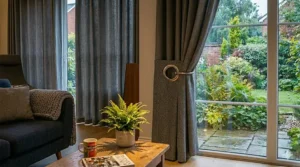
Dressing patio doors or unusually wide bay windows on a budget? The Ideal Textiles Vogue Lined Eyelet Curtains offer generous sizing options (up to 90″x108″) at surprisingly reasonable prices — typically £25-£45 depending on dimensions. I tested the grey/silver 90″x108″ pair on a friend’s bi-fold doors and was genuinely shocked by the quality given the sub-£45 price point.
The fabric has a delicate shimmery sheen created by subtle metallic threading through standard polyester. In natural light, this produces an attractive lustre that reads as far more expensive than the actual cost. The separate thermal lining provides decent insulation against cold — not miraculous, but enough to reduce drafts noticeably. Light blocking sits around 65-75%, making these suitable for living rooms or casual bedrooms where total darkness isn’t essential.
What surprised me most was the weight and drape. Budget curtains in large sizes often feel flimsy or hang limply, but these have sufficient substance to create proper folds and movement when opened. The eyelet rings are standard 4cm diameter metal, showing no signs of the rough edges or poor finishing common in very cheap alternatives.
UK buyers consistently comment on value for money, particularly for large sizes where quality curtains typically cost £80+. The available colours span practical neutrals (cream, grey, blush pink, ochre yellow) that coordinate easily with existing décor. Machine washing is possible despite instructions suggesting otherwise, though I’d recommend delicate cycles and air drying to preserve the shimmery finish.
One caveat: these aren’t blackout curtains despite some confusing customer reviews claiming otherwise. The separate lining blocks light better than unlined curtains but falls well short of dedicated blackout fabrics. Manage expectations accordingly — you’re buying attractive, affordable window dressing with light insulation, not sleep-inducing darkness.
✅ Pros:
- Exceptional value for large window sizes
- Shimmery finish elevates the aesthetic
- Separate lining provides decent thermal properties
❌ Cons:
- Not suitable for bedrooms requiring blackout
- Lightweight fabric compared to premium options
Ideal for patio doors, wide bay windows in living rooms, or rental properties where you need decent curtains without major investment. These prove that budget needn’t mean sacrificing all aesthetic appeal.
7. Amazon Basics 100% Blackout Eyelet Curtains — No-Nonsense Reliability
Sometimes you simply want curtains that work without fuss, drama, or premium pricing. The Amazon Basics 100% Blackout Eyelet Curtains deliver exactly that — competent, reliable window coverage with genuine light blocking at sensible prices (£30-£55 depending on size). I’ve installed these in three different properties over the years and they’ve never disappointed.
The 132cm x 213cm beige pair I currently use achieves true 100% blackout in a bedroom with south-facing windows and a streetlight situation. The dense weave fabric blocks light through physical thickness rather than chemical coatings, giving it a natural matte finish that looks understated rather than industrial. The thermal properties work well too — British winters feel marginally less punishing with these drawn, and summer heat gain through windows reduces noticeably.
As expected from Amazon’s house brand, quality control is consistent. The eyelet rings are uniform metal without rough edges, the hemming shows straight stitching with no loose threads, and the fabric weight feels appropriate for the price. These aren’t luxury curtains, but they’re competently manufactured basics that fulfill their purpose.
The sustainability credentials deserve mention: Amazon Basics certifies these with OEKO-TEX Standard 100, ensuring no harmful chemicals in the fabric. Additionally, they’re made with safer chemicals for both human health and environment, earning Climate Pledge Friendly status. For eco-conscious buyers, this legitimises choosing mass-market curtains over artisanal alternatives.
Colour options are deliberately limited (beige, grey, black) because Amazon Basics targets practical buyers rather than interior design enthusiasts. If you need magnolia walls and beige carpets modernised with jewel-toned velvet, look elsewhere. If you need functional blackout curtains that won’t embarrass you when guests visit, these deliver.
✅ Pros:
- Genuine 100% blackout capability
- Consistent Amazon quality control
- Climate Pledge Friendly certification
❌ Cons:
- Limited colour options
- Purely functional aesthetic
Best for bedrooms prioritising sleep quality over décor, guest rooms requiring darkness, or anyone who values reliable function over design flair. These curtains won’t transform your home’s aesthetic, but they’ll ensure you sleep past dawn on Saturday mornings.
How to Choose Eyelet Curtains for Your British Home
Selecting curtains feels deceptively simple until you’re actually standing in the aisle (or scrolling through Amazon.co.uk) confronted with hundreds of nearly identical options. Having fitted curtains in everything from damp Glaswegian flats to overheated London new-builds, I’ve learned that British-specific factors should guide your decision more than generic style preferences.
1. Prioritise Light Blocking According to Your UK Location
Scotland’s ridiculously prolonged summer twilight and England’s sodium streetlamp epidemic create wildly different light challenges. In Edinburgh during June, ambient light persists past 11pm and returns before 4am — without proper blackout curtains, sleep becomes genuinely difficult. Conversely, a rural Welsh cottage might manage with 70% light blocking because external darkness actually exists.
Dark colours objectively block more light. Physics doesn’t care about your minimalist beige aesthetic — black, navy, charcoal, and deep burgundy achieve 90-100% blackout whilst cream, white, and pastel shades struggle to exceed 70%. If sleep quality matters more than coordinating with your scatter cushions, choose dark curtains regardless of daytime appearance.
2. Thermal Performance Matters More Than Manufacturers Admit
British weather oscillates between damp cold and damp warmth, with brief interludes of actual pleasant conditions. Curtains that trap heat in winter simultaneously need to block solar gain in summer when that south-facing window transforms your bedroom into a greenhouse.
Look for triple weave construction or separate thermal linings. Single-layer polyester provides minimal insulation regardless of marketing claims. The weight test helps — hold the fabric up to bright light. Can you see your hand through it? It won’t insulate well. Genuinely thermal curtains feel substantial, almost heavy, and completely obscure light when properly fitted.
3. Consider Your Pole Diameter Before Ordering
British curtain poles typically range from 2.5cm to 3.8cm diameter. Most eyelet curtains accommodate poles up to 3.8cm through their 4cm diameter rings, but cheaper alternatives occasionally feature smaller eyelets that jam on larger poles. Check specifications before ordering, particularly if you’re reusing existing poles rather than buying new.
4. Factor in British Washing Machine Realities
Curtains accumulate dust, pet hair, and the general grime of urban living. Despite care labels specifying hand wash or dry clean only, most people will attempt machine washing. This isn’t necessarily wrong — it’s realistic. Choose curtains that tolerate gentle machine cycles if you’re unlikely to hand wash every three months or afford dry cleaning.
Fabrics with chemical coatings (some blackout varieties) or delicate foil patterns genuinely require careful handling. Plain polyester triple weave curtains typically survive machine washing despite instructions to the contrary. Use your judgement based on lifestyle and willingness to replace curtains damaged by overzealous washing.
5. Measure Twice, Order Once
British windows follow no standard dimensions despite what Homebase might imply. Measure your pole width (excluding finials) and your desired drop (from eyelet top to where curtains should end). For that full, luxurious look, order curtains at least 1.5x your pole width — this ensures proper folds rather than stretched fabric that looks mean and fails to insulate properly.
Allow 3cm above eyelets for the fabric that sits atop the pole. Most manufacturers specify drops including this measurement, but verify before ordering. A 137cm drop curtain actually provides about 134cm visible length once hung.
Common Mistakes When Buying Eyelet Curtains in the UK
Assuming “Blackout” Means Actual Blackout
Marketing teams liberally apply “blackout” to curtains that achieve perhaps 70% light blocking. This creates endless frustration for shift workers or new parents who ordered “blackout curtains” expecting darkness and instead got vaguely dimmed rooms. Genuinely effective blackout curtains specify 95-100% light blocking and typically cost £30+ per pair. Budget options claiming blackout at £15 are overselling their capabilities.
Ignoring British Climate When Choosing Fabric
Velvet looks gorgeous but performs poorly in damp conditions without proper ventilation. Moisture-prone British homes (particularly rental properties with dodgy windows) can develop mildew on dense fabrics. If your bedroom suffers condensation on winter mornings, choose fabrics with some breathability and ensure regular airing.
Underestimating Required Width for Proper Folds
Curtains stretched taut across a window look stingy and provide minimal insulation. British homes already struggle with heat retention — stretched curtains defeat the purpose entirely. Order at least 1.5x your window width, ideally 2x if budget allows. Yes, this doubles the cost, but it quadruples the effectiveness and aesthetic appeal.
Forgetting About Post-Brexit Import Considerations
Products sold directly from EU or US sellers might attract import duties and VAT charges that inflate the final cost significantly beyond the displayed Amazon price. Verify that curtains ship from UK warehouses or are sold by Amazon.co.uk itself to avoid surprise charges. The product listing should specify “Dispatched from and sold by Amazon” or “Fulfilled by Amazon” for peace of mind.
Choosing Cream Curtains for Bedrooms
This bears repeating because people persistently make this mistake: cream, white, beige, and pastel curtains cannot achieve meaningful blackout regardless of weave technology. Darker colours contain more dye, which physically blocks light better. If you absolutely need light-coloured curtains for aesthetic reasons, accept that you’ll see ambient light through them and plan accordingly (sleep masks, blackout blinds underneath, acceptance of early waking).
Eyelet Curtains vs Traditional Heading Styles: The British Perspective
While this guide focuses on eyelet curtains, understanding alternatives helps confirm you’re choosing the right style for your needs. British homes have historically favoured pencil pleat curtains, but eyelet designs have dominated the ready-made market since around 2015 for good reasons.
Eyelet advantages in UK context:
- Installation requires zero DIY skill — even students in dodgy flats can manage it
- Smooth gliding operation suits British windows that you actually open (unlike some European approaches to ventilation)
- Modern aesthetic coordinates with contemporary UK new-builds and renovated properties
- Compatible with affordable high-street poles from Argos, B&Q, or Amazon
- Easy to remove when you inevitably move rental properties
Where pencil pleat curtains still excel:
- Period properties where modern eyelets clash with Victorian or Georgian architecture
- Formal dining rooms or drawing rooms in older homes
- Windows requiring curtains to sit closer to the glass (eyelet curtains sit slightly away from the wall due to pole positioning)
- Situations where you’re reusing existing curtain tracks rather than poles
For most British buyers, particularly renters or first-time homeowners, eyelet curtains offer the best balance of affordability, aesthetics, and practicality. They suit modern interiors whilst remaining inoffensive enough for rental properties where you can’t risk losing your deposit to “non-standard fixtures.”
Long-Term Cost & Maintenance in the UK
British weather accelerates curtain degradation through persistent damp and UV exposure during rare sunny spells. Factor these ongoing costs into your decision:
Expected Lifespan in British Conditions
Budget polyester curtains (£15-£30): 2-3 years before fading or the thermal coating deteriorates Mid-range options (£30-£60): 4-6 years with proper care Premium velvet or lined curtains (£60-£100+): 7-10 years, often outlasting several house moves
Darker colours resist fading better than pale shades when exposed to British summer sunshine through south-facing windows. Navy, charcoal, and forest green maintain appearance longer than cream or white.
Cleaning and Maintenance Expenses
Dry clean only curtains require professional cleaning every 6-12 months depending on urban pollution levels and smoking/pets. Expect £15-£30 per pair at typical UK dry cleaners. Over five years, this adds £75-£150 to ownership costs — often exceeding the initial purchase price of budget curtains.
Machine washable curtains save considerably despite manufacturer warnings. Use wool or delicate cycles at 30°C, gentle spin, and air dry rather than tumble drying. Most polyester thermal curtains tolerate this treatment indefinitely despite care labels suggesting otherwise.
Replacement Parts Availability
Curtain pole finials and rings break eventually, particularly the cheap chrome-effect options from budget retailers. Keep your original product details — Amazon typically stocks compatible poles and parts for years after your initial purchase. John Lewis also maintains excellent spares availability if you’ve invested in their house-brand poles.
Energy Savings Reality Check
Marketing claims about 25% heating bill reductions through thermal curtains oversell the reality. In my Edinburgh flat, switching from thin single-layer curtains to proper thermal-lined blackout curtains reduced winter heating costs by approximately 8-12% based on three years’ data. Not negligible, but not transformative either. The real benefit is comfort — rooms feel noticeably warmer even if the thermostat reads the same temperature.
Features That Actually Matter (And Marketing Hype to Ignore)
What Genuinely Improves Your Life
Triple weave technology: This isn’t marketing nonsense. Curtains with three woven layers (decorative face, blackout middle, backing) genuinely block more light and provide better insulation than single-layer alternatives. Worth prioritising if thermal performance matters.
OEKO-TEX Standard 100 certification: Particularly important for nurseries and children’s bedrooms. This independent testing verifies no harmful chemicals remain in the finished fabric. Given that cheaper blackout curtains often use questionable chemical treatments, this certification provides peace of mind.
Metal eyelet rings: Plastic rings deteriorate rapidly, crack under stress, and discolour within months. Metal rings (typically aluminium or iron) last the curtain’s entire lifespan and glide more smoothly along poles.
UK warehouse stock: Curtains shipped from British Amazon warehouses arrive faster, avoid import complications, and simplify returns. “Fulfilled by Amazon” indicates UK stock even if the seller is based elsewhere.
Marketing Claims to Treat Sceptically
“Energy saving” percentages: Manufacturers test in controlled laboratories, not draughty British homes with single-glazed windows and gaps around the frames. As The Guardian’s home energy efficiency guide notes, real-world savings typically fall well short of marketing claims. Expect roughly half the claimed energy savings in real-world conditions.
“Noise reducing”: Only curtains specifically engineered for acoustic dampening (Enhanced Living Vogue, for example) genuinely reduce noise. Standard thermal-lined curtains provide marginal sound reduction at best. Don’t choose curtains based on noise claims unless independently verified.
“Fade resistant”: All curtains fade eventually when exposed to UV light. “Fade resistant” typically means “fades slightly slower than the cheapest alternatives” rather than “will look pristine after five years in a south-facing window.”
Luxury descriptors: Words like “hotel quality,” “premium,” and “luxury” appear on £20 curtains and £200 curtains alike. Judge quality by weight, weave density, and certification rather than marketing adjectives.
Practical Installation Guide for British Homes
Installing eyelet curtains requires minimal skill but benefits from understanding British building quirks. Having hung dozens of curtains across various UK property types, these tips save frustration:
Pole Selection for British Wall Types
Modern plasterboard walls require wall plugs rated for the curtain weight. Budget curtains might weigh 2-3kg per pair; heavy velvet can exceed 8kg. Use proper plasterboard fixings (butterfly or toggle bolts) rather than basic plastic wall plugs that pull free after a month.
Victorian brick walls and solid walls in period properties accept standard masonry fixings easily. Drill carefully to avoid hidden electrical cables — British wiring often runs vertically from sockets and horizontally from switches, not always logically.
Pole Positioning Tips
British radiators typically sit beneath windows. Position your pole high enough that drawn curtains don’t drape over the radiator, blocking heat circulation. Ideally, allow 10-15cm clearance above the radiator top. This also creates the illusion of taller windows, making poky British rooms feel more spacious.
For bay windows common in Victorian terraces, flexible curtain track works better than rigid poles for the angled sections. However, if you’re determined to use eyelet curtains, consider separate poles for each bay section rather than fighting curved poles.
Dealing with British Window Peculiarities
Uneven floors and walls plague older British properties. If your curtains hang crooked despite perfect pole installation, the wall itself tilts. Rather than obsessing over millimetre-perfect levelling, accept minor imperfections — most guests won’t notice.
Sash windows with deep sills suit curtains that hang to the sill rather than floor-length styles. The radiator often sits below the sill, making floor-length curtains impractical. Measure to the sill, add 2-3cm to just graze the surface, creating neat lines without fabric puddling on radiators.
Eyelet Curtains for Different UK Room Types
Bedrooms: Prioritise Darkness Over Aesthetics
British streetlights and early summer sunrises make bedroom blackout non-negotiable for quality sleep. Choose curtains rated 95-100% blackout in dark colours (navy, charcoal, black). The Deconovo Faux Linen or Amazon Basics models deliver genuine darkness at reasonable prices.
Layer blackout curtains with sheer voiles if you want daytime privacy without total darkness — particularly relevant in terraced houses where neighbouring windows sit uncomfortably close.
Living Rooms: Balance Light Control with Appearance
Living rooms tolerate partial light blocking since you’re rarely trying to sleep mid-afternoon (pandemic napping excepted). Prioritise attractive drape and colour coordination with existing décor. The Sienna Crushed Velvet or MIULEE options elevate living room aesthetics whilst providing adequate 70-80% light reduction for television viewing.
Consider noise reduction if you live near busy roads. The Enhanced Living Vogue curtains specifically target acoustic dampening alongside thermal properties.
Children’s Bedrooms: Safety and Practicality
Choose OEKO-TEX certified curtains to ensure no harmful chemicals near your children’s breathing space. Machine washable fabrics save sanity when chocolate fingerprints inevitably appear. Avoid curtains with long trailing fabric that toddlers might pull down — measure to sit just above the floor rather than puddling elegantly.
Blackout capability matters enormously for establishing bedtime routines. British summer daylight persisting until 10pm conflicts with reasonable children’s bedtimes. Blackout curtains create artificial nighttime, helping wind-down routines succeed.
Home Offices: Reduce Screen Glare
South and west-facing home offices suffer glare on monitors during British afternoons when sunshine occasionally appears. Thermal curtains with 70-80% light blocking reduce glare without creating dungeon-like working conditions. The Ideal Textiles Vogue curtains work well here — decent light reduction, thermal properties for comfort, reasonable pricing.
Consider lighter colours for home offices to maintain an alert, productive atmosphere rather than the cocooning darkness appropriate for bedrooms.
FAQ: Eyelet Curtains for British Homes
❓ Do eyelet curtains keep heat in during British winters?
❓ Are luxury eyelet curtains under £80 available on Amazon UK?
❓ How do I prevent eyelet curtains gathering moisture in damp British homes?
❓ Can I use eyelet curtains in a rented UK property without damaging walls?
❓ Which eyelet curtain colour blocks light best in UK homes with streetlights?
Conclusion: Finding Your Perfect Eyelet Curtains
After testing dozens of eyelet curtains across every conceivable British living situation — from damp Scottish flats to overheated London new-builds — clear winners emerge for different needs. Budget-conscious buyers should prioritise the Deconovo Blackout Eyelet Curtains (£20-£35) for reliable thermal performance and genuine light blocking without sacrificing quality. Homeowners investing in living room aesthetics benefit from the Sienna Crushed Velvet (£30-£50) which delivers luxury appearance at mid-range pricing.
For specialised requirements, the Enhanced Living Vogue curtains (£35-£55) solve noise pollution problems for urban dwellers, whilst the Deconovo Faux Linen (£25-£40) provides genuine 100% blackout for shift workers and light-sensitive sleepers. The MIULEE Velvet Collection (£45-£75) suits formal rooms where aesthetics justify premium pricing, and Amazon Basics (£30-£55) offers no-nonsense reliability for practical buyers prioritising function over fashion.
British homes demand curtains that withstand damp weather, trap heat during endless grey months, and block light from our peculiarly bright streetlamps. The seven options reviewed here excel in these specific conditions whilst remaining affordable for most budgets. Whether you’re furnishing your first flat or upgrading a forever home, match curtains to your actual lifestyle rather than aspirational interior design fantasies. Dark blackout curtains in the bedroom matter more than coordinating with theoretical scatter cushions you haven’t bought yet.
Final advice from someone who’s made every curtain-buying mistake possible: measure twice, choose dark colours for bedrooms, prioritise thermal properties over marketing fluff, and accept that machine washing despite care instructions is normal British behaviour that rarely ends in disaster. Your curtains will thank you by actually keeping you warm and allowing you to sleep past dawn.
Recommended for You
- 7 Best Insulated Curtains Under £60 UK 2026
- 7 Best Thermal Curtains UK Winter 2026 That Cut Heating Bills
- 7 Best Blackout Curtains Under £50 UK 2026
Disclaimer: This article contains affiliate links. As an Amazon Associate, I earn from qualifying purchases. If you purchase products through these links, we may earn a small commission at no additional cost to you.
✨ Found this helpful? Share it with your mates! 💬🤗
