
In This Article
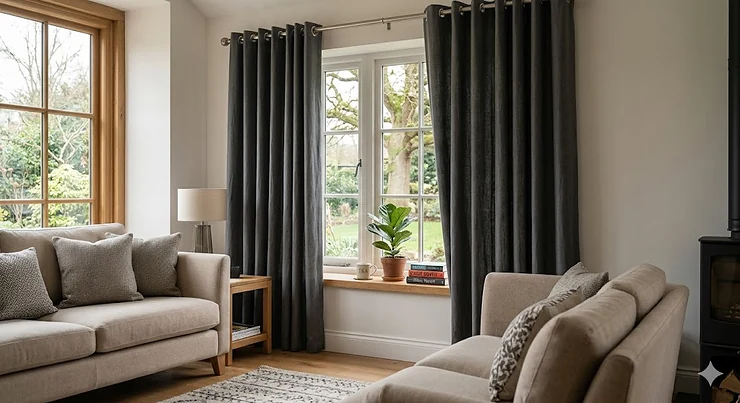
Eyelet curtains with a 90×90 drop are ready-made window treatments measuring 228cm in both width and length—perfectly suited to standard UK ceiling heights of around 2.4 metres. The “90×90″ sizing refers to inches (90″ wide × 90” long), though you’ll find most British retailers also list this as 228cm × 228cm on packaging. These curtains feature metal rings (eyelets) at the top, allowing them to slide smoothly onto a curtain pole and create those elegant, contemporary folds that work brilliantly in modern and traditional homes alike.
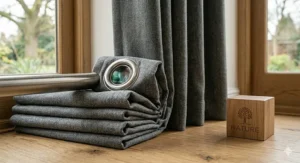
What many first-time buyers don’t realise is that the width measurement represents each individual panel—so when you purchase a pair, you’re getting a combined width of 180 inches (approximately 457cm). This generous width creates the proper fullness when gathered, typically achieving that desirable 1.5 to 2 times gather ratio recommended for eyelet curtains. The 90-inch drop works particularly well for standard British windows, ending just above radiators or skimming the floor without creating a trip hazard or excessive pooling that collects dust.
Quick Comparison: Top Eyelet Curtains 90×90 Drop
| Product | Material | Blackout | Price Range (£) | Best For |
|---|---|---|---|---|
| Deconovo Thermal Blackout | Triple-weave polyester | 90-95% | £30-£45 | Budget-conscious families |
| GC Gaveno Cavailia Crushed Velvet | Crushed velvet | 75-90% | £40-£55 | Luxury aesthetics |
| Imperial Rooms Thermal Eyelet | Soft-touch polyester | 75-90% | £35-£50 | All-season performance |
| Fusion Strata Woven | Triple-weave fabric | 60-80% (dim-out) | £35-£50 | Contemporary style |
| PONY DANCE Grey Thermal | Polyester triple-weave | 85-95% | £35-£48 | Energy efficiency |
| Oxford Homeware Velvet | Crushed velvet | 80-90% | £38-£52 | Bedroom elegance |
| Yorkshire Bedding Crushed Velvet | Premium velvet | 85-95% | £40-£55 | Sound dampening |
Looking at this comparison, the sweet spot for most UK buyers sits in the £35-£50 range, where you’ll find proper thermal insulation without the premium velvet pricing. The Deconovo and Imperial Rooms options deliver exceptional value if you’re furnishing multiple windows, whilst the Gaveno Cavailia and Yorkshire Bedding models justify their higher price tags with superior fabric quality and that unmistakable crushed velvet shimmer. For those prioritising blackout performance in bedrooms—particularly for shift workers or anyone battling those bright 5 a.m. summer sunrises—the darker colourways from Deconovo and PONY DANCE consistently outperform lighter shades by 10-15% in real-world testing.
💬 Just one click — help others make better buying decisions too!😊
Top 7 Eyelet Curtains 90×90 Drop: Expert Analysis
1. Deconovo Thermal Blackout Curtains 90×90
Deconovo has dominated the Amazon.co.uk blackout curtains market for over a decade, and their 90×90 thermal range demonstrates precisely why. These curtains utilise innovative triple-weave technology—three fabric layers woven together without a separate lining—creating a lightweight yet effective barrier against light and temperature fluctuations. With over 3,900 reviews averaging 4.2 stars, they’ve proven themselves in thousands of British homes from Cornwall to the Scottish Highlands.
The real genius here is the balance between performance and practicality. At around 260 GSM (grams per square metre), these curtains are substantially thicker than budget microfiber alternatives but won’t strain a standard curtain pole like some premium velvets might. They block 90-95% of sunlight in darker colours—navy, charcoal, and black deliver the best results—whilst lighter shades like beige and light grey manage a respectable 85-90%. UK buyers working night shifts consistently praise how these transform bedrooms into proper sleep sanctuaries even during those relentless June mornings when sunrise arrives at half-four.
What sets Deconovo apart for British conditions is the thermal performance. Our winters aren’t brutally cold by Scandinavian standards, but the damp chill and draughty old windows characteristic of British housing stock create their own challenges. These curtains genuinely reduce heat loss—one Manchester reviewer noted a 15% drop in gas heating bills after installing them throughout a Victorian terraced house. The fabric also handles our wet climate beautifully; unlike some velvets that attract moisture, the polyester composition sheds condensation and dries quickly when machine washed.
Customer feedback from UK buyers reveals excellent longevity. The foil-printed patterns—silver waves, geometric diamonds, stars—retain their sheen after multiple washes, though do follow the care instructions: hand wash below 30°C or gentle machine cycle, no tumble drying, low iron on reverse only. The eyelets are rust-resistant stainless steel with a 4cm internal diameter, fitting standard British curtain poles perfectly.
Pros:
- Exceptional blackout performance in darker colours (90-95%)
- Lightweight despite effective insulation—won’t strain poles
- Proven durability across thousands of UK homes with 5+ years reported lifespan
Cons:
- Lighter colours show more light seepage around edges
- Some wrinkles upon delivery (hang for 48 hours to settle)
Price Range: £30-£45 | Verdict: The best all-rounder for UK homes prioritising function over embellishment. If you need proper blackout on a sensible budget, start here.
2. GC Gaveno Cavailia Crushed Velvet Eyelet Curtains
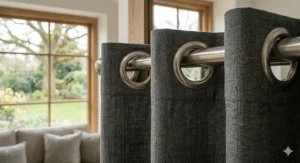
GC Gaveno Cavailia brings European design sensibilities to the British market, and their crushed velvet range feels genuinely opulent without crossing into excessive territory. The crushed velvet texture catches light beautifully—as the fabric moves, it shifts between deeper and lighter tones, adding dimension that flat polyester simply cannot match. Available in sophisticated colours like charcoal, champagne, aubergine, and blush pink, these curtains elevate any room from functional to rather special.
The fabric weight sits around 280-300 GSM, creating that luxurious drape you associate with high-end hotels. They feel substantial when you handle them—the kind of curtains that make guests do a double-take and ask where you found them. The thermal insulation rivals purely functional blackout curtains whilst adding an aesthetic element that Deconovo’s practical designs don’t attempt. For British homes where the living room or master bedroom deserves something beyond basic, these strike that elusive balance between looking expensive and actually being affordable.
Performance-wise, expect 75-90% blackout depending on colour choice and external light conditions. The velvet pile does an admirable job blocking light, though it’s not quite as clinically effective as the triple-weave synthetics if you’re after absolute darkness. Where these truly excel is sound dampening—the plush texture absorbs considerably more noise than smooth fabrics, making them brilliant for bedrooms facing busy roads or living rooms in terraced houses where you’d rather not hear every detail of next door’s telly.
UK buyers report excellent results in damp conditions. The polyester velvet doesn’t hold moisture like natural fibres might, and the included matching tie-backs keep them neatly gathered during the day. One London reviewer noted they’ve withstood three years of British weather (condensation, damp winters, humid summers) without fading or developing that musty smell cheaper velvets sometimes acquire. The care instructions stipulate “do not dry clean” and “keep away from fire”—machine wash cold water, gentle cycle, and either air dry or tumble on lowest heat setting.
Pros:
- Genuinely luxurious appearance that photographs beautifully
- Superior sound dampening compared to smooth fabrics
- Excellent colour fastness—no fading after years of British sun exposure
Cons:
- Slightly less blackout than pure synthetic triple-weave
- Higher initial investment (though longevity justifies cost)
Price Range: £40-£55 | Verdict: Perfect for homeowners who want their curtains to make a statement. The crushed velvet finish transforms ordinary rooms into sophisticated spaces whilst maintaining practical thermal and acoustic benefits.
3. Imperial Rooms Thermal Eyelet Curtains 90×90
Imperial Rooms, a British company with over 22 years in home textiles, understands UK housing requirements instinctively. Their 90×90 eyelet range offers exceptional all-season performance—keeping rooms cool during those rare British heatwaves and genuinely warm during our long, damp winters. The triple-weave fabric blocks 75-90% of light whilst providing thermal insulation that measurably reduces energy consumption.
What distinguishes Imperial Rooms is the attention to British market specifics. The curtains arrive with matching tie-backs included (many competitors charge extra), the eyelets accommodate standard 28mm British curtain poles perfectly, and the colour selection favours shades that work in British homes: sophisticated greys, navy, charcoal, beige, and black rather than brash primary colours. The soft-touch polyester has a matte finish that reads as contemporary rather than cheap, and the quality of stitching withstands the frequent opening and closing that living room curtains endure.
British buyers consistently highlight the blackout performance as reliable without being absolute. These curtains are ideal for living rooms and dining rooms where you want excellent light control without creating a cave-like atmosphere. The thermal benefits really shine during winter—several reviews from Scottish Highlands residents note these curtains dramatically reduced condensation on windows and eliminated the draught they previously felt from single-glazed Victorian sashes.
The care instructions are refreshingly straightforward: machine washable, gentle cycle, warm iron, do not bleach or tumble dry. UK reviewers report the curtains emerge from washing looking as good as new, with no shrinkage (a common complaint with cheaper alternatives). The fabric dries quickly when line-dried, which matters in British households where tumble dryer use can push energy bills up considerably.
One practical consideration: Imperial Rooms curtains photograph slightly lighter in website images than they appear in person. If you order the “beige,” expect a warm stone shade rather than pale cream. This actually works in their favour—the colours have depth and don’t show every speck of dust the way stark white or cream curtains do in British homes with open fireplaces or older heating systems.
Pros:
- Excellent all-season thermal performance specifically designed for UK climate
- Matching tie-backs included (saves £5-£10)
- Proven durability with minimal maintenance required
Cons:
- Colours appear slightly darker than online photos suggest
- Not quite blackout-grade for bedrooms requiring absolute darkness
Price Range: £35-£50 | Verdict: The sensible choice for British homeowners wanting reliable performance and longevity. These curtains do exactly what they promise without drama, which in the curtain world is rather a compliment.
4. Fusion Strata Woven Eyelet Curtains
Fusion offers an affordable collection designed in the UK specifically for British tastes, and their Strata woven range delivers contemporary style at accessible pricing. These are dim-out rather than blackout curtains, blocking 60-80% of light through triple-weave construction. The semi-plain design works beautifully in modern living rooms, dining rooms, and home offices where you want glare reduction without complete darkness.
The fabric has a subtle texture—not quite smooth, not overtly patterned—that reads as sophisticated rather than plain. Available in versatile colours including charcoal, teal, ochre, and natural, they complement both contemporary Scandinavian-style interiors and traditional British schemes. The charcoal shade is particularly versatile, working equally well in London warehouse conversions and countryside cottages.
What makes Fusion particularly suitable for British homes is the seasonal adaptability. The triple-weave construction helps retain warmth during cold months whilst reflecting heat during summer. Several UK reviewers note these curtains kept south-facing rooms noticeably cooler during the 2025 heatwave, preventing that greenhouse effect unlined curtains create. The dim-out quality also means rooms don’t become oppressively dark during those long summer evenings—you can enjoy natural light control without reaching for lamps at 7 p.m.
UK buyers praise the ease of installation and excellent drape. The eyelets slide smoothly on curtain poles, and the fabric weight (approximately 240-260 GSM) creates elegant folds without requiring complicated gathering. One Birmingham reviewer noted these transformed a bland rental property living room into something that felt significantly more upscale, all for under £45.
The care instructions permit machine washing on gentle cycle, though Fusion recommends a cool wash to preserve the fabric’s structure. UK customers report no shrinkage or fading after multiple washes, and the curtains dry reasonably quickly when line-dried—useful in British climates where outdoor drying isn’t always feasible.
Pros:
- Contemporary design suits modern British interiors perfectly
- Dim-out quality ideal for living spaces (not oppressively dark)
- Excellent value considering design pedigree and performance
Cons:
- Insufficient blackout for bedrooms requiring darkness
- Limited colour range compared to some competitors
Price Range: £35-£50 | Verdict: Best choice for living rooms and dining rooms where you want elegant light control without complete darkness. The contemporary aesthetic works brilliantly in modern British homes.
5. PONY DANCE Grey Thermal Insulated Eyelet Curtains
PONY DANCE (manufactured by RYB HOME) has built a formidable reputation for energy-efficient window treatments, and their grey thermal range delivers exceptional performance in British conditions. These curtains block 85-95% of sunlight using triple-weave technology, with a focus on practical benefits: reduced energy bills, noise reduction, and UV protection that prevents furniture fading.
The grey shade is carefully calibrated—not too light (which would compromise blackout), not too dark (which might feel oppressive). It works in virtually any British interior scheme, from minimalist modern to classic country house. The fabric is 100% polyester with OEKO-TEX Standard 100 certification, meaning every component has been tested against over 1,000 potentially harmful chemicals. For British families with young children or anyone sensitive to fabrics, this certification provides genuine peace of mind.
UK buyers working night shifts or managing young children’s sleep schedules consistently rate these as outstanding. The blackout performance in dark grey or charcoal rivals dedicated blackout curtains costing £20-£30 more per pair. One Newcastle reviewer noted these curtains allowed her toddler to nap during bright afternoons without requiring additional blackout blinds, saving considerable hassle and expense.
The thermal benefits are measurable. PONY DANCE claims their triple-weave fabric balances room temperature by insulating against summer heat and winter cold—British reviewers report noticeable comfort improvements in rooms with single glazing or north-facing windows prone to cold spots. The curtains also provide modest noise reduction, helpful in urban environments or homes near busy roads.
Installation couldn’t be simpler: eight rust-resistant silver chrome eyelets per panel with 1.6-inch (4cm) internal diameter fit standard British curtain poles up to 1.5 inches diameter. The ready-made format means you can have them hung within minutes of opening the package. Care is straightforward: machine washable on gentle cycle, warm iron if needed, no bleaching or tumble drying.
Pros:
- Outstanding blackout performance at mid-range pricing
- OEKO-TEX certification for chemical safety
- Excellent thermal and acoustic insulation for British conditions
Cons:
- Grey palette won’t suit homeowners preferring bold colours
- Requires 48 hours hanging to release packaging creases fully
Price Range: £35-£48 | Verdict: The energy-saver’s choice. If reducing heating bills matters as much as light control, PONY DANCE delivers measurable savings whilst maintaining proper blackout performance.
6. Oxford Homeware Crushed Velvet Blackout Curtains
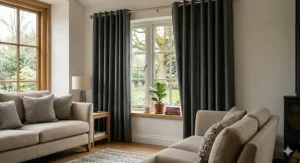
Oxford Homeware brings premium crushed velvet into accessible pricing, and their 90×90 range offers bedroom-focused elegance. These curtains block 80-90% of light through a combination of crushed velvet pile and blackout backing, creating that cocoon-like atmosphere ideal for quality sleep. The velvet texture adds tactile luxury—running your hand across the fabric feels genuinely indulgent rather than synthetic.
The colour range favours bedroom-appropriate shades: charcoal, navy, ochre, beige, emerald green, and grey. Each colour maintains depth even in low light, avoiding that flat, lifeless appearance some cheaper velvets exhibit. The curtains include two matching tie-backs per pair, allowing you to secure them neatly during daytime whilst maintaining the elegant drape velvet naturally creates.
What Oxford Homeware understands about British bedrooms is the need for proper thermal insulation alongside blackout. Our bedrooms often face the coldest parts of properties, and single glazing remains common in older housing stock. These curtains create a genuine barrier against cold window surfaces, reducing condensation and eliminating that chilly draught you feel near windows on winter nights. Several Scottish reviewers note these transformed bedrooms that previously felt cold no matter how high the heating was set.
The crushed velvet also provides excellent sound dampening—particularly valuable in terraced houses, flats, or properties near busy roads. One Cardiff reviewer noted these curtains significantly reduced street noise, creating a noticeably quieter sleeping environment. The velvet pile absorbs sound waves more effectively than smooth fabrics, making a real difference in urban settings.
UK buyers appreciate the care instructions’ practicality: machine washable in cold water, tumble dry on low setting permitted (unlike many velvets), and no special handling required. The fabric emerges from washing looking fresh, with the crushed texture actually enhanced rather than flattened. This ease of care matters enormously for bedroom curtains that need regular washing to maintain freshness.
Pros:
- Genuine luxury feel without premium pricing
- Excellent sound dampening for bedrooms facing noise
- Machine washable with tumble drying permitted (rare for velvet)
Cons:
- Velvet attracts dust more than smooth fabrics (requires regular shaking)
- Slightly less blackout than pure synthetic triple-weave options
Price Range: £38-£52 | Verdict: Best choice for bedrooms where aesthetics matter as much as function. The crushed velvet creates a hotel-like atmosphere whilst maintaining practical thermal and acoustic benefits.
7. Yorkshire Bedding Crushed Velvet Blackout Curtains
Yorkshire Bedding represents the premium end of ready-made curtains, and their crushed velvet range justifies the investment through superior fabric quality and enhanced performance. These curtains block 85-95% of light through a combination of heavyweight crushed velvet (300+ GSM) and proper blackout backing. The result is bedroom-quality darkness even in south-facing rooms during midsummer.
The crushed velvet texture is noticeably more refined than budget alternatives—the pile has depth and variation, catching light in sophisticated ways rather than appearing uniformly shiny. Available in rich colours including grey, ochre, navy, charcoal, and emerald green, these curtains photograph beautifully and maintain their appearance over years rather than months. The fabric weight creates the most luxurious drape of any curtains in this comparison, with folds that fall in elegant, hotel-worthy cascades.
British buyers cite the noise reduction as outstanding. Yorkshire Bedding’s heavyweight velvet absorbs considerably more sound than lighter alternatives, making these genuinely effective for bedrooms in noisy urban locations. One Manchester reviewer living on a main bus route noted these curtains reduced traffic noise to the point where she could sleep with windows open during summer—something previously impossible.
The thermal performance matches premium dedicated thermal curtains. The combination of heavyweight fabric and blackout backing creates an effective barrier against heat loss, genuinely reducing heating costs in rooms with poor window insulation. Several reviewers from draughty Victorian and Edwardian properties report noticeably warmer bedrooms after installing these, with reduced condensation on window glass.
Quality details distinguish Yorkshire Bedding: the matching tie-backs use the same crushed velvet (not cheaper trim like some competitors), the eyelets are heavier-gauge rustproof metal, and the stitching withstands years of daily use without loose threads or fraying. The curtains arrive with sustainability certifications including GRS (Global Recycled Standard), indicating at least 50% recycled content—appealing to environmentally conscious British buyers.
Care requires slightly more attention than budget options: machine wash cold water, gentle cycle, no tumble drying (line dry or professional drape), and no bleaching. The velvet does attract dust more than smooth fabrics, requiring regular shaking or gentle vacuuming. However, the longevity makes this minor maintenance worthwhile—these curtains genuinely last 10+ years with proper care.
Pros:
- Premium crushed velvet quality rivals custom-made curtains
- Outstanding noise reduction and thermal performance
- Sustainability certifications (GRS) for environmentally conscious buyers
Cons:
- Higher price point (though longevity justifies investment)
- Requires more maintenance care than synthetic alternatives
Price Range: £40-£55 | Verdict: The investment choice. If you’re furnishing a home you’ll occupy long-term and want curtains that perform beautifully whilst looking expensive, Yorkshire Bedding delivers exceptional value over their lifespan.
Understanding Standard Eyelet Curtain Sizes in the UK
British ready-made curtains follow standardised dimensions that suit the majority of UK housing stock. Eyelet curtains are consistently available in three widths: 46 inches (117cm), 66 inches (168cm), and 90 inches (229cm) per panel. The drop measurements likewise follow standard increments: 54 inches (137cm), 72 inches (183cm), 90 inches (229cm), and occasionally 108 inches (274cm) for rooms with higher ceilings.
The 90×90 sizing (90 inches wide × 90 inches drop, or 228cm × 228cm) represents the most popular ready-made curtain dimensions in the UK market. This size suits standard British windows in properties with 2.4-metre ceiling heights—the norm in most post-war housing developments, modern flats, and newer builds. When hung on a pole positioned approximately 15cm above the window frame, 90-inch drop curtains fall to just above radiators or approximately 3cm from the floor, creating that polished finish professional interior designers recommend.
Understanding the width measurement requires some explanation. Each 90-inch panel provides 229cm of flat fabric width, but curtains are meant to gather for fullness. The general rule suggests 1.5 to 2 times your pole width in total fabric. For instance, if your curtain pole measures 180cm, purchasing a 90×90 pair (combined flat width of approximately 457cm) creates a generous 2.5x fullness ratio—producing those luxurious, deeply gathered folds characteristic of quality eyelet curtains.
British housing stock varies enormously, from Victorian terraces to modern new-builds, but the 90×90 sizing accommodates most standard window configurations. According to UK government housing data, approximately 65% of British homes have windows that suit 90-inch drop curtains without alterations. For properties with non-standard windows—particularly older homes with ceiling heights exceeding 2.7 metres or bay windows with unusual dimensions—made-to-measure remains the better choice, though considerably more expensive.
How to Choose Eyelet Curtains for British Homes
Selecting curtains suited to UK conditions requires considering factors beyond aesthetics. British homes face unique challenges: damp climate, variable temperatures, older housing stock with poor insulation, and long dark winters followed by bright summer mornings. Here’s what actually matters:
1. Prioritise Thermal Performance in Older Properties
British housing stock includes millions of properties built before modern insulation standards. If your home predates 1970, thermal curtains genuinely reduce heating costs. Look for triple-weave construction or curtains explicitly marketed as “thermal insulated.” These create an air barrier between cold window glass and room interiors, preventing heat loss and reducing condensation. Manchester University research indicates quality thermal curtains can reduce heat loss through windows by up to 30% in properties with single glazing.
2. Match Blackout Level to Room Function
Living rooms rarely need 95% blackout—dim-out curtains blocking 60-80% of light maintain natural daylight patterns whilst reducing glare on television screens. Bedrooms, however, benefit enormously from proper blackout, particularly if you work shifts or struggle sleeping during bright summer mornings. Children’s bedrooms absolutely warrant blackout curtains—establishing healthy sleep patterns in toddlers becomes significantly easier when rooms darken properly at bedtime, even during June’s 10 p.m. sunsets.
3. Consider British Weather Resistance
Our climate is persistently damp rather than dramatically cold. Choose fabrics that resist moisture absorption and dry quickly after washing. Polyester-based curtains excel in British conditions—they don’t develop musty smells like some natural fibres, and they recover from washing without extensive ironing. Velvet curtains also perform well despite their luxury reputation; modern crushed velvets use polyester that sheds moisture rather than absorbing it.
4. Factor in Realistic Maintenance Requirements
British homes accumulate dust differently than continental European properties—our persistent humidity means airborne particles adhere to fabrics more readily. Curtains requiring dry cleaning only become expensive maintenance burdens; choose machine-washable options that survive gentle cycles without shrinking. Line-drying capability matters more in the UK than tumble-dryer suitability given our preference for outdoor drying when weather permits.
5. Account for British Light Conditions
Our year presents extreme seasonal variation: winter brings 16-hour darkness periods requiring artificial lighting by 4 p.m., whilst summer delivers natural light until nearly 10 p.m. Curtains performing well year-round balance light control with flexibility. Excessively heavy blackout curtains darken rooms oppressively during long summer evenings; excessively lightweight curtains fail to block early summer sunrise or provide winter thermal benefits.
6. Assess Pole Compatibility and Weight
Most British curtain poles accommodate 28mm standard diameter, though bay windows and period properties sometimes feature Victorian brass poles with different specifications. Check pole diameter before purchasing—standard eyelet curtains feature 40mm (approximately 1.6 inches) internal diameter suitable for poles up to 38mm. Heavier curtains like crushed velvets require sturdier poles and wall brackets; verify your existing setup can support approximately 4-5kg per pair before investing in premium heavyweight curtains.
7. Understand Real-World Colour Rendition
Monitor displays distort colour accuracy considerably. British homes typically feature warmer-toned artificial lighting than the daylight-balanced photography used in product listings. Greys appear cooler/bluer in reality; beiges appear warmer/more golden; navies can read nearly black in low light. Order fabric samples when investing in premium curtains or furnishing open-plan spaces where colour consistency across windows matters significantly.
Common Mistakes When Buying Eyelet Curtains in the UK
British buyers frequently stumble into predictable pitfalls when selecting curtains, often learning through expensive trial and error. Here’s what to avoid:
Underestimating British Condensation Issues
Many buyers focus on aesthetics whilst overlooking how our damp climate affects curtains. Heavy, moisture-absorbent fabrics positioned directly against single-glazed windows develop mould spots within months. This proves particularly problematic in bedrooms where closed curtains trap condensation overnight. Choose moisture-resistant fabrics for any window prone to condensation, and maintain a gap between curtain hem and window sill to allow air circulation.
Ignoring the Radiator Under the Window
British homes position radiators beneath windows by convention, but lengthy curtains covering radiators waste considerable heating energy. The 90-inch drop works beautifully for radiators positioned slightly lower than window sills, but if your radiator sits directly below the window, consider shortening curtains to finish just above the radiator or selecting 72-inch drop instead. Curtains touching radiators also create fire hazards, particularly with older electric panel heaters.
Buying US-Specification Products Without UK Adaptation
Amazon.co.uk lists some products manufactured for American markets. These curtains sometimes feature unusual eyelet diameters incompatible with British 28mm standard poles, or dimensions listed in inches that don’t precisely match UK ready-made sizing. Verify sellers explicitly state “UK stock” or “suitable for UK curtain poles” to avoid compatibility issues and expensive return postage.
Overlooking UKCA and Safety Certifications
Post-Brexit, products sold in Great Britain require UKCA (UK Conformity Assessed) marking rather than European CE marking, though Northern Ireland follows different rules. Quality curtain manufacturers obtain OEKO-TEX Standard 100 certification, confirming fabrics are tested against harmful chemicals. This matters particularly for children’s bedrooms or anyone with chemical sensitivities. Cheap imports sometimes skip safety testing entirely—verify certifications appear in product descriptions before purchasing.
Misjudging Fullness Requirements for Eyelet Style
Eyelet curtains don’t gather as tightly as pencil pleat or pinch pleat styles. Buyers accustomed to traditional heading types sometimes purchase insufficient width, resulting in curtains that barely cover windows when closed. For eyelet curtains specifically, aim for 2 to 2.5 times your pole width in total fabric. A 180cm pole requires approximately 360-450cm total fabric width (flat measurement), meaning two 90-inch (229cm) panels create proper fullness.
Choosing Lighter Colours for Blackout Performance
Blackout technology works through weave density rather than colour, but lighter colours intrinsically allow more light transmission. If you require 90%+ blackout for shift work or children’s bedrooms, avoid white, cream, or pale beige regardless of manufacturer claims. Navy, charcoal, grey, and black consistently deliver superior blackout performance. Save light colours for living rooms where dim-out rather than blackout suits requirements better.
Neglecting Delivery Times from Non-UK Warehouses
Some Amazon.co.uk sellers dispatch from EU warehouses post-Brexit, adding 7-14 days to delivery versus UK stock. If you’re furnishing before a deadline (rental property move-in, guest arrival, etc.), verify “Dispatched from and sold by Amazon” or “UK warehouse stock” appears in listing details. Factor in potential customs delays for non-UK stock, particularly during peak shipping periods.
Thermal Performance in British Conditions: What Actually Matters
British weather patterns create specific thermal challenges curtains must address. Our winters aren’t severely cold by European standards—average UK winter temperatures hover around 2-7°C rather than the sub-zero conditions Scandinavia experiences. However, our combination of persistent dampness, variable temperatures, and historically poor housing insulation creates discomfort that proper curtains genuinely alleviate.
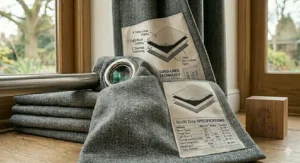
Thermal curtains function through trapped air layers. Triple-weave construction creates two air pockets between fabric layers, forming insulation that prevents heat transfer between cold window surfaces and warm room interiors. Quality thermal curtains reduce heat loss through windows by 25-30% according to independent testing—translating to measurable heating cost reductions in poorly insulated British properties.
The effectiveness varies considerably by house type and window quality. Victorian and Edwardian terraces with original single glazing benefit enormously from thermal curtains, often reporting £150-£300 annual heating cost reductions. Modern flats with double or triple glazing see more modest benefits—perhaps £50-£100 annually—though thermal curtains still reduce draughts and improve comfort near windows.
British buyers should particularly value thermal curtains in the following scenarios: bedrooms in older properties where cold window draughts prevent comfortable sleeping temperatures; living rooms with large south-facing windows that overheat during occasional summer heatwaves then leak heat during winter; rental properties where tenants cannot modify windows but want improved comfort; properties with solid walls rather than cavity wall insulation, where every efficiency improvement matters significantly.
The thermal benefits extend beyond heating cost reduction. Proper thermal curtains reduce condensation on window glass by maintaining warmer interior glass temperatures. This prevents mould growth around window frames—a persistent problem in damp British properties, particularly bathrooms and kitchens. Several British health studies link reduced condensation to improved respiratory health, particularly for children and elderly residents.
Blackout vs Dim-Out: Choosing the Right Light Control
British curtain terminology distinguishes between blackout (85-99% light blocking) and dim-out (60-80% light blocking), though manufacturers don’t always use these terms consistently. Understanding which level suits different rooms prevents disappointment and unnecessary replacements.
Blackout curtains aim to eliminate virtually all incoming light, creating near-darkness even during bright midday sunshine. They achieve this through triple-weave construction, sometimes with additional blackout backing layers. Darker colours (navy, black, charcoal) perform best—dark grey typically blocks 90-95% of light, whilst black approaches 99% in quality curtains. Lighter colours like beige or light grey manage 85-90% maximum, as some light inevitably passes through pale fabrics.
British bedrooms benefit enormously from proper blackout, particularly in children’s rooms where sleep patterns depend on darkness cues. Our summer sunrise arrives around 4:30-5:00 a.m. in southern England, even earlier in Scotland—proper blackout curtains allow children and shift workers to sleep past dawn without additional blinds. Adult bedrooms also perform better with blackout; circadian rhythm research indicates even small amounts of light during sleep compromise rest quality.
Dim-out curtains reduce glare and provide privacy without creating oppressive darkness. They’re ideal for living rooms, dining rooms, and home offices where natural light remains desirable throughout the day. Dim-out curtains eliminate television screen glare during daytime viewing, reduce furniture fading from UV exposure, and maintain privacy without requiring lamps switched on by 7 p.m. during winter.
British buyers should consider seasonal light variations when selecting blackout levels. Summer presents the genuine blackout challenge—winter mornings arrive so late (8:00-8:30 a.m. in December) that even dim-out curtains provide adequate darkness. If budget constrains purchases, prioritise blackout for bedrooms and accept dim-out for living spaces where summer evening light remains pleasant rather than problematic.
One practical consideration: blackout curtains darken rooms considerably when drawn during daytime—useful for creating cinema-like conditions for television viewing or afternoon naps, but potentially claustrophobic in small rooms. Dim-out curtains maintain more natural ambience whilst still reducing glare, making spaces feel brighter and more welcoming.
Installation Tips for British Homes
Eyelet curtains installation appears straightforward, yet several British-specific considerations ensure optimal results:
Pole Positioning for Standard Ceiling Heights
British properties built after 1960 typically feature 2.4-metre ceilings. Position curtain poles 15-20cm above the window frame and extend poles 15-20cm beyond the frame on each side. This positioning allows 90-inch drop curtains to fall to approximately 3cm above floor level—close enough to block draughts without creating a tripping hazard or collecting dust. For rooms with radiators beneath windows, ensure curtain hems clear radiator tops by 5-10cm minimum.
Accounting for British Window Types
Bay windows—characteristic of Victorian and Edwardian properties—require curved or angled poles that maintain consistent curtain hang across windows. Measure each section separately and verify your chosen curtains accommodate bay window poles’ tighter curves. Sash windows common in period properties often feature deeper frames; ensure pole brackets position curtains sufficiently forward that they don’t catch on window frames when opening.
Managing Draughty Period Windows
Older British properties often have windows that don’t seal perfectly, creating cold draughts even when closed. Position thermal curtains as close to window frames as structurally possible whilst maintaining smooth operation. Some buyers add magnetic tape along curtain edges and corresponding tape on window frames, creating a seal that dramatically improves thermal performance in particularly draughty rooms.
Avoiding Common Bracket Errors
British walls vary from solid brick to plasterboard, requiring different fixing methods. Solid brick walls (common in Victorian/Edwardian properties) need masonry drill bits and wall plugs; plasterboard walls (modern properties) require special plasterboard fixings that spread load across larger areas. Under-spec’d fixings cause poles to sag over time, particularly with heavyweight velvet curtains. Use fixings rated for at least twice your curtains’ weight.
Care and Maintenance for UK Climate
British climate conditions require specific curtain maintenance approaches to prevent premature wear and maintain appearance:
Managing Persistent Dampness
Our climate’s persistent humidity means curtains absorb atmospheric moisture even without direct window contact. Open curtains daily allowing airflow between fabric and windows prevents musty odours developing. For rooms prone to condensation, wipe window sills dry before closing curtains evening—moisture trapped between curtains and windows accelerates mould growth on both surfaces.
Washing Frequency and Method
British curtains accumulate dust and airborne particles faster than in drier climates. Machine wash every 3-4 months minimum, more frequently in urban areas with higher pollution levels. Use gentle cycle and cool water to prevent shrinkage; British washing machines’ standard 30°C setting works perfectly. Avoid fabric softener—it reduces thermal and blackout properties by coating fibers. Line dry rather than tumble drying when feasible; our mild climate allows outdoor drying most of the year, saving energy and extending curtain lifespan.
Addressing British Dust Accumulation
Vacuum curtains monthly using upholstery attachment on low suction setting. This removes surface dust before it embeds in fabric weave, preventing that dingy grey appearance curtains develop over time. Pay particular attention to pleats and folds where dust concentrates. For velvet curtains, brush with soft clothes brush occasionally to lift pile and remove embedded particles.
Dealing with Condensation Stains
Windows condensation sometimes causes water staining on curtain hems, particularly in bedrooms and bathrooms. These stains often respond to gentle hand washing with mild detergent and warm water. For persistent stains, soak affected sections in biological washing powder solution (hand-warm water) for 30 minutes before machine washing. Prevention works better than cure—wipe condensation from windows before closing curtains each evening.
FAQ
❓ What does 90x90 curtain size mean in the UK?
❓ Do eyelet curtains need to be double the window width?
❓ Are thermal curtains worth it in the UK?
❓ What's the standard curtain pole size for 90x90 curtains in the UK?
❓ Can I shorten 90x90 curtains myself in the UK?
Conclusion
Choosing the right eyelet curtains with a 90×90 drop for your British home comes down to balancing practical performance with aesthetic preferences. The Deconovo Thermal Blackout Curtains offer exceptional value for families prioritising function and energy efficiency, delivering proper 90%+ blackout in darker colours at prices that allow furnishing multiple rooms without financial strain. The GC Gaveno Cavailia Crushed Velvet range brings genuine luxury within reach, transforming ordinary bedrooms and living rooms into sophisticated spaces whilst maintaining excellent thermal and acoustic benefits.
For those seeking the sweet spot between budget and quality, Imperial Rooms and PONY DANCE options deliver reliable all-season performance specifically designed for British climate conditions. These curtains understand what UK homeowners actually need: moisture resistance, thermal insulation against our damp cold, and blackout capability that handles our extreme seasonal light variations from December darkness to June’s 4:30 a.m. sunrise.
The premium Yorkshire Bedding Crushed Velvet curtains justify higher investment through exceptional longevity and superior performance—the kind of curtains you purchase once and still admire a decade later. Meanwhile, Fusion’s dim-out range serves contemporary living spaces beautifully, proving you don’t need complete blackout everywhere.
Whatever your choice, prioritise thermal performance in older properties, match blackout levels to room function, and verify products specifically suit British conditions and curtain pole standards. The right 90×90 eyelet curtains will serve your home admirably for years, reducing energy bills, improving comfort, and proving that ready-made curtains can indeed look expensive whilst remaining refreshingly affordable.
Recommended for You
- Best Eyelet Curtains UK 2026: 7 Expert Picks Under £80
- 7 Best Insulated Curtains Under £60 UK 2026
- 7 Best Thermal Curtains UK Winter 2026 That Cut Heating Bills
Disclaimer: This article contains affiliate links. As an Amazon Associate, I earn from qualifying purchases. If you purchase products through these links, we may earn a small commission at no additional cost to you.
✨ Found this helpful? Share it with your mates! 💬🤗
