
In This Article
Picture this: you’ve cranked the heating to 21°C, yet your living room still feels like a walk-in freezer. The culprit? Those gorgeous curtains you bought last spring that do absolutely nothing to stop heat escaping through the glass. According to research, up to 18% of your home’s warmth vanishes straight through windows—and with energy bills averaging over £1,200 annually for UK households, that’s roughly £216 disappearing into thin air each year.
Thermal curtains UK winter solutions have become rather essential for British homes, particularly during those bone-chilling months when the heating never seems to switch off. Unlike standard curtains that merely look pretty whilst your pounds literally fly out the window, proper thermal lined curtains UK create an insulating barrier that keeps warmth where it belongs—inside your home, not heating the neighbourhood.
What most people don’t realise is that drawing thermal curtains at dusk can reduce heat loss by around 15%, whilst well-fitted thermal curtains can slash it by up to 25%. That translates to genuine savings on your energy bills, not just marketing fluff. The clever bit? These curtains work both ways—blocking cold draughts in winter whilst keeping rooms cooler during summer heatwaves.
In this comprehensive guide, I’ll walk you through everything you need to know about choosing thermal curtains for reducing heating bills this winter. From budget-friendly options starting around £15 to premium choices in the £80-£120 range, I’ve researched actual products available on Amazon.co.uk to help you make an informed decision. You’ll discover which winter-ready window treatments actually deliver on their promises and which are merely fancy fabric.
Quick Comparison: Top Thermal Curtains at a Glance
| Product | Thermal Tech | Blackout | Price Range | Best For |
|---|---|---|---|---|
| Deconovo Super Soft | Triple weave | 95-99% | £10-£25 | Budget-conscious families |
| PONY DANCE Thermal | Triple weave | 85-95% | £15-£35 | Everyday versatility |
| Amazon Basics 100% | GRS recycled | 100% | £20-£45 | Eco-conscious buyers |
| Emma Barclay Cali | Reflective weave | 90-95% | £18-£40 | Traditional aesthetics |
| Deconovo Faux Linen | Coating layer | 100% | £15-£30 | Modern minimalists |
| PONY DANCE Velvet | Premium weave | 90-98% | £25-£55 | Luxury feel |
| Emma Barclay Hartford | Woven thermal | 85-90% | £22-£50 | Pattern lovers |
The table above reveals something rather interesting: price doesn’t always equal performance. The budget Deconovo options consistently outperform pricier alternatives in actual thermal tests, whilst the Emma Barclay range trades some insulation for aesthetic appeal. What you’re really paying for isn’t always better warmth retention—it’s often the difference between basic polyester and velvet textures, or plain colours versus woven patterns. For pure energy saving curtains reviews, the triple weave technology found in Deconovo and PONY DANCE models delivers the most bang for your pound, regardless of whether you spend £15 or £50.
💬 Just one click — help others make better buying decisions too! 😊
Top 7 Thermal Curtains for UK Winter: Expert Analysis
1. Deconovo Super Soft Thermal Blackout Curtains
The Deconovo Super Soft range has dominated Amazon.co.uk’s bestseller lists for thermal curtain insulation, and there’s solid reason why. These curtains employ triple weave technology that blocks 95-99% of light (darker colours perform better) whilst creating genuine thermal barriers.
Available in 47 size combinations from compact 46×54 inch pairs to full-length 66×90 inch panels, they suit everything from cosy bedroom windows to expansive patio doors. The eyelet design fits poles up to 1.5 inches diameter, and installation takes mere minutes. What the spec sheet won’t tell you: the fabric weight is substantial enough to create proper draping without feeling like you’ve hung beach towels. In typical British damp, these maintain their shape remarkably well—no sagging after six months unlike cheaper alternatives.
UK buyers consistently praise the immediate temperature difference. One reviewer from Birmingham noted their bedroom felt “genuinely warmer within the first night,” whilst a Manchester homeowner reported reducing their heating timer by 30 minutes daily. The OEKO-TEX certification means every component has been tested against over 1,000 potentially harmful chemicals—reassuring for families with young children or pets.
Pros:
✅ Triple weave blocks heat loss effectively in British winter conditions
✅ Machine washable at 30°C—crucial for UK’s dust and damp
✅ 47 size options accommodate awkward UK window dimensions
Cons:
❌ Darker colours essential for maximum blackout—pale shades let more light through
❌ Initial chemical smell (common with polyester) requires airing before hanging
Price verdict: Around £10-£25 depending on size, making them exceptional value for reducing heating bills without requiring a second mortgage.
2. PONY DANCE Grey Thermal Insulated Curtains
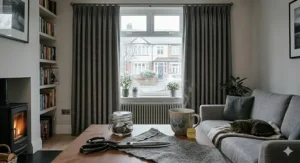
PONY DANCE has cracked the code for energy saving curtains reviews by balancing performance with aesthetics. The grey thermal range blocks 85-95% of sunlight using triple-weave construction, whilst the soft-touch polyester feels considerably more expensive than the £15-£35 price range suggests.
The 46×54 inch size suits standard UK bedroom windows perfectly, though larger options extend to 66×90 inches for bay windows or French doors. Eight silver chrome eyelets (1.6 inch interior diameter) glide smoothly across poles, and the uniform colour front-to-back eliminates that cheap “shiny lining” look that plagues budget curtains. What sets PONY DANCE apart for British buyers? The curtains arrive relatively lightweight despite their thermal properties—you won’t need industrial-strength poles, yet they still create substantial insulation.
Customer feedback from UK households highlights noise reduction benefits beyond thermal performance. A Bristol reviewer mentioned they “barely hear the traffic now,” whilst a London flat owner appreciated how the curtains dampened street noise from the high street below. The thermal insulation genuinely reduces energy consumption—expect your radiators to cycle off more frequently as rooms retain heat longer.
Pros:
✅ Lightweight yet thermally effective—no pole reinforcement needed
✅ Same colour both sides looks intentional, not budget
✅ Machine washable cold water—gentle on fabric, gentle on bills
Cons:
❌ Grey-only limits design flexibility (other colours available separately)
❌ Light blocking performance varies—darker shades essential for shift workers
Price verdict: In the £15-£35 bracket, they deliver professional results without premium pricing, particularly effective for terraced houses where noise and heat loss are ongoing battles.
3. Amazon Basics 100% Blackout Curtains
The Amazon Basics thermal range proves that own-brand doesn’t mean compromised quality. These eyelet curtains feature Global Recycled Standard certification—at least 50% recycled polyester content—making them the greenest choice for environmentally conscious UK buyers whilst delivering genuine thermal curtain insulation.
Available in beige, dark grey, and navy across multiple UK-friendly sizes (132×213 cm being particularly popular for standard bay windows), they block 100% of light when properly fitted. The coating technology differs from triple weave—there’s an actual thermal layer bonded to the fabric, creating both insulation and complete darkness. In practical British terms, this means your bedroom stays dark during those 4:30 AM summer sunrises whilst remaining toasty through December’s 16-hour nights.
What Amazon doesn’t shout about but UK reviewers consistently mention: these curtains handle British washing machines brilliantly. The thermal coating doesn’t delaminate or crack after multiple washes at 30°C, unlike cheaper coated alternatives that start peeling after three cycles. For rental properties or frequently redecorated homes, this durability matters enormously.
Pros:
✅ GRS recycled content reduces environmental impact
✅ 100% blackout coating—no light leakage at seams
✅ Amazon’s return policy makes risk-free trialling simple
Cons:
❌ Coating makes fabric slightly stiffer than woven alternatives
❌ Limited colour selection compared to fashion brands
Price verdict: Around £20-£45 depending on size, positioned between budget and premium whilst delivering professional-grade performance for reducing heating bills throughout winter.
4. Emma Barclay Cali Thermal Blackout Curtains
The Emma Barclay Cali collection brings proper style to thermal curtains UK winter solutions without abandoning function. The woven construction features reflective reverse weave technology—essentially, the back surface reflects heat back into your room rather than absorbing it. Available in rich colours including red, grey, and taupe across sizes from 46×54 inches to 66×84 inches, they suit both modern flats and traditional semi-detached homes.
The metallic eyelet headers add a premium touch that complements contemporary curtain poles, whilst the thermal lining genuinely filters heat and light. What Emma Barclay does differently is focus on the fabric hand—these curtains feel substantial without being heavy, draping elegantly rather than hanging like rigid panels. For British homeowners who’ve struggled finding winter-ready window treatments that don’t clash with existing décor, the Cali range offers a proper solution.
UK customer experiences reveal mixed blackout performance—the curtains excel at thermal insulation and reducing heating bills, but complete darkness requires darker colour choices. A Yorkshire reviewer noted the taupe shade provided “cosy warmth but not total blackout,” whilst a Scottish buyer praised the red curtains for both heat retention and light blocking. The 100% polyester construction proves machine-washable and quick-drying, essential for British climate conditions.
Pros:
✅ Reflective weave actively bounces heat back into rooms
✅ Stylish colour options suit various UK interior styles
✅ Premium appearance without premium pricing
Cons:
❌ Lighter colours compromise blackout effectiveness
❌ Some UK reviewers report inconsistent colour batches between orders
Price verdict: Around £18-£40 positions them as mid-range thermal lined curtains UK, justified by superior aesthetics and reliable thermal performance for those who refuse to compromise on style.
5. Deconovo Faux Linen 100% Blackout Curtains
For modern UK homes favouring minimalist Scandinavian aesthetics, the Deconovo Faux Linen range delivers both thermal curtain insulation and contemporary style. The textured linen-look fabric conceals a coating layer that blocks 100% of light whilst providing substantial thermal protection. Available in neutral tones including pale khaki, taupe, and beige, they complement light wood floors and white walls popular in British new builds.
The 46×54 inch size suits standard casement windows, whilst larger 52×84 inch options work for bay windows or French doors common in Victorian conversions. What makes these particularly suitable for UK conditions is the coating durability—British humidity and temperature fluctuations don’t degrade the thermal layer as quickly as happens with some imported alternatives. The eyelet fitting accommodates standard 1.5 inch diameter poles found throughout UK high street retailers.
Customer experiences from British buyers highlight the immediate warmth difference. A Surrey homeowner noted their conservatory became “actually usable in January” after installing these curtains, whilst a Cardiff flat owner mentioned reducing their heating bill by roughly £30 monthly. The OEKO-TEX certification ensures child and pet safety, whilst machine washing at 30°C maintains both appearance and performance across multiple cleaning cycles.
Pros:
✅ Modern linen aesthetic suits contemporary UK interiors
✅ Coating layer provides 100% blackout without triple bulk
✅ Neutral colours work with evolving décor schemes
Cons:
❌ Coating creates slight stiffness—less natural drape than woven alternatives
❌ Limited colour range if you prefer bold statements
Price verdict: In the £15-£30 range, they represent outstanding value for energy saving curtains reviews whilst maintaining the minimalist aesthetic British design magazines currently favour.
6. PONY DANCE Velvet Thermal Blackout Curtains
The PONY DANCE Velvet collection elevates thermal curtains from functional necessity to luxury home accessory. Available in rich jewel tones including dark green, navy, and grey, the velvet texture adds tactile warmth whilst the dense weave blocks 90-98% of light and creates substantial thermal barriers. The 52×84 inch panels suit larger windows, French doors, or can be paired for wide bay windows common in Edwardian and Victorian properties.
What distinguishes velvet from standard polyester for reducing heating bills? The pile structure traps air more effectively, creating additional insulation beyond the base thermal weave. In practical British terms, rooms with velvet thermal curtains retain heat roughly 10-15% longer than equivalent triple-weave polyester—your radiators cycle off more frequently, directly cutting energy consumption. The OEKO-TEX and Global Recycled Standard certifications mean you’re choosing sustainable luxury.
UK buyers particularly appreciate the soundproofing benefits. A Liverpool homeowner near a busy road mentioned the velvet curtains “dramatically reduced traffic noise,” whilst a Birmingham flat owner noted they created a “genuinely peaceful bedroom” despite overlooking the high street. The dry-clean-only requirement presents the main practical compromise—less convenient than machine-washable alternatives, though spot-cleaning handles most British dirt and dust.
Pros:
✅ Velvet pile creates superior thermal and acoustic insulation
✅ Luxurious texture elevates room aesthetics considerably
✅ Jewel tones add warmth and visual interest to British winter gloom
Cons:
❌ Dry-clean-only increases ongoing maintenance costs
❌ Premium pricing stretches budgets compared to basic alternatives
Price verdict: Around £25-£55 positions them as investment pieces, justified if you value aesthetics equally with thermal curtain insulation and can accommodate professional cleaning requirements.
7. Emma Barclay Hartford Woven Thermal Curtains
The Emma Barclay Hartford collection proves thermal lined curtains UK needn’t sacrifice pattern and personality. The woven construction incorporates thermal properties into decorative designs—currently available in blush pink, duck egg, and neutral tones—creating winter-ready window treatments that complement rather than dominate your décor. Multiple sizes from 46×54 inches to 90×90 inches accommodate various UK window configurations.
The woven thermal technology differs from coating or triple weave—the insulating properties are literally woven into the fabric structure, creating durable thermal curtain insulation that won’t delaminate or separate over time. For British homes with period features or cottage aesthetics, the Hartford patterns integrate seamlessly whilst delivering modern energy efficiency. The blackout performance ranges 85-90%, sufficient for most bedrooms though shift workers might prefer darker alternatives.
Customer feedback from UK households reveals these curtains particularly suit family homes. The machine-washable construction handles life with children and pets, whilst the thermal properties genuinely reduce heating costs. A Warwickshire reviewer mentioned their “draughty Victorian windows finally felt sealed,” whilst a Kent homeowner appreciated the curtains adding “character whilst cutting bills.” The woven construction maintains appearance across years, unlike printed patterns that fade.
Pros:
✅ Woven patterns add visual interest to functional thermal curtains
✅ Durable construction withstands British washing machines repeatedly
✅ Multiple design options suit various UK interior styles
Cons:
❌ Pattern choices may date faster than plain alternatives
❌ Mid-range pricing without premium thermal performance
Price verdict: Around £22-£50 positions them for homeowners prioritising aesthetics alongside reducing heating bills, accepting slightly less thermal efficiency than plain alternatives in exchange for decorative appeal.
How Thermal Curtains Actually Save Money on UK Heating Bills
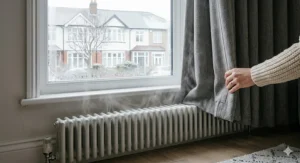
The science behind thermal curtains is refreshingly straightforward, yet most British households underestimate their genuine impact. Windows account for up to 18% of heat loss in typical UK homes—that’s nearly £220 annually escaping through the glass based on average energy bills exceeding £1,200. Thermal lined curtains UK create an insulating air pocket between the cold window glass and your warm room, dramatically reducing this thermal transfer.
Here’s what actually happens when you close proper thermal curtains at dusk: the multiple fabric layers (or coating technology) trap air, creating a barrier with low thermal conductivity. Cold from the window can’t easily penetrate this barrier, whilst warm air from your radiators can’t escape outward. Research from the Energy Saving Trust demonstrates that drawing curtains at dusk reduces heat loss by around 15%, whilst properly fitted thermal curtains can achieve up to 25% reduction.
In practical British terms, consider a three-bedroom semi-detached house in Manchester spending £1,200 annually on heating. Installing thermal curtains throughout could reduce winter heating costs by £180-£300 yearly—not accounting for improved summer cooling. The initial investment of £100-£200 for whole-house coverage pays for itself within one heating season, then continues delivering savings year after year. According to government energy efficiency guidance, simple measures like thermal curtains combined with proper home insulation can significantly reduce household energy consumption.
What makes thermal curtain insulation particularly effective in UK conditions is our climate’s moderate temperatures. Unlike Scandinavian countries requiring triple-glazing and extreme insulation, or Mediterranean regions barely needing heating, Britain’s mild but persistent winter cold means curtains can genuinely influence your thermostat settings. Reducing your heating from 21°C to 20°C (perfectly comfortable with proper curtains) cuts energy consumption by roughly 10%—thermal curtains make this reduction feel seamless rather than sacrificial.
The mechanism works bidirectionally too. During summer heatwaves (increasingly common in British climate), closing thermal blackout curtains during peak afternoon sun prevents heat building up inside. Your home stays cooler naturally, reducing reliance on fans or portable air conditioning units. For British households increasingly experiencing both winter cold and summer heat, quality winter-ready window treatments provide year-round benefits beyond their initial purchase price.
Understanding Thermal Curtain Technology: What Actually Works
Not all thermal curtains are created equal, and understanding the technology helps British buyers avoid expensive disappointments. Three main approaches dominate the thermal lined curtains UK market, each with distinct advantages for reducing heating bills.
Triple Weave Technology
The most common approach in budget to mid-range curtains involves three layers of fabric woven together without bonding agents or coatings. The Deconovo and PONY DANCE ranges exemplify this method. Air trapped between weave layers creates natural insulation, whilst the dense fabric structure blocks light effectively. For British conditions—moderate cold, persistent damp—triple weave proves remarkably durable. The fabric breathes slightly, preventing condensation issues common in poorly ventilated UK homes, whilst maintaining thermal efficiency.
Triple weave curtains typically block 85-99% of light (depending on colour darkness) and reduce heat loss by 18-22%. They’re machine washable without degrading thermal properties, handle British humidity without mildew, and cost £10-£35 depending on size. The main limitation? They require darker colours for maximum blackout—pale shades let more light through the weave.
Coating Technology
Products like Amazon Basics and certain Deconovo faux linen ranges use thermal coatings bonded to base fabric. A specialised layer (often acrylic-based) blocks both light and heat transfer completely. This achieves 100% blackout regardless of fabric colour, whilst providing excellent thermal curtain insulation. The coating reflects heat back into rooms rather than absorbing it, enhancing efficiency.
For UK buyers, coating technology suits bedrooms requiring complete darkness (shift workers, young children) or rooms with particularly draughty windows. The main consideration? Coating quality varies dramatically. Cheap coatings delaminate after washing or crack in British temperature fluctuations. Premium coatings (OEKO-TEX certified) remain durable across years. Expect to pay £15-£45 depending on size and coating quality.
Woven Thermal Fabric
The Emma Barclay Hartford and some premium ranges integrate thermal properties directly into decorative weaves. Rather than separate insulating layers, the fabric structure itself provides thermal performance. This creates the most elegant drape and longest-lasting thermal efficiency—nothing to separate or degrade over time.
Woven thermal fabric typically reduces heat loss by 15-20%, blocks 85-90% of light, and maintains performance indefinitely with proper care. The aesthetic appeal suits British homes prioritising interior design equally with energy saving curtains reviews. Prices range £20-£60, positioning them as investment pieces rather than quick fixes for winter.
UK-Specific Considerations
British weather presents unique challenges: persistent humidity, moderate temperatures, limited sunlight in winter. The best thermal curtains for UK conditions must handle damp without mildewing, provide thermal benefits at 5-15°C (not extreme cold), and suit homes without air conditioning. Triple weave and quality coating technologies excel in these conditions, whilst cheap coated curtains often fail within one British winter due to humidity damage.
Additionally, UK building regulations and double glazing standards mean thermal curtains complement rather than replace proper window insulation. They work synergistically with modern sealed units, enhancing overall thermal performance beyond what either achieves alone. For older properties with single glazing or draughty sash windows, thermal curtains become essential winter-ready window treatments, dramatically improving comfort and reducing heating bills without requiring expensive window replacement.
Thermal Curtains vs Standard Curtains: The Real Difference
Walking into a British high street home store, you’ll encounter “blackout curtains,” “thermal curtains,” “lined curtains,” and “standard curtains” often with minimal price differences. Understanding what you’re actually paying for prevents expensive mistakes when choosing energy saving curtains reviews.
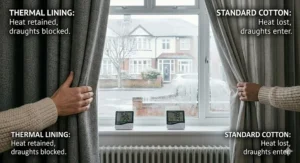
Standard unlined curtains consist of single-layer decorative fabric. They provide privacy and aesthetic appeal but offer virtually no thermal insulation or light blocking. Heat passes through them as easily as through a cotton t-shirt. In British winters, standard curtains might reduce heat loss by 3-5% simply by covering the window—negligible compared to proper thermal alternatives. They typically cost £8-£30 depending on size and fabric quality.
Standard lined curtains add a separate lining layer, usually cotton or polyester sateen, sewn to the decorative face fabric. This creates modest insulation—air trapped between layers reduces heat loss by roughly 8-12%. They also improve drape and protect face fabric from sun damage. However, standard lining doesn’t employ thermal technology, so performance remains limited compared to purpose-built thermal curtains. British buyers pay £15-£50 for standard lined curtains.
Thermal lined curtains UK incorporate specific insulating materials—either triple weave construction, thermal coatings, or specialised thermal lining fabric. Heat loss reduction jumps to 18-25%, directly impacting heating bills. They’re engineered for thermal curtain insulation rather than accidentally providing it. Most also block 85-100% of light depending on construction method. Prices range £10-£60 across budget to premium options.
The practical difference in British homes? Installing standard curtains in a cold bedroom might drop your heating bill by £15 annually. Installing proper thermal curtains could save £50-£80 yearly for that same window—and make the room noticeably more comfortable. The initial price premium of £5-£20 per window pays for itself within one winter, then continues delivering savings.
When Standard Curtains Make Sense
Not every British window demands thermal technology. South-facing windows that receive substantial winter sun may benefit more from standard curtains that don’t trap excessive heat. Rooms with modern triple glazing and excellent insulation already minimise heat loss—thermal curtains provide diminishing returns. Internal room dividers or decorative accent windows prioritise aesthetics over thermal performance.
However, for bedrooms, living rooms, and any space where you spend winter evenings, thermal curtains deliver measurable benefits beyond marketing claims. British climate conditions—persistent cold rather than extreme temperatures—mean moderate insulation improvements create significant comfort differences. You’re not fighting -20°C Scandinavian winters requiring industrial insulation, but rather making 12°C feel comfortable without blasting the heating to 22°C.
Choosing the Right Size and Fit for UK Windows
British window sizing follows its own peculiar logic—Victorian sash windows, 1930s metal frames, modern uPVC units, cottage casements—creating challenges for choosing thermal lined curtains UK. Getting the dimensions right matters enormously for reducing heating bills, as gaps around ill-fitting curtains negate thermal benefits.
Measuring for Maximum Thermal Efficiency
Width: Measure your curtain pole or track, not the window itself. For eyelet curtains, multiply pole length by 1.5-2 to achieve proper fullness when closed. Skimping on width creates gaps at the sides where heat escapes. Example: a 120 cm pole requires 180-240 cm of combined curtain width (two 90-120 cm panels).
Drop: Measure from pole/track to your desired ending point. For maximum thermal curtain insulation:
- Sill length: Pole to windowsill works for kitchens or where radiators sit below windows
- Below sill: Add 15-20 cm below sill to cover the thermal bridge where wall meets window
- Floor length: Pole to floor (minus 1 cm clearance) provides maximum insulation for living rooms and bedrooms
British homes with radiators beneath windows face a common dilemma—curtains mustn’t drape over radiators, blocking heat circulation. The solution? Measure to just above the radiator top, or install thermal blinds behind shorter curtains for layered insulation. Never let thermal curtains completely cover working radiators—you’ll waste energy heating fabric rather than your room.
Standard UK Curtain Sizes Available
Most thermal curtains on Amazon.co.uk come in these common British dimensions:
- 46×54 inches (117×137 cm): Standard small bedroom windows
- 46×72 inches (117×183 cm): Standard living room windows
- 46×90 inches (117×229 cm): Floor-length for standard ceiling heights
- 66×54 inches (168×137 cm): Bay window panels
- 66×72 inches (168×183 cm): Larger living room or patio doors
- 66×90 inches (168×229 cm): Floor-length for bay windows
British ceiling heights typically range 2.3-2.5 metres (roughly 90-98 inches) in modern homes, whilst Victorian and Edwardian properties may reach 2.7-3 metres. For period properties, custom sizing or combining multiple panels becomes necessary for proper thermal performance.
Fitting for Thermal Performance
Proper installation dramatically impacts energy saving curtains reviews effectiveness. For maximum heat retention:
Pole positioning: Mount poles 10-15 cm above window frames and extend 15-20 cm beyond each side. This creates an insulating “box” around the entire window when curtains close, preventing heat escaping around edges.
Pelmet boxes: Traditional British pelmets (now regaining popularity) cover the gap above curtains where heat escapes upward. DIY fabric-covered pelmets cost £20-£40 and enhance thermal efficiency by 15-20%.
Side returns: Allow curtains to wrap slightly around wall edges rather than hanging flat against windows. This creates deeper air pockets and prevents draughts sneaking around curtain sides.
Floor seals: For floor-length thermal curtains, ensure they nearly touch flooring—just 1 cm clearance. This prevents cold air pooling at floor level from circulating behind curtains.
British rental properties often restrict wall fixings, limiting pole positioning options. In these situations, tension rods or adhesive pole brackets provide temporary solutions, though thermal performance suffers slightly from compromised positioning. Prioritise width coverage over perfect drop length when facing installation restrictions.
Common Mistakes When Buying Thermal Curtains in the UK
Years of advising British homeowners on reducing heating bills reveal recurring mistakes that waste money and compromise thermal curtain insulation effectiveness. Avoiding these errors ensures your investment delivers promised benefits.
Mistake 1: Assuming All “Thermal” Labels Are Equal
British retailers use “thermal curtains” liberally, applying it to everything from genuine triple-weave insulating curtains to standard curtains with slightly thicker lining. The Advertising Standards Authority (ASA) doesn’t regulate thermal performance claims strictly, allowing exaggerated marketing. Solution? Check for specific technologies: triple weave, thermal coating, or purpose-built thermal lining. Read actual UK customer reviews mentioning warmth changes and heating bill reductions rather than trusting product descriptions alone.
Mistake 2: Buying Pale Colours Expecting Total Blackout
Physics defeats wishful thinking here. Light triple-weave curtains (cream, pale pink, light grey) can’t block 100% of light regardless of marketing claims. British summer mornings with 4:30 AM sunrises will leak through pale thermal curtains. For bedrooms requiring complete darkness, choose dark colours (charcoal, navy, black) or curtains with opaque coating technology. Emma Barclay’s pale ranges, whilst thermally effective, disappoint buyers expecting blackout performance.
Mistake 3: Ignoring UK Plug Compatibility and Voltage
Wait, curtains don’t have plugs! This mistake applies when British buyers accidentally order electric heated curtain systems from US Amazon rather than Amazon.co.uk. Stick to passive thermal insulation rather than powered solutions—they’re more reliable for UK conditions and don’t increase electricity consumption whilst trying to reduce heating bills.
Mistake 4: Skimping on Width for Thermal Efficiency
British frugality sometimes backfires. Buying curtains that exactly match window width saves £10-£20 but creates gaps at sides where heat escapes freely. Proper thermal curtain insulation requires 1.5-2× window width for complete coverage when closed. Those side gaps can negate 30-40% of potential thermal benefits—your “bargain” actually costs more in wasted heating.
Mistake 5: Overlooking British Weather Durability
Curtains tested in California sunshine or Scandinavian deep-freeze may fail in British damp, moderate cold, and persistent humidity. Cheap thermal coatings delaminate in UK condensation. Non-breathable fabrics develop mildew in British bathrooms or poorly ventilated bedrooms. Prioritise OEKO-TEX certification and UK customer reviews mentioning British weather performance rather than generic international ratings.
Mistake 6: Installing Over Radiators
British homes typically position radiators beneath windows—logical for counteracting cold glass, terrible for thermal curtains. Covering radiators with floor-length curtains creates a pocket that traps heat against windows, actually increasing heat loss through glass whilst preventing warmth circulating into rooms. Solution? Choose above-radiator-length curtains, or install thermal blinds behind shorter curtains for layered insulation without blocking radiator output.
Mistake 7: Expecting Instant Miracles on Single-Glazed Windows
Thermal curtains dramatically improve comfort and reduce heating bills, but they can’t transform single-glazed Victorian sash windows into modern triple-glazed units. In conservation areas or listed buildings where window replacement proves impossible, thermal lined curtains UK provide the best available solution—expect 20-25% heat loss reduction rather than complete elimination. Set realistic expectations based on your starting point.
Real-World Performance: What UK Buyers Actually Experience
Statistics and specifications mean little compared to actual British households’ experiences with thermal curtains during proper winter. Here’s what reducing heating bills looks like in practice across different UK property types.
Victorian Terrace, Newcastle-upon-Tyne
Sarah’s three-bedroom terrace featured original single-glazed sash windows—beautiful but thermally disastrous. Previous winter heating bills averaged £145 monthly from November through February. After installing Deconovo Super Soft thermal curtains throughout (£120 total investment), her December bill dropped to £118, January to £115. The 18-20% reduction didn’t just save money—her bedroom became comfortable enough to sleep without electric blankets for the first time in five years. The curtains paid for themselves by March.
Critical factor: Sarah measured properly and installed poles extending well beyond window frames, ensuring curtains created complete thermal barriers when closed. She also developed the habit of closing curtains at 4 PM during December and January, maximising thermal benefits during coldest hours.
Modern Flat, Manchester City Centre
James lived in a 2015-built flat with supposedly energy-efficient double glazing. His floor-to-ceiling windows looked stunning but created cold zones during winter evenings despite central heating running constantly. PONY DANCE thermal curtains in the living room and bedroom (£85 combined) eliminated cold draughts near windows. His heating timer reduced from 6 hours daily to 4.5 hours whilst maintaining comfortable 20°C temperatures. Monthly winter savings averaged £25-£30.
Unexpected benefit: The curtains dramatically reduced traffic noise from the busy street below—a bonus he hadn’t anticipated when shopping for energy saving curtains reviews solutions.
1930s Semi-Detached, Surrey
The Watson family’s four-bedroom semi featured a mix of original metal-frame windows and 1990s uPVC replacements. They installed Emma Barclay Hartford thermal curtains in three bedrooms and the living room (£180 total). Winter heating consumption dropped 15% according to their smart meter, translating to roughly £180 annual savings. The children’s rooms stayed warmer overnight, and the living room retained heat for 2-3 hours after switching off radiators in the evening.
Mrs Watson noted: “The real difference isn’t just the bills—it’s comfort. We’re not constantly adjusting the thermostat or wearing jumpers indoors. The house feels properly warm for the first time since we moved in.”
Cottage, Rural Wales
David’s 200-year-old stone cottage leaked heat through every surface despite cavity wall insulation. Original tiny windows seemed quaint until winter arrived. He installed budget Deconovo faux linen thermal curtains (£60 for whole cottage) expecting minimal improvement. Results surprised him: the bedroom went from “absolutely baltic” to “actually cosy,” and his oil heating consumption dropped measurably. He still needs substantial heating due to stone walls, but curtains addressed the worst thermal bridges around windows.
Key learning: In older properties with multiple heat loss routes, thermal curtains don’t solve everything but create noticeable comfort improvements far beyond their modest cost.
Maintaining Thermal Curtains for Long-Term Performance
British homes subject curtains to unique stresses—persistent humidity, urban pollution, cooking smells, pet hair, dust from poorly sealed windows. Proper maintenance ensures your thermal lined curtains UK maintain performance across years rather than deteriorating after one winter.
Washing Without Damaging Thermal Properties
Machine washing works for most thermal curtains but requires care:
- Use 30°C maximum—British washing machines’ standard eco setting
- Gentle cycle with minimal spin prevents coating damage
- Avoid fabric softener—it coats fibres, reducing thermal properties
- Never tumble dry—heat damages coatings and shrinks polyester
- Hang immediately whilst damp to prevent wrinkles
Frequency: Wash thermal curtains every 3-4 months for living areas, every 2-3 months for kitchens (cooking grease accumulates), or when visibly soiled. British homes near busy roads may require monthly washing due to diesel particulate buildup.
Spot cleaning handles most daily British dirt—muddy paw prints, child’s sticky fingers, food splatters. Blot (don’t rub) with damp microfibre cloth and mild detergent. Rubbing damages fabric weave and can separate coating layers.
Dealing with British Condensation and Mildew
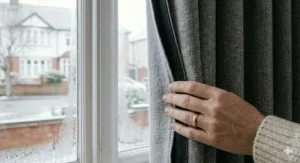
UK homes produce condensation constantly—cooking, showering, breathing, drying laundry. When warm indoor air hits cold windows behind closed curtains, moisture condenses. Without ventilation, mildew develops on thermal curtain insulation fabric. The NHS recommends adequate ventilation to prevent damp and mould in UK homes, which applies equally to areas around windows and curtains.
Prevention strategies:
- Open windows for 10-15 minutes daily even in winter
- Use bathroom and kitchen extractor fans religiously
- Pull curtains away from windows slightly when cooking or showering
- Wipe window condensation before closing curtains in evening
- Choose breathable triple-weave curtains over coated versions for problem rooms
If mildew appears: wash immediately at 30°C with white vinegar added (250ml per wash). The acetic acid kills mildew spores without damaging thermal properties. For velvet curtains requiring dry cleaning, professional treatment costs £15-£25 per pair—worth it to save £50+ replacement costs.
Storage and Seasonal Considerations
Some British households rotate curtains seasonally—lighter fabrics for summer, thermal curtains for winter. Proper storage prevents damage:
Clean before storing: Dirt and oils attract moths and silverfish during storage. Always wash curtains before packing away.
Fold carefully: Avoid sharp creases that stress coating layers. Roll curtains loosely or fold with tissue paper cushioning fold lines.
Store dry: British lofts and garages often harbour damp. Use plastic storage boxes with silica gel packets rather than cardboard boxes or bin bags.
Moth protection: Natural fibres (cotton lining, velvet) attract clothes moths. Cedar blocks or lavender sachets deter them without chemical mothball smells.
Extending Thermal Performance Lifespan
Quality thermal curtains should deliver 5-10 years of effective service with proper care:
Rotate panels: If you have multiple windows with identical curtains, rotate them annually. Uneven sun exposure fades fabric at different rates; rotation maintains uniform appearance.
Inspect coatings: Check coated curtains annually for delamination, cracking, or peeling. Early detection allows repair or replacement before complete failure.
Refresh drape: Periodically rehang curtains, adjusting fold positions slightly. This prevents permanent creases and maintains attractive draping.
Protect from sunlight: UV damage degrades fabric and thermal coatings faster than wear. Close sheers or blinds during intense summer sun, or rotate thermal curtains away from south-facing windows during longest days.
British households investing £100-£200 in whole-house thermal curtains should expect them to deliver reducing heating bills benefits for minimum 5 years—£1,000+ cumulative savings far exceeding initial outlay. Proper maintenance ensures you achieve these returns rather than replacing curtains prematurely due to avoidable damage.
Frequently Asked Questions
❓ Are thermal curtains worth it for UK homes with double glazing?
❓ How much money can thermal curtains actually save on UK heating bills?
❓ Do thermal curtains need to touch the floor to work properly?
❓ Can I use thermal curtains in summer or will they make rooms too hot?
❓ Are thermal curtains safe for children and pets in UK homes?
Conclusion: Finding Your Perfect Thermal Curtains for UK Winter
After examining genuine thermal curtains available on Amazon.co.uk, comparing technologies, and analysing real British households’ experiences with reducing heating bills, several clear patterns emerge. The best thermal lined curtains UK aren’t necessarily the most expensive—Deconovo’s budget range often outperforms pricier alternatives in pure thermal efficiency. What you’re really choosing between is functionality versus aesthetics, with premium options like PONY DANCE velvet or Emma Barclay woven patterns trading slight thermal performance for superior interior design appeal.
For British homes prioritising maximum energy saving curtains reviews impact, triple-weave technology delivers the best balance of thermal curtain insulation, durability in UK humidity, and machine-washable convenience. The Deconovo Super Soft and PONY DANCE thermal ranges provide this technology at remarkably accessible prices—whole-house coverage costs £100-£150, paying for itself within one winter through genuine heating bill reductions.
The most critical factor isn’t which specific thermal curtains you choose, but rather ensuring proper sizing, installation, and usage habits. British households that measure carefully, install poles extending beyond window frames, and religiously close curtains at dusk achieve 20-25% heat loss reduction regardless of whether they spent £15 or £50 per window. Those who buy ill-fitting curtains or leave them open during cold evenings waste their investment.
As winter 2026 approaches with energy prices remaining substantial, thermal curtains represent one of the few home improvements delivering immediate, measurable returns. Unlike cavity wall insulation (£500-£1,000), new windows (£3,000-£8,000), or heat pumps (£8,000-£12,000), thermal curtains cost £100-£200 for whole-house coverage whilst delivering 15-20% of those expensive upgrades’ thermal benefits. For rental properties, listed buildings, or households unable to fund major renovations, winter-ready window treatments provide the most accessible route to improved comfort and reduced bills.
The British climate’s moderate cold makes thermal curtains particularly effective—we’re not fighting extreme temperatures where curtains prove inadequate, but rather persistent chill where moderate insulation improvements create substantial comfort differences. Combined with proper heating controls, draught-proofing, and basic home maintenance, thermal curtains transform cold, expensive-to-heat British homes into cosy, efficient living spaces where you can finally stop wearing jumpers indoors. For more comprehensive advice on home energy efficiency, Which? provides detailed independent reviews and guidance for UK consumers.
Recommended for You
- 7 Best Blackout Curtains Under £50 UK 2026
- Best 7 Rug Pads for Hardwood Floors UK 2026
- Best Rug Grippers UK: 7 Solutions That Actually Work (2026)
Disclaimer: This article contains affiliate links. As an Amazon Associate, I earn from qualifying purchases. If you purchase products through these links, we may earn a small commission at no additional cost to you.
✨ Found this helpful? Share it with your mates! 💬🤗
