
In This Article
You’ve invested in gorgeous hardwood flooring—oak, walnut, perhaps even a reclaimed pine that cost more than your first car. Then you’ve layered on a lovely Persian rug or a modern wool runner. What sits between them? For most British homeowners, the answer is either “absolutely nothing” or “something I grabbed from the local DIY shop without reading the label.”
That oversight costs you. Not immediately—the damage creeps in slowly, like damp in a Victorian terrace. One day you lift the rug and discover yellowing patches where the rubber backing has reacted with your polyurethane finish, or perhaps permanent indentations where cheap PVC has compressed the wood fibres beyond recovery. Consumer testing by Which? has consistently shown that plasticizer migration from low-quality rug pads is among the top three causes of preventable hardwood floor damage, with repair costs often exceeding £500 for a single room.
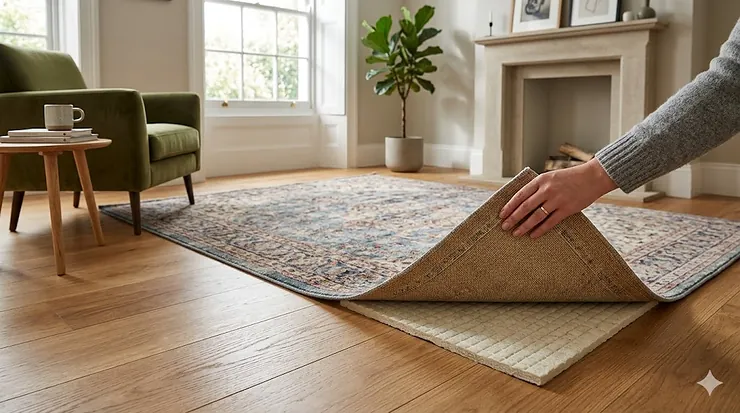
Here’s what proper rug underlay does: it stops your rug from sliding across the floor like a drunk ice skater, it cushions impact to extend both rug and floor lifespan, it prevents scratches from grit trapped underneath, and—crucially for British homes—it allows air circulation to manage our perpetual damp. The right pad is invisible insurance. The wrong one is a chemistry experiment conducted on your £3,000 oak floor whilst you sleep. This guide reviews seven rug pads available on Amazon.co.uk that won’t betray your hardwood, explains what materials actually work in British conditions (spoiler: moisture management matters more here than in Arizona), and walks you through choosing protection that matches your specific floor finish, rug weight, and foot traffic patterns.
Quick Comparison: Top Rug Pads at a Glance
| Product | Material | Thickness | Price Range | Best For |
|---|---|---|---|---|
| Mohawk Home Dual Surface | Felt + Natural Rubber | 6mm (1/4″) | £40-£70 | All-round protection with grip |
| HOTUT Non-Slip Gripper Pads | TPR Rubber | 2mm | £12-£18 | Budget corner grippers |
| Waterproof Felt Rug Pad | Felt + Rubber Backing | 5mm | £35-£60 | Damp-prone areas, kitchens |
| FrithRugs Foxi Anti-Slip | Dense Felt | 3mm | £25-£45 | Carpeted floors under rugs |
| Taylor & Brown Anti-Slip Mat | PVC-Free Rubber | 4mm | £30-£50 | High-traffic hallways |
| fowong Large Rug Pad | Non-Woven Fabric + Grip | 3mm | £20-£35 | Oversized area rugs |
| Rugistic Premium Felt Pad | 100% Recycled Felt | 8mm (1/3″) | £50-£85 | Maximum cushioning |
From this comparison, three clear patterns emerge: felt-and-rubber combinations dominate the mid-range because they balance grip with floor safety, whilst budget options sacrifice cushioning for basic anti-slip functionality. The premium tier (£50+) focuses on thickness and eco-credentials rather than aggressive grip—these pads assume your rug is heavy enough to stay put with minimal help. British buyers should note that thicker pads (8mm+) can create door clearance issues in older properties where internal doors already scrape the floorboards.
💬 Just one click — help others make better buying decisions too! 😊
✨ Don’t Miss These Exclusive Deals!
🔍 Take your floor protection to the next level with these carefully selected products. Click on any highlighted item to check current pricing and availability on Amazon.co.uk. These picks will help you find exactly what you need!
Top 7 Rug Pads for Hardwood Floors: Expert Analysis
1. Mohawk Home Dual Surface Rug Pad – The British Drawing Room Standard
The Mohawk Home Dual Surface pad has earned its reputation through sheer reliability. At 6mm thick, it strikes the balance most UK homes need: enough cushioning to make walking on your rug noticeably softer, but not so thick that doors catch or the rug becomes a trip hazard. The construction is straightforward—recycled polyester felt on one side, natural rubber on the other—but the execution matters. The felt side grips your rug through friction without adhesives, whilst the rubber side (genuinely natural rubber, not synthetic latex with plasticizers) holds position on your hardwood without chemical migration.
In practice, this means you can hoover without the rug bunching, children can play without the corners curling up, and—this is the bit that saves your floor—moisture from spills or damp mopping evaporates naturally rather than getting trapped between pad and wood. British homes, especially those built before 1970, tend to have more humidity fluctuation than modern builds; this breathability prevents the cloudy finish that appears when moisture sits on polyurethane for months. The pad works equally well over engineered wood, solid oak, or parquet, and Mohawk’s Green Label Plus certification confirms minimal VOC off-gassing, which matters if you’re laying this in a bedroom or nursery.
UK buyers consistently praise its ease of trimming—you can cut it with regular household scissors to match an irregularly shaped rug or wrap around furniture legs. The main criticism centres on initial rubber smell, which typically dissipates within 48 hours if you let it air out in a ventilated space before installation. Priced in the £40-£70 range depending on size, it’s neither the cheapest nor most expensive option, but it’s the one flooring specialists actually recommend when asked.
Pros:
✅ Natural rubber won’t stain floors
✅ Felt thickness adds noticeable comfort
✅ Made from recycled materials
Cons:
❌ Initial rubber odour requires airing
❌ Slightly pricey for smaller rugs
2. HOTUT Non-Slip Gripper Pads – Eight Triangles and a Modest Ask
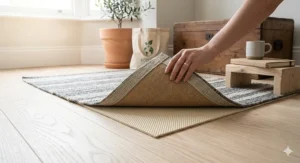
These small triangular pads represent a fundamentally different approach: instead of covering the entire rug footprint, you stick one at each corner and perhaps a few along the edges. Each pad measures 10×10cm and uses vacuum technology—essentially a slightly tacky rubber surface that creates suction against both rug and floor. For light rugs in low-traffic areas, or as temporary protection whilst you save up for a proper full pad, they work adequately.
What they don’t do is cushion, protect against scratches from underside grit, or prevent the rug centre from buckling when someone walks across it. They’re fine for a bathroom mat or a decorative runner in a rarely-used guest bedroom, but put them under a 3×5 metre living room rug where three children and a Labrador operate, and you’ll be repositioning that rug weekly. The material is thermoplastic rubber (TPR) rather than natural rubber, which is safer for hardwood than PVC but still requires caution—check your floor finish compatibility before committing.
At £12-£18 for a pack of eight, they’re the budget entry point. UK reviews note they lose grip over time and need washing every few months to restore tackiness. They’re reusable and won’t damage your floor if you follow instructions (clean both surfaces before application, don’t leave them in direct sunlight), but they’re not a long-term solution for serious rugs. Think of them as training wheels—useful whilst you work out whether that new rug is staying in that spot, inadequate once you’ve committed.
Pros:
✅ Very affordable
✅ Reusable and washable
✅ No cutting or measuring required
Cons:
❌ No cushioning or scratch protection
❌ Grip degrades over time
3. Waterproof Felt Rug Pad (180×280cm) – The Kitchen Diplomat
This pad solves a specifically British problem: our kitchens get damp from constant kettle boiling, sink splashes, and the general moistness of an island climate. Standard felt pads wick moisture up into your rug backing and create mildew; standard rubber pads trap it against your floor finish and cause cloudiness. This pad uses a waterproof thermoplastic rubber backing layer beneath traditional felt cushioning, creating a moisture barrier whilst maintaining breathability at the edges.
The 5mm thickness won’t sink your feet into luxury, but it provides enough cushioning to make standing at the cooker more comfortable and enough grip to prevent the rug sliding when you’re rushing about with a stockpot. The waterproof backing means spilt tea or dog water bowls won’t seep through to your oak floor underneath—you simply lift the rug, mop up, and carry on. This feature particularly suits homes with underfloor heating, where trapped moisture can create genuine problems.
Installation requires checking which side goes down—the rubber backing faces the floor, felt faces the rug. UK buyers note the pad arrives rolled tightly and needs 24 hours lying flat to eliminate waves and curls. Some report slight difficulty cutting it to size due to the waterproof layer, requiring sharp scissors or a craft knife. Priced around £35-£60 depending on size, it occupies the sensible middle ground: not premium, not bargain-bin, just competently solving the problem you bought it for.
Pros:
✅ Waterproof barrier protects floor
✅ Suitable for damp-prone areas
✅ Compatible with underfloor heating
Cons:
❌ Takes time to flatten after unrolling
❌ Slightly harder to trim than basic felt
4. FrithRugs Foxi Anti-Slip Underlay – The Carpet Whisperer
Most rug pads target hard floors; this one’s built for the odd British habit of layering rugs over existing carpet. If you’ve got beige wall-to-wall carpeting left by the previous owner (circa 1987) and you’re trying to inject some colour without tearing everything up and discovering asbestos tiles underneath, the Foxi pad stops your decorative rug from sliding about like it’s auditioning for Strictly.
The material is dense pressed felt—no rubber backing, because carpet doesn’t need grip, it needs friction and weight. At 3mm thickness, it adds minimal height (important when carpets are already raising your floor level) whilst providing enough substance to anchor a medium-weight rug. The felt also prevents colour transfer from your new rug bleeding into the old carpet underneath, which saves awkward conversations when you eventually decide to replace that carpeting and discover a lighter patch where the rug sat.
This is admittedly a niche product for a specifically British scenario, but if that scenario is yours, it’s rather good at its job. UK reviews from customers with rental properties note it prevents rugs bunching up under foot traffic whilst remaining completely removable—no adhesives, no marks. The main limitation: it doesn’t work on hard floors, so if you’re transitioning a rug from carpet to hardwood, you’ll need a different pad. Priced £25-£45, it’s a specialist tool that earns its keep in the right circumstances.
Pros:
✅ Purpose-built for rugs over carpet
✅ Prevents colour transfer
✅ Adds minimal height
Cons:
❌ Useless on hard floors
❌ No waterproofing or rubber grip
5. Taylor & Brown Anti-Slip Mat (160×230cm) – The Hallway Veteran
Hallways are brutally hard on rug pads. You’ve got constant foot traffic, wet shoes from British weather, grit dragged in from outside, and usually limited natural light to keep things dry. This pad addresses those conditions with a PVC-free rubber composition that provides serious grip without the plasticizer migration that cheaper pads inflict on your floor.
The 4mm thickness sits in the Goldilocks zone: enough cushioning to make the hallway runner comfortable underfoot, not so thick that you create a trip hazard at the doorway threshold. The rubber surface uses a textured pattern rather than flat smooth rubber, which improves grip on both sealed hardwood and more porous wood finishes like oil. British customers in Victorian terraces (where hallway floors are often original pine with decades of wear) report it stays firmly in place even with dogs charging in and out.
What sets it apart is durability. After six months of abuse, cheaper pads start breaking down—corners crumble, the rubber becomes sticky, or the material compresses into permanent footprint shapes. This pad maintains its thickness and grip characteristics substantially longer. The trade-off comes in trimming: the denser rubber requires proper scissors or a craft knife, and cutting clean curves is fiddly. At £30-£50, it costs marginally more than budget options but outlasts them by years rather than months, making it economically sensible for high-traffic spots where replacement would be annoying.
Pros:
✅ PVC-free rubber safe for floors
✅ Excellent grip in high-traffic areas
✅ Durable construction
Cons:
❌ Harder to cut to custom shapes
❌ Limited size options
6. fowong Large Rug Pad (120×180cm) – The Understated Workhorse
Sometimes you just need a pad that does the basics competently without demanding attention. The fowong pad uses non-woven fabric on top with a rubberised grip underside—a common construction, but executed with slightly better materials than the cheapest alternatives. It’s white, which shows dirt easily, but that visibility actually helps you remember to vacuum underneath periodically (trapped dust is one of the sneaky ways rugs scratch floors).
The 3mm thickness provides minimal cushioning; this pad prioritises keeping your rug flat and stationary rather than making it luxuriously soft. For office spaces, bedrooms where the rug sits under furniture, or dining rooms where chair legs anchor the rug anyway, that’s perfectly adequate. The non-woven fabric surface grips wool and cotton rug backs effectively without being so aggressive that removing the rug for cleaning becomes a wrestling match.
UK buyers appreciate its multipurpose versatility—several reviews mention cutting it up to use as drawer liners, car boot organisation, or shelf grips, which speaks to decent material quality. It won’t transform your floor experience, but nor will it damage your hardwood or fail after three months. At £20-£35, it’s priced appropriately for what it delivers: reliable anonymity. If you’re protecting an expensive antique rug or have specific floor finish concerns, spend more. If you’re securing a everyday rug in a moderate-traffic area, this is sensible value.
Pros:
✅ Multipurpose use beyond rug padding
✅ White colour shows when cleaning needed
✅ Good grip-to-price ratio
Cons:
❌ Minimal cushioning
❌ Shows dirt quickly
7. Rugistic Premium Felt Pad (100% Recycled Felt) – The Plush Investment
At 8mm thickness, this is the cushioned option for people who want walking on their rug to feel noticeably different from walking on bare floor. The entire pad is compressed recycled felt—no rubber backing, which means it relies on weight and friction rather than tackiness. This construction makes it the safest choice for sensitive floor finishes (French polish, oil-finished oak, newly applied polyurethane still within its curing window) where even natural rubber might pose a minimal risk.
The thick felt absorbs impact beautifully, which matters if you’ve got elderly relatives visiting (reduces fall impact), children playing (softer landing), or you simply want that luxurious hotel carpet feel underfoot. It also dampens sound substantially—particularly valuable in flats where downstairs neighbours might otherwise hear every footstep on your beautiful but acoustically lively hardwood.
The limitation is grip. On perfectly level, smooth hardwood, the felt’s weight keeps lighter rugs stable. On slightly uneven floors (common in older British homes where floorboards have settled), or with heavy foot traffic, rugs can still creep gradually. This pad works best under large, heavy rugs where furniture placement and rug weight do most of the work, with the pad focusing on protection and cushioning. At £50-£85 depending on size, it’s premium-priced, but the extra thickness genuinely delivers extra comfort. This is the pad you buy after your second child points out that your floor is “too hard for Lego building,” and you realise they’re right.
Pros:
✅ Maximum cushioning and comfort
✅ Excellent sound dampening
✅ Safest for sensitive floor finishes
Cons:
❌ Less grip than rubber-backed pads
❌ Premium pricing
How to Choose the Right Rug Pad: The Practical Framework
Selecting rug underlay isn’t complicated once you understand what your specific situation demands. Start with your floor finish—if you’ve got modern polyurethane-sealed hardwood, you’ve more flexibility; if you’ve oil-finished oak or French polish, prioritise natural materials (felt, natural rubber, jute) that won’t react chemically. Next, consider your rug weight: lightweight kilims and flatweaves need aggressive grip; heavy Persian and wool rugs need cushioning and scratch protection more than anti-slip properties.
Traffic patterns matter enormously. A rug in a guest bedroom might see someone walk across it twice weekly; a hallway runner endures dozens of passages daily, often with wet shoes. High-traffic areas demand durable materials that won’t compress into permanent footprint shapes—look for denser rubber or thick felt. Low-traffic areas allow you to prioritise comfort and floor protection over grip and durability.
British climate adds a wrinkle Americans don’t deal with: moisture management. Our homes tend toward damp rather than dry, even with modern insulation and ventilation. According to building standards guidance from the UK Government, proper ventilation and moisture control are essential for maintaining floor integrity, which makes breathable pads (felt-rubber combinations with air circulation) outperform fully waterproof options unless you’re specifically dealing with kitchen spills or bathroom humidity. The last variable is budget: cheap pads (under £20) might suffice for short-term use or insignificant rugs, but for anything you plan to keep more than two years, spending £30-£60 on quality materials pays for itself by preventing floor damage that costs hundreds to repair.
Test compatibility before committing the entire floor: cut a small piece of your chosen pad, place it in an inconspicuous corner (under a side table, behind a door), wait two weeks, then check for discolouration, stickiness, or finish changes. This simple precaution catches the occasional mismatch between pad chemistry and your specific floor finish before you’ve covered the whole dining room.
What Most UK Buyers Get Wrong About Rug Pads
The single biggest mistake British homeowners make is assuming any pad labelled “non-slip” or “for hardwood floors” will work safely. Marketing claims mean nothing; material composition is everything. PVC pads are still sold widely despite their documented tendency to yellow polyurethane finishes through plasticizer migration—they’re cheap to manufacture, so retailers stock them, but that doesn’t make them appropriate for your oak floor.
The second error is neglecting to trim pads to proper size. Your pad should sit 2-3cm inside your rug perimeter on all sides, creating a border where rug edges taper naturally to the floor. Pads that extend to or beyond rug edges create trip hazards, show visibly from certain angles, and catch on furniture or foot traffic. Take five minutes with scissors to get the sizing right rather than just throwing the pad down and hoping.
Thickness is frequently misunderstood as purely about comfort. Whilst thicker pads do feel plusher, they also raise your rug higher, which affects door clearance, creates trip hazards at transitions, and can make furniture placement awkward (table legs sitting on rug edge create wobble). British homes, with their generally lower door clearances compared to American new builds, particularly suffer from over-thick pads. Measure your door-to-floor gap before buying an 8mm pad that you’ll then need to exchange for a 3mm version.
Finally, many buyers ignore maintenance. Rug pads accumulate dust, grit, and debris underneath—the very particles that scratch your hardwood. Lift your rug quarterly, vacuum both floor and pad underside, and check for any signs of moisture, mildew, or pad deterioration. This ten-minute task prevents 90% of pad-related floor damage and extends both rug and pad lifespan considerably. British weather means we’re tracking in more damp and dirt than dryer climates; adjust your cleaning schedule accordingly.
✨ Don’t Miss These Exclusive Deals!
🔍 Take your floor protection to the next level with these carefully selected products. Click on any highlighted item to check current pricing and availability on Amazon.co.uk. These picks will help you find exactly what you need!
Living With Your Rug Pad: A Seasonal Maintenance Guide
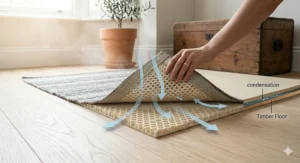
Your relationship with your rug pad changes throughout the year as British weather cycles through its soggy seasons. During autumn and winter, when rain is near-constant and heating creates indoor-outdoor temperature differentials, moisture management becomes critical. This is when you want breathable pads and should be lifting rugs monthly to check for condensation or mildew underneath. If your entry hall rug smells slightly musty, that’s moisture trapped between pad and floor—air it out immediately before it damages your wood finish.
Spring brings the opposite challenge: as heating switches off and homes dry out, some pads (especially pure rubber ones) can become slightly tacky or sticky on their underside. This isn’t necessarily damage—it’s often condensation residue or cleaning product buildup. Wipe the floor underneath clean, ensure it’s completely dry, then replace the pad. If stickiness persists on the pad itself, that’s chemical breakdown, and replacement is due.
Summer’s UV exposure (yes, even through British clouds) can fade or degrade cheaper rubber pads if they’re in direct window light. Rotate rugs 180 degrees twice yearly to distribute any light exposure evenly and prevent one section of pad from degrading faster than others. This rotation also prevents permanent compression marks in your hardwood from furniture weight concentrated on the same spots.
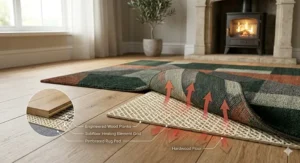
For homes with underfloor heating (increasingly common in modern UK builds), specific pad considerations apply. Heat accelerates any chemical processes, so natural materials (felt, rubber) are non-negotiable—synthetic latex or PVC will off-gas chemicals more aggressively when warmed. According to building research fro
m UK institutions, maintaining appropriate floor temperatures is crucial for system efficiency and material longevity. Keep underfloor heating below 27°C when you’ve rugs laid, and choose thinner pads (under 5mm) to avoid creating an insulating layer that makes your heating work harder for the same warmth. Several manufacturers specifically market underfloor-heating-compatible pads; take those claims seriously and check user reviews from UK customers with similar systems.
Comparing Rug Pads to Alternative Floor Protection Methods
Some homeowners question whether rug pads are necessary at all. Couldn’t you just use carpet tape? No, absolutely not. Carpet tape adheres to both rug and floor, and whilst it prevents sliding, removing it later frequently pulls up finish or leaves residue that requires refinishing to eliminate. British consumer protection regulations under the Consumer Rights Act 2015 would likely deem carpet tape damage as resulting from improper use, leaving you without recourse. Tape belongs on carpets where it’s designed to be used, not hardwood.
Double-sided velcro strips represent another misguided attempt. They’re even worse than tape—the adhesive is more aggressive, removal damages floors more severely, and the velcro’s hook side can catch clothing or scratch feet. Furniture pads or corner grippers (like the HOTUT option reviewed earlier) work for very light rugs in very low-traffic areas, but they’re supplements to proper pads, not replacements for them.
Non-slip spray products marketed for rugs create tacky coatings on rug undersides. They provide minimal grip on hardwood (unlike on tile or vinyl), require frequent reapplication, and can transfer to your floor finish if the rug sits undisturbed for months—essentially gluing your rug down without your consent. These sprays work adequately on bathroom tiles under bath mats; they’re inappropriate for hardwood under area rugs.
The only legitimate alternative to a rug pad is accepting that your rug will slide, bunch, and gradually wear both itself and your floor, then replacing both after several years when damage becomes visible. That approach costs substantially more than a £40 pad. Research from the National Wood Flooring Association demonstrates that grit trapped under rugs without pads creates microscopic scratches that accumulate into visible wear patterns within 18-24 months. A proper pad pays for itself within the first year simply by preventing this abrasion damage.
The Science Behind Rug Pad Materials: What Actually Protects Your Floor
Understanding why certain materials protect floors whilst others damage them requires basic chemistry knowledge. Plasticizers are chemicals added to rubber and vinyl to keep them flexible—without plasticizers, these materials would be rigid and brittle. However, plasticizers migrate over time, moving from the material into whatever they contact. When that contact is polyurethane floor finish, plasticizers cause yellowing or cloudiness as they react with the finish chemistry. Research in materials science has shown that phthalate-based plasticizers commonly used in cheap PVC products are particularly prone to migration. This is why cheap PVC pads (loaded with plasticizers) damage floors, whilst natural rubber pads (which achieve flexibility through molecular structure rather than added chemicals) remain safe.
Felt works through mechanical friction rather than chemical adhesion. The fibres create surface area that grips rug backing physically, with no chemical interaction. Dense felt also provides cushioning by compressing under weight then rebounding—this compression absorbs impact that would otherwise transfer through the rug into your floor. Premium felt pads use recycled materials (textile waste, carpet scraps) processed into stable fibre mats, which explains their higher cost: the manufacturing requires more steps than simply pouring liquid rubber into moulds.
Natural rubber derives from latex harvested from rubber trees, then processed into solid form. Crucially, this processing doesn’t require plasticizers—the molecular chains in natural rubber are inherently flexible. This is why natural rubber pads cost more than synthetic rubber or vinyl: the raw material is more expensive and processing is more complex. The trade-off is floor safety and durability—natural rubber doesn’t break down into sticky residue or leach chemicals into your floor finish.
Some modern pads use thermoplastic rubber (TPR), a synthetic alternative that achieves flexibility without traditional plasticizers. TPR occupies middle ground between cheap PVC and expensive natural rubber: safer than PVC, more affordable than natural rubber, but with slightly shorter lifespan than either. For most British homes, TPR-based pads represent a sensible compromise—they won’t damage your floor, they’ll last several years, and they don’t require spending premium prices unless you’re protecting particularly valuable hardwood.
Installation Best Practices: Getting It Right the First Time
Proper installation starts before you touch the pad: clean your floor thoroughly, removing all dust, grit, and cleaning product residue. Even microscopic particles trapped under a pad become abrasives that grind into your floor over months. For newly finished floors, wait until the finish has fully cured—polyurethane typically requires 30 days, whilst oil finishes may need 2-3 weeks depending on humidity and temperature. Installing a pad before curing completes can trap off-gassing chemicals against your floor and create permanent cloudiness.
Roll your pad out in the intended location and let it relax for 24 hours before placing your rug. Pads shipped rolled tightly often have creases or curls that need time to flatten naturally. Forcing a creased pad under a rug creates lumps and bumps that wear unevenly and feel uncomfortable underfoot. For particularly stubborn creases, roll the pad in the opposite direction and leave it weighted overnight.
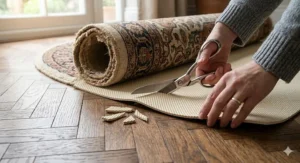
Trim your pad 2-3cm smaller than your rug on all sides. This inset border prevents the pad showing from any angle and eliminates trip hazards where rug edges transition to floor. Use proper fabric scissors or a sharp craft knife—dull blades create ragged edges that crumble faster. For rectangular rugs, trim corners square; for rounded rugs, follow the approximate curve but don’t obsess over perfection—the rug hides minor irregularities.
When laying the pad under your rug, ensure the correct side faces down. Felt-rubber combination pads typically have felt facing the rug (for friction grip) and rubber facing the floor (for anti-slip). Pure felt pads have no wrong side, but textured rubber pads should have the grippy texture facing down. If you’re uncertain, the packaging usually indicates “this side down” or “floor side”—read it before discarding the wrapper, or you’ll be guessing.
Finally, check your work: walk across the rug in normal use patterns, push it with your foot as if hoovering, and sit on its edges as if rearranging furniture. The rug should feel stable without excessive resistance when you deliberately try to move it—you want grip, not glue. If corners curl or the centre buckles, adjust pad placement or consider whether your rug is too light for that pad type. Better to discover these issues during setup than after your Labrador has torn three ACLs doing zoomies across the living room.
Rug Pad Myths That Refuse to Die
Myth: Thicker pads always provide better protection. Reality: Thickness correlates with cushioning, not floor protection. A thin, dense felt pad can protect better than a thick, soft foam pad if the latter compresses into permanent divots under furniture weight. Protection comes from material quality and breathability, not millimetres of thickness. British homes particularly suffer from the “more is better” thickness trap due to lower door clearances—that plush 12mm pad feels lovely but catches under your bedroom door and creates a trip hazard in the threshold.
Myth: Rubber pads are universally safe for hardwood. Reality: Synthetic rubber and natural rubber behave completely differently. PVC “rubber” pads containing plasticizers will damage floors; natural rubber pads will not. The word “rubber” alone tells you nothing about safety—you must identify whether it’s natural rubber, synthetic latex, thermoplastic rubber (TPR), or vinyl masquerading as rubber. UK product listings often blur these distinctions, requiring you to read specifications carefully or contact the manufacturer directly.
Myth: Once installed, rug pads need no maintenance. Reality: Pads accumulate dust, pet hair, and grit underneath, all of which scratch floors over time. They also trap moisture in damp British weather, potentially causing mildew or finish cloudiness. Quarterly pad lifting for cleaning is minimum best practice; monthly is better for high-traffic or damp-prone areas. This maintenance burden shocks homeowners who assumed “protective pad” meant “install and forget,” but neglected pads damage floors almost as effectively as no pad at all.
Myth: Expensive pads are just marketing hype. Reality: Premium pads use genuinely better materials—natural rather than synthetic rubber, dense recycled felt rather than thin virgin felt, certifications for low VOC emissions rather than none. The £15 versus £65 price difference reflects material costs and manufacturing quality, not just branding. That said, mid-range pads (£30-£50) often provide 90% of premium pad benefits for 60% of the cost, making them the sweet spot for most British households. Reserve premium spending for protecting genuinely valuable floors (reclaimed oak, antique parquet) where replacement costs justify investment.
FAQ: Your Questions Answered
❓ Can I use the same rug pad on both hardwood and carpet?
❓ How often should I replace rug pads in the UK?
❓ Are rug pads safe to use with underfloor heating?
❓ Do rug pads prevent all scratches on hardwood floors?
❓ Can I cut rug pads to fit irregular shaped rugs?
Conclusion: Protecting What You’ve Invested In
Hardwood flooring represents one of your home’s most significant aesthetic and financial investments. The wood itself might have cost thousands, the installation likely ran hundreds more, and the refinishing you’ll eventually need isn’t cheap either. Against that backdrop, a £40-£60 rug pad is absurdly cost-effective insurance—yet most homeowners overlook it entirely until damage appears.
The pads reviewed here represent the sensible options available on Amazon.co.uk for British conditions: moisture-tolerant materials, genuine floor compatibility, and realistic pricing for various budgets. The Mohawk Home Dual Surface earns its reputation through reliable performance across different floor types and traffic levels; the budget HOTUT grippers suit temporary or light-duty applications; the premium Rugistic felt delivers luxury cushioning for those who want it. Between them, these seven pads cover the scenarios most UK households encounter.
What matters more than which specific pad you choose is that you choose one at all, properly sized and correctly installed. Your hardwood floor will still be there in 20 years if you protect it now. Without protection, you’ll be budgeting for refinishing in five years and replacement in ten. The mathematics is rather straightforward, even before you factor in the comfort improvement and slip prevention that pads provide. British homes, with their particular challenges of damp climate and older building stock, need this protection more than American or Australian homes in drier conditions—don’t let our habit of muddling through convince you that floors are indestructible. They’re not, and the damage accumulates invisibly until suddenly it’s very visible indeed.
✨ Don’t Miss These Exclusive Deals!
🔍 Take your floor protection to the next level with these carefully selected products. Click on any highlighted item to check current pricing and availability on Amazon.co.uk. These picks will help you find exactly what you need!
Recommended for You
- Best Rug Grippers UK: 7 Solutions That Actually Work (2026)
- 7 Best Affordable Area Rugs 240×340 That Transform UK Homes (2026)
- Large Rugs UK 200×300: 7 Best Extra Large Living Room Rugs 2026
Disclaimer: This article contains affiliate links. As an Amazon Associate, I earn from qualifying purchases. If you purchase products through these links, we may earn a small commission at no additional cost to you.
✨ Found this helpful? Share it with your mates! 💬🤗
