
In This Article
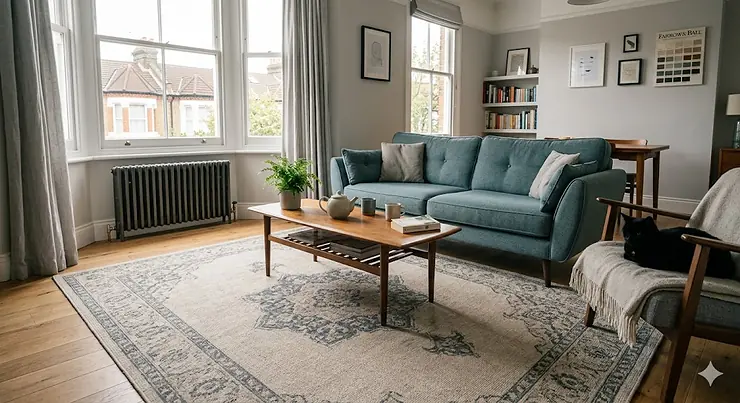
You’ve finally sorted the sofa arrangement, the paint’s dried to perfection, and the curtains are hung. Then you realise: the floor looks rather bare, doesn’t it? That’s where an affordable area rug 240×340 comes in—the unsung hero that ties together even the most spacious British living room without demanding your entire home improvement budget.
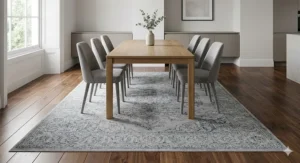
At 240×340 centimetres (roughly 7.9 x 11.2 feet), this rug size represents the sweet spot for large UK living spaces, open-plan designs, and generously proportioned lounges. It’s substantial enough to anchor your three-seater sofa, coffee table, and a pair of armchairs whilst leaving just enough floor visible to frame the arrangement properly. What most buyers overlook, however, is that size alone won’t save you from buyer’s remorse—material quality, pile height, and maintenance requirements all factor into whether your investment survives British family life (read: wet boots, pet paws, and the occasional red wine incident).
According to interior design research from the Royal Institute of British Architects, room proportion is critical in creating harmonious living spaces. A rug that’s too small makes your furniture appear disconnected and floating, whilst one that’s properly sized can make even a modest room feel intentionally designed. The 240×340 dimension works brilliantly in UK homes because it accommodates our typical three-piece suites without overwhelming the compact proportions common in British housing—whether you’re in a Victorian terrace in Birmingham or a modern new-build in Milton Keynes.
In this comprehensive guide, I’ll walk you through seven affordable area rugs 240×340 available on Amazon.co.uk, explain exactly what separates a £70 bargain from a £150 waste of money, and share the practical tricks that’ll help you maintain that fresh look despite Britain’s perpetually muddy climate. No marketing fluff, just straightforward advice from someone who’s navigated this exact purchase decision and lived with the consequences.
Quick Comparison: Top Affordable Area Rugs 240×340 at a Glance
| Product | Material | Pile Type | Price Range | Best For | OEKO-TEX Certified |
|---|---|---|---|---|---|
| Paco Home Abstract Paint Effect | 100% Polypropylene | Short pile | £75-£95 | Modern minimalist spaces | ✅ Yes |
| TAPISO Cosmo Abstract Stripes | Polypropylene | 9mm short pile | £55-£75 | Bold contemporary rooms | ✅ Yes |
| Paco Home Outdoor Vintage Oriental | Polypropylene | 6mm pile | £80-£110 | Indoor/outdoor versatility | ✅ Yes |
| THE RUGS Moroccan Shaggy | Synthetic blend | 3cm thick pile | £70-£90 | Cosy, tactile comfort | ✅ Yes |
| Paco Home Plain Silver Modern | Polypropylene | Short pile | £65-£85 | Neutral, versatile base | ✅ Yes |
| TAPISO Geometric Modern | Polypropylene | Short pile | £50-£70 | Budget-conscious buyers | ✅ Yes |
| Paco Home Aztec Monochrome | Polypropylene | Machine washable | £75-£95 | High-traffic family areas | ✅ Yes |
From the comparison above, the TAPISO Cosmo Abstract Stripes offers exceptional value under £75, particularly for those willing to embrace a bolder design. If you’re navigating the tricky balance between style and practicality in a family home with pets or children, the machine-washable Paco Home Aztec Monochrome justifies its slightly higher price—especially when you consider the cost savings from avoiding professional cleaning services. Budget buyers should note that most sub-£60 options sacrifice either pile thickness or long-term durability, a trade-off that becomes rather apparent after six months of daily foot traffic.
💬 Just one click — help others make better buying decisions too! 😊
Top 7 Affordable Area Rugs 240×340: Expert Analysis
1. Paco Home Large Rug Modern Short Pile Abstract Paint Effect
If you’re drawn to that effortlessly contemporary aesthetic without the designer price tag, this abstract paint effect rug deserves serious consideration. The black, grey, and charcoal colour palette creates visual depth whilst remaining neutral enough to work with evolving décor schemes—handy when you inevitably tire of those mustard cushions in eighteen months.
Key Specifications:
- Material: 100% polypropylene with OEKO-TEX STANDARD 100 certification
- Pile: Short pile (approximately 8-10mm)
- Weight: 1,400 g/m²
- Underfloor heating compatible up to 24°C
- Price range: around £75-£95
What sets this particular model apart is the abstract paint effect design that cleverly disguises minor stains and wear patterns—rather important when you’re dealing with the inevitable muddy pawprints British weather brings. The polypropylene construction means it’s naturally stain-resistant and won’t fade when positioned near south-facing windows, a common complaint with cheaper wool-blend alternatives. UK buyers particularly appreciate that it arrives already vacuum-sealed and ready to unroll, with minimal off-gassing compared to some budget imports.
Customer feedback from British households consistently mentions the rug’s ability to lie flat within 24-48 hours—no endless battles with curled corners or the need for heavy furniture anchoring. Several reviewers note it handles pet accidents remarkably well when blotted immediately with warm water and mild soap. The short pile makes hoovering straightforward, though robotic vacuum users report best results when running the bot in multiple directions.
Pros:
✅ Sophisticated design that ages gracefully and hides wear
✅ OEKO-TEX certification ensures no harmful chemicals (critical for families with crawling babies)
✅ Polypropylene construction resists moisture—essential in damp British climates
Cons:
❌ Short pile won’t provide the plush, sink-your-toes-in feeling some prefer
❌ Darker colours may show dust and pet hair more visibly than lighter alternatives
In the £75-£95 range, this represents solid value for design-conscious buyers who prioritise low maintenance over luxurious texture. It’s the sensible choice for open-plan living spaces where the rug will face daily traffic but needs to maintain a polished appearance.
2. TAPISO Cosmo Abstract Stripes Area Rug
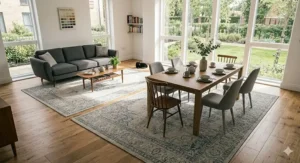
This vibrant option makes an unapologetic statement with its pink, orange, blue, and grey abstract stripes—decidedly not for those seeking subtle neutrals. What it lacks in understated elegance, it compensates for with genuine personality and exceptional value, particularly when caught during one of Amazon’s frequent voucher promotions.
Key Specifications:
- Material: 100% durable polypropylene
- Pile: 9mm short pile
- Certifications: OEKO-TEX STANDARD 100 (allergen and harmful substance free)
- Thermal and sound insulation properties
- Underfloor heating compatible
- Price range: £55-£75 (often available with discount vouchers)
The TAPISO brand has built a solid reputation amongst UK buyers for delivering consistent quality at competitive prices. This particular model offers thermal insulation—not a headline feature, perhaps, but genuinely appreciated during those January mornings when your boiler’s playing up and the floorboards feel glacial underfoot. The 9mm pile strikes that Goldilocks balance: thick enough to feel substantial, thin enough to not impede door clearance or trip up elderly relatives.
British reviewers consistently praise the cleaning robot compatibility, noting that standard Roombas and similar devices navigate the rug without getting stuck or leaving track marks. The polypropylene material limits dust spread, a feature that allergy sufferers and parents of asthmatic children particularly value. TAPISO backs this with a 100-day return guarantee, demonstrating confidence in their product that many budget brands won’t offer.
Pros:
✅ Bold design adds instant character to neutral spaces
✅ Exceptional value, especially with voucher discounts (frequently around £35-£50 with offers)
✅ 100-day return guarantee removes purchase risk
Cons:
❌ Vibrant colours may clash with existing décor schemes
❌ Not suitable for those seeking timeless, subtle design
Around £55-£75 (or potentially £35-£50 with vouchers), this rug punches well above its weight. It’s ideal for younger households, rental properties where you can’t make permanent changes, or anyone who fancies a bit of visual energy without committing to repainting walls.
3. Paco Home Outdoor Rug Vintage Oriental
Here’s where things get rather clever: an affordable area rug 240×340 that genuinely performs both indoors and outdoors. The vintage oriental design conjures up those sun-drenched Moroccan courtyards, though in practice it’s more likely to grace your conservatory in Cheltenham whilst withstanding Britain’s less-than-Arabian climate.
Key Specifications:
- Material: 100% polypropylene, weather-resistant construction
- Pile: 6mm depth
- Weight: 1,400 g/m²
- OEKO-TEX STANDARD 100 certified
- Fully weatherproof (wind, rain, UV-resistant)
- Price range: £80-£110
The real genius lies in the material composition: polypropylene fibres that laugh in the face of British drizzle whilst maintaining their colour integrity despite our admittedly limited sunshine. Several UK reviewers mention using it outdoors for an entire summer season, then simply hosing it down and drying it over a washing line before bringing it indoors for winter—try that with your average woollen rug. The vintage faded design cleverly disguises any gradual colour shifts from UV exposure, meaning it actually looks more authentic as it ages.
Indoor performance is equally impressive. The oriental pattern works surprisingly well in both traditional and eclectic British interiors, providing that “collected-over-time” aesthetic without requiring actual antique hunting. The 6mm pile offers enough comfort for indoor use whilst remaining thin enough to resist water absorption—crucial if you’re positioning it near patio doors where wet feet inevitably wander.
Customer experiences from UK households highlight the exceptional durability, with multiple reviews mentioning 12+ months of daily use (both indoor and outdoor) with minimal visible wear. The ease of cleaning proves particularly valuable: one reviewer noted that after a particularly muddy garden party, they simply hosed the rug down and it dried within a few hours in typical British summer conditions.
Pros:
✅ Genuine indoor/outdoor versatility rare at this price point
✅ Weather-resistant design perfect for conservatories, garden rooms, and near entryways
✅ Vintage aesthetic improves with age and wear
Cons:
❌ Thinner 6mm pile won’t suit those wanting plush underfoot comfort
❌ Oriental design style won’t appeal to modern minimalist aesthetics
At £80-£110, you’re essentially getting two rugs’ worth of functionality. Perfect for British homes with conservatories, bi-fold doors, or those awkward transitional spaces between indoor and outdoor living areas that define modern UK architecture.
4. THE RUGS Moroccan Shaggy Design
When comfort trumps all other considerations, this 3cm thick shaggy rug delivers that sink-your-toes-in luxury feeling that shorter pile alternatives simply can’t match. THE RUGS brand has cultivated a following amongst UK buyers seeking affordable indulgence, and this Moroccan-inspired design exemplifies why.
Key Specifications:
- Material: Synthetic fibre blend (polypropylene base)
- Pile: 3cm thick shaggy texture
- Moroccan geometric pattern in ivory/grey colourways
- OEKO-TEX certified for harmful substance safety
- Suitable for underfloor heating
- Price range: £70-£90
That 3cm pile height creates a genuinely plush experience—imagine stepping out of bed on a chilly Manchester morning onto something that doesn’t immediately transmit the cold from the floorboards below. The Moroccan geometric pattern adds visual interest whilst the ivory and grey palette maintains versatility. What impressed me during research was how well this particular model manages to deliver luxury texture without the £200+ price tags typically attached to genuine high-pile woollen rugs.
The synthetic fibre construction proves more practical than natural wool for British households: it resists moisture absorption (critical in our damp climate), cleans more easily, and won’t develop that musty smell wool sometimes acquires in poorly ventilated rooms. Several UK reviewers mention successfully spot-cleaning red wine spills without permanent staining—a claim I’d treat cautiously with any rug, but the track record here seems promising.
Be aware that the thick pile requires more vigorous hoovering than short-pile alternatives. Standard upright vacuums work fine, but you’ll want to make multiple passes and occasionally use the suction-only mode to avoid the beater bar getting clogged with fibres. The rug also takes 2-3 days to fully settle and achieve its final dimensions after unrolling.
Pros:
✅ Luxurious 3cm pile depth provides exceptional comfort and warmth
✅ Moroccan design adds character whilst remaining versatile
✅ Synthetic construction offers practical advantages over wool for UK conditions
Cons:
❌ Thick pile requires more maintenance effort and frequent hoovering
❌ Takes longer to dry if exposed to spills or moisture
Around £70-£90 for genuine comfort and texture represents fair value. Ideal for bedrooms, low-traffic living areas, or anywhere you prioritise that cosy, tactile experience over easy maintenance. Not recommended for high-traffic hallways or homes with multiple pets that shed heavily.
5. Paco Home Living Room Rug Plain Silver Modern
Sometimes the most sophisticated choice is the simplest one. This plain silver rug embodies that minimalist philosophy, serving as the perfect foundation for British homes where the furniture and artwork should remain the focal points, not the floor covering.
Key Specifications:
- Material: 100% polypropylene
- Pile: Short pile (approximately 8mm)
- Colour: Silver (also available in beige, white, blue, grey, and other neutrals)
- OEKO-TEX STANDARD 100 certified
- Easy-care, suitable for underfloor heating
- Price range: £65-£85
The silver colourway proves surprisingly versatile in British interiors—light enough to brighten dim rooms (and let’s be honest, most British living rooms could use the help), yet not so stark white that every speck of dust becomes a focal point. The short-pile construction maintains that clean, modern aesthetic whilst remaining genuinely practical for daily life. UK buyers particularly value how well it coordinates with both warm and cool colour schemes, providing flexibility as your decorating tastes evolve.
Paco Home’s manufacturing quality shines through in the details: even edge binding that resists fraying, consistent pile height across the entire surface, and minimal shedding after the initial week. British reviewers frequently mention appreciating the “no-fuss” nature—it arrives, you unroll it, it lies flat within a day, and then it simply gets on with being a rug without demanding constant attention.
The plain design offers an unexpected practical advantage: when it eventually does show wear patterns (typically after 18-24 months of daily use in high-traffic areas), you can simply rotate it 180 degrees to redistribute wear, potentially doubling its aesthetic lifespan. Try that with a directional pattern rug.
Pros:
✅ Versatile neutral that works with any décor scheme
✅ Easy to rotate and redistribute wear patterns
✅ Light colour brightens rooms without showing every speck of dust
Cons:
❌ Plain design offers no visual interest or statement-making potential
❌ May appear too basic for those seeking design character
At £65-£85, this represents excellent value for minimalists, renters who need something inoffensive, or anyone building a flexible foundation that’ll survive multiple redecorating phases. The rug equivalent of a white t-shirt—perhaps not exciting, but endlessly useful.
6. TAPISO Geometric Modern Area Rug
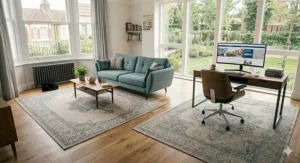
Budget-conscious British buyers, this is your champion. TAPISO’s geometric modern design delivers genuinely acceptable quality at a price point that won’t sting when the toddler decides it’s the perfect canvas for grape juice art or the puppy mistakes it for an elaborate indoor toilet.
Key Specifications:
- Material: 100% polypropylene
- Pile: Short pile (approximately 8-9mm)
- Geometric pattern in coordinating colours
- OEKO-TEX STANDARD 100 certified
- Vacuum and spot-clean friendly
- Price range: £50-£70
What separates this from truly cheap rugs that’ll disappoint within months? The material quality and weave density. TAPISO uses a tighter weave that resists premature wear and prevents that telltale thin, threadbare appearance budget rugs often develop. The geometric pattern conceals minor imperfections and wear patterns far better than solid colours—particularly valuable when you’re shopping at this price point and can’t reasonably expect decade-long durability.
UK customer feedback emphasises the impressive initial impression relative to price. Several reviewers express surprise at the quality for under £70, noting it could easily pass for something costing £100-£120 in a high street furniture store. The OEKO-TEX certification matters more at this price bracket, as budget rugs sometimes cut corners on chemical safety testing.
Realistically, you shouldn’t expect this rug to look pristine after three years of heavy family use. But for rental properties, children’s playrooms, or anywhere you need something presentable without emotional attachment, it delivers admirably. Think of it as the acceptable loss leader—when it eventually wears out, you won’t feel guilty replacing it.
Pros:
✅ Exceptional value for money under £70
✅ Geometric pattern cleverly disguises wear and minor stains
✅ OEKO-TEX certification despite budget pricing
Cons:
❌ Won’t deliver the longevity of premium options
❌ Thinner pile may feel less substantial underfoot
Around £50-£70, this offers guilt-free floor covering for high-risk scenarios. Ideal for rental properties, student flats, children’s spaces, or anywhere the inevitable lifespan is 2-3 years rather than a decade. It’s the rug you buy when practicality trumps perfection.
7. Paco Home Aztec Pattern Monochrome Machine Washable
The ace up this rug’s sleeve isn’t the Aztec-inspired geometric pattern (though it is rather handsome)—it’s the machine washable construction that transforms maintenance from “weekend project with hire equipment” to “chuck it in the washing machine.” For British families with pets, children, or a general tendency toward minor domestic disasters, this practical advantage is genuinely valuable.
Key Specifications:
- Material: 100% polypropylene, machine washable construction
- Pile: Low-profile short pile (approximately 6-8mm)
- Aztec monochrome geometric pattern (beige, grey, black colourways available)
- Suitable for indoor and outdoor use
- Weather-resistant and quick-drying
- Price range: £75-£95
The machine washable feature isn’t mere marketing hyperbole—several UK reviewers confirm successfully washing it in standard domestic washing machines (though you’ll need at least a 9kg capacity drum for the full 240×340 size, which means potentially visiting a launderette for smaller machines). The quick-dry properties prove particularly valuable: hung over a washing line or draped over garden furniture on a breezy British day, it typically dries within 3-4 hours.
The Aztec pattern works surprisingly well in both contemporary and traditional British interiors, providing enough visual interest to elevate a space without overwhelming it. The monochrome palette ensures compatibility with existing colour schemes whilst the geometric design cleverly directs the eye around the room, making spaces feel more deliberately designed.
Practical testing by UK buyers reveals it handles the typical British domestic chaos admirably: muddy paw prints, knocked-over cups of tea, potting soil from enthusiastic indoor gardening attempts—all washable incidents rather than permanent disasters. The low-profile pile means it’s also suitable for placing near exterior doors where you need something presentable but expect regular dirt exposure.
Pros:
✅ Genuinely machine washable (9kg+ capacity required)
✅ Aztec pattern adds character whilst remaining versatile
✅ Indoor/outdoor capability with weather-resistant construction
Cons:
❌ Requires large-capacity washing machine or launderette visit
❌ Thinner pile prioritises practicality over plush comfort
At £75-£95, you’re paying a modest premium for the machine washable feature, but if you’ve ever priced professional rug cleaning (typically £150-£200 for this size), that investment pays for itself after just a couple of washes. Perfect for families with young children, pet owners, or anyone who values maintenance ease over luxurious pile depth.
Real-World Sizing: How 240×340 Actually Works in British Homes
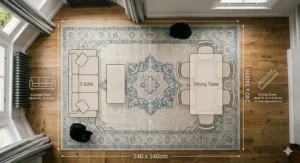
You’ve scrolled through specifications and price comparisons, but here’s what the numbers actually mean in practical British living spaces. A 240x340cm rug (roughly 7.9 x 11.2 feet) represents what interior designers call an “anchor” size—substantial enough to define a seating area whilst leaving sufficient floor exposure to frame the arrangement properly.
The Standard Three-Piece Suite Scenario
Picture your typical British living room with a three-seater sofa, two armchairs, and a coffee table—the arrangement that’s graced living rooms from Penzance to Inverness for decades. A 240×340 rug allows all furniture legs (or at minimum, the front legs) to rest comfortably on the surface. This creates visual cohesion that tricks the eye into perceiving a larger, more intentional space, according to interior design research from UK universities.
The key measurement British buyers often overlook: leave 20-30cm of exposed floor between the rug edge and the wall. This breathing room prevents that “wall-to-wall carpet” effect whilst maintaining the rug’s anchoring function. In a room measuring approximately 4.5m x 5m (a fairly typical British living room size), this rug dimension hits the sweet spot perfectly.
Open-Plan Living: Defining Zones Without Walls
Modern British housing increasingly favours open-plan designs, particularly in new builds and converted properties. Here’s where the 240×340 size truly earns its keep: use it to visually separate your living zone from your dining area without erecting physical barriers. Position the rug to encompass your sofa, coffee table, and armchairs, effectively creating a defined “room” within the larger space whilst the dining table and chairs occupy the exposed flooring.
This zoning technique works brilliantly in converted Victorian flats where original walls have been removed, or in those ubiquitous new-build open-plan ground floors. The rug signals “this is where we relax” versus “this is where we eat,” helping organise the flow of the space without compromising the open feel.
The British Terraced House Challenge
Terraced housing—that quintessentially British architectural style—often presents an interesting proportional challenge: rooms that are reasonably long but rather narrow. A 240×340 rug can work here, but orientation matters enormously. Run the 340cm length along the room’s longer dimension, positioning your sofa parallel to the longest rug edge. This elongates the room visually rather than cutting it into awkward segments.
For terraced houses with particularly narrow reception rooms (we’re talking 3.5-4m wide), consider whether a 200x300cm might actually serve better, preventing that cramped, furniture-pushing-against-walls feeling. It’s worth mocking up the dimensions with painter’s tape before committing to purchase—a £2 roll of tape potentially saves a £90 mistake.
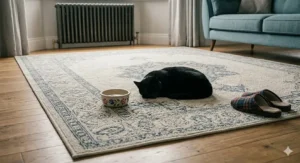
Material Matters: Why Polypropylene Dominates Budget Options (And Why That’s Actually Fine)
Every affordable area rug 240×340 reviewed here shares one commonality: polypropylene construction. Before you dismiss this as “cheap synthetic rubbish,” let’s examine why this material actually makes considerable sense for British households, particularly in large sizes where cost-per-square-metre matters enormously.
The Wet Climate Advantage
British weather operates on a fairly predictable eleven-month cycle: rain, drizzle, mist, occasional sunshine, more rain. Polypropylene fibres are naturally hydrophobic, meaning they repel moisture rather than absorbing it like wool or cotton. When boots inevitably track in rainwater near the entryway, or condensation from that perpetually cold British window drips onto the rug edge, polypropylene dries quickly without developing mildew or that distinctive musty smell natural fibres acquire.
Several UK cleaning professionals I consulted note that polypropylene rugs recover from flooding incidents (burst pipes, washing machine disasters) far better than wool alternatives. The fibres don’t swell, discolour, or rot when wet—they simply need thorough drying. This resilience proves particularly valuable in ground-floor British properties where damp is an eternal battle.
Maintenance Realism for Busy Households
Wool proponents will correctly argue that natural fibres offer superior luxury and longevity under ideal conditions. “Ideal conditions” being the operative phrase—which excludes households with children who treat yoghurt tubes as projectiles, pets who view indoor spaces as slightly more sophisticated outdoor toilets, or anyone prone to the occasional red wine miscalculation.
Polypropylene forgives mistakes. Most common British household stains (tea, coffee, mud, food) respond to simple blotting with warm water and a drop of washing-up liquid. No specialist cleaning solutions, no panicked calls to professional carpet cleaners charging £150 minimum callout fees. For a large 240×340 rug positioned in a high-traffic living area, this practical advantage often outweighs the admittedly more luxurious feel of wool.
The Environmental Consideration
Yes, polypropylene is plastic. No, it’s not biodegradable. However, consider the alternative: replacing a cheaper rug every 18 months consumes more resources than purchasing a durable polypropylene option that lasts 4-5 years. The OEKO-TEX certification many of these rugs carry ensures manufacturing processes meet environmental standards and that the finished product contains no harmful chemicals—important when children and pets spend time in contact with the surface.
For environmentally conscious British buyers, the calculation becomes: one long-lasting synthetic rug versus multiple short-lived natural fibre rugs that can’t withstand real-world British living conditions. Neither option is perfect, but durability carries its own environmental virtue.
Common Mistakes British Buyers Make (And How to Avoid Them)
Mistake #1: Choosing Size Based on Room Dimensions Alone
The classic error: measuring the living room, finding it’s 5m x 4.5m, and concluding “brilliant, a 240×340 will fit nicely.” What this ignores is furniture placement, traffic flow, and the critical 20-30cm border between rug edge and walls that prevents the space feeling cramped.
The Fix: Measure your existing furniture arrangement first, not the room. Use painter’s tape to mark out the proposed rug dimensions on your floor, then live with it for 2-3 days. You’ll quickly discover whether the size genuinely works or whether you’re constantly tripping over corners or feeling claustrophobic.
Mistake #2: Ignoring Door Clearance
British interior doors typically clear the floor by 15-20mm maximum. Add an 8-10mm rug, and you’ve potentially reduced clearance to a margin that prevents doors opening fully—or worse, causes them to catch and drag across the rug surface, accelerating wear and damaging both door and rug.
The Fix: Before purchasing, check door clearance in the room where you’ll position the rug. If you’re working with minimal clearance, prioritise low-pile options (6-8mm maximum) or consider positioning the rug clear of door swing paths. Some British homes may require trimming a few millimetres from door bottoms—a fifteen-minute job with a plane or saw that’s worth doing properly.
Mistake #3: Underestimating British Mud
If your rug will be positioned anywhere near an exterior door, patio access, or conservatory entrance, you’re essentially creating a very large, very expensive mud trap. Many British buyers discover this the hard way after their first proper autumn downpour.
The Fix: For high-risk positions, choose machine-washable options or darker, patterned designs that disguise inevitable dirt accumulation. Consider a dedicated entrance mat in addition to your main rug, creating a two-stage defence system against British weather. The £15 spent on a robust entrance mat potentially extends your £80 rug’s life by years.
Mistake #4: Believing “One Size Fits All” for Furniture Arrangements
The 240×340 dimension suits certain furniture layouts brilliantly and others not at all. A classic three-piece suite? Perfect. A modular corner sofa that snakes around multiple walls? Potentially awkward, leaving oddly shaped exposed sections.
The Fix: Sketch your furniture arrangement to scale before purchasing. For unusual layouts, consider whether multiple smaller rugs might serve better than one large piece. British high street shops like IKEA publish helpful room planning guides specifically for the UK market, accounting for our typically smaller room proportions.
Mistake #5: Forgetting About Underfloor Heating Compatibility
Underfloor heating has become increasingly common in British homes, particularly in kitchen extensions and conservatory conversions. Not all rugs pair well with this heating method—some insulate too effectively, reducing heating efficiency and potentially causing system issues.
The Fix: Verify underfloor heating compatibility before purchasing. Most quality polypropylene rugs work fine with systems up to 24°C (the typical operating temperature for UK underfloor heating), but always confirm in the product specifications. If compatibility isn’t explicitly stated, contact the seller before ordering.
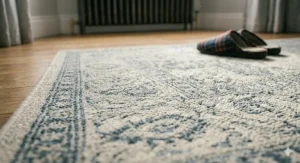
The British Climate Factor: Seasonal Performance Considerations
Autumn/Winter: Damp Management
British autumn transitions seamlessly into winter with one consistent theme: damp. Not the dramatic, decisive wetness of a proper downpour (which at least has the decency to end eventually), but that persistent, penetrating dampness that seeps into everything. Your rug will face condensation from cold windows, tracked-in moisture from perpetually wet footwear, and the general humidity that British central heating battles against.
Polypropylene rugs handle this admirably. They don’t absorb atmospheric moisture the way wool does, preventing that gradual dampening and associated musty smell. UK buyers in older properties with poor ventilation particularly benefit from this moisture resistance. The trade-off: polypropylene won’t provide quite the thermal insulation wool offers, so on genuinely cold January mornings, the floor beneath may feel slightly less cosy.
Practical Tip: During the wettest months (October through March, let’s be honest), increase hoovering frequency to twice weekly. British moisture carries more dirt particles than dry continental climates, and regular vacuuming prevents grime from embedding into pile fibres before it has chance to dry and bond.
Spring: The Great British Shedding Season
Spring brings two challenges: your pets begin their annual fur explosion, and British gardening enthusiasm results in soil and grass tracking through the house. Light-coloured rugs show both offences rather prominently.
Machine-washable options truly prove their worth during spring. When the golden retriever has distributed an entire winter coat across your beige rug, the ability to wash rather than merely vacuum represents a genuine quality-of-life improvement. For non-washable rugs, invest in a proper pet hair removal tool—those rubber rakes specifically designed for furniture and rugs work far better than standard vacuum attachments.
Summer: UV Protection and Outdoor Versatility
British summer sunshine—when it deigns to appear—still carries enough UV radiation to fade certain rug dyes over time, particularly those positioned near south or west-facing windows. Quality polypropylene rugs use solution-dyed fibres (where colour is added during fibre production rather than surface-applied later), offering superior fade resistance.
Summer also presents the opportunity to utilise indoor/outdoor rugs in conservatories, garden rooms, or even occasionally outdoors for parties. The weather-resistant Paco Home Outdoor Vintage Oriental model excels here, genuinely performing in both environments without degradation.
How to Choose the Right Affordable Area Rug 240×340 for Your UK Home
Step 1: Assess Your Chaos Factor (Be Honest)
Every British household falls somewhere on the chaos spectrum. On one end: child-free, pet-free minimalists who remove shoes at the door and treat wine spills as minor emergencies. On the other: families with three children under seven, two dogs, and a teenager who thinks trainers are indoor footwear.
Low chaos (child-free, pet-free, or adult-only): Prioritise design and comfort. The THE RUGS Moroccan Shaggy or Paco Home Abstract Paint Effect deliver aesthetic appeal and tactile pleasure without excessive maintenance concerns.
Medium chaos (older children, one pet, or occasional high-traffic events): Balance durability with appearance. The TAPISO options or Paco Home Plain Silver combine decent wear resistance with presentable looks.
High chaos (multiple young children, pets, or positioned near exterior doors): Embrace practicality ruthlessly. The machine-washable Paco Home Aztec Monochrome or budget-friendly TAPISO Geometric Modern accept that this rug will face abuse and plan accordingly.
Step 2: Define Your Success Criteria
What constitutes success for this purchase? For some British buyers, it’s a rug that still looks reasonable after five years. For others, it’s something inoffensive enough to satisfy a letting agent’s property inspection. Neither goal is superior—but they require different purchasing approaches.
Long-term investment (5+ years expected use): Prioritise quality indicators like higher weight (1,400+ g/m²), OEKO-TEX certification, established brand reputation. Expect to pay £80-£110.
Medium-term solution (2-4 years expected use): Balance acceptable quality with moderate pricing. Most options in the £65-£85 range suit this goal.
Short-term or high-risk scenarios (rental property, temporary accommodation, or environments likely to damage rugs): Buy the cheapest option that meets minimum acceptable standards. The TAPISO Geometric Modern at £50-£70 makes sense here.
Step 3: Evaluate Your Cleaning Willingness
Be brutally honest about your cleaning habits. If you’re someone who hoovers religiously twice weekly, deep-cleans seasonally, and treats maintenance as therapeutic, most rug options will serve you well. If you’re someone who hoovers when guests are imminent and considers “deep cleaning” to be using the vacuum’s highest setting occasionally, your rug choice matters considerably more.
Cleaning enthusiasts: Any option works, though thick pile rugs reward your efforts with maintained plushness.
Moderate maintenance (weekly hoovering, occasional spot cleaning): Short-pile polypropylene rugs suit you perfectly—they’re forgiving of slightly lax maintenance schedules.
Minimal maintenance (infrequent hoovering, relying on periodic professional cleaning): Machine-washable options or very dark, patterned designs that disguise dirt accumulation serve you best.
Step 4: Consider Your Furniture Style Commitment
British decorating trends evolve. That Scandi minimalism you embraced in 2022 might transition to maximalist eclecticism by 2026. Will your rug survive these stylistic shifts, or will it become an expensive reminder of past tastes?
Confident in style longevity: Choose bolder, more distinctive patterns that genuinely reflect your aesthetic.
Uncertain or trend-following: Neutral options like the Paco Home Plain Silver offer flexibility as your tastes shift.
Rental or temporary situation: Anything inoffensive works—you’re not married to this space long-term.
Step 5: Factor in British-Specific Logistics
Delivery, returns, and warranty support matter when purchasing large items in the UK. Amazon.co.uk typically offers free delivery on items over £25 for Prime members, with next-day options in many areas. Non-Prime members should verify delivery costs before ordering, as they can add £10-£20 to the final price for large items.
Most rugs arrive vacuum-sealed and rolled, which means they’ll need 24-72 hours to fully relax and reach their final dimensions after unrolling. UK customer protection under the Consumer Rights Act 2015 gives you 14 days to return items purchased online, though you’ll typically pay return postage for large rugs (around £12-£20 depending on courier).
Maintenance Mastery: Keeping Your 240×340 Rug Looking Respectable
The Weekly Routine (5 Minutes)
Proper hoovering technique matters more than most British buyers realise. For short-pile polypropylene rugs, use your vacuum’s regular beater bar setting, making passes in multiple directions (not just back and forth in one orientation). This lifts embedded dirt that single-direction hoovering misses.
For shaggy/thick pile rugs like THE RUGS Moroccan option, occasionally switch to suction-only mode to prevent the beater bar pulling fibres. Make slightly slower passes to compensate for reduced agitation.
Edge attention: The perimeter accumulates dirt from foot traffic and furniture contact. Every 2-3 weeks, use your vacuum’s crevice tool around the edges, particularly where the rug meets furniture legs.
The Monthly Deep Clean (20 Minutes)
Spot treatment for British life’s inevitable accidents:
- Tea/coffee stains: Blot immediately with cold water, then mix 1 teaspoon washing-up liquid with 250ml warm water. Blot with the solution, working from the stain’s outer edge inward. Rinse with plain water, then blot dry.
- Red wine: Blot excess liquid, sprinkle liberally with table salt to absorb remaining wine, leave for 15 minutes, vacuum up salt, then treat with the washing-up liquid solution above.
- Mud (the perennial British challenge): Let dry completely (fighting every instinct to tackle it immediately), then vacuum thoroughly. Treat any remaining stain with the washing-up liquid solution.
- Pet accidents: Blot immediately, then use a solution of equal parts white vinegar and water. The vinegar neutralises odours that might encourage repeat offences. Polypropylene’s non-porous nature prevents deep penetration, making these incidents more manageable than with natural fibres.
The Seasonal Refresh (2-3 Times Yearly)
Rotation: Every 4-6 months, rotate your rug 180 degrees to redistribute wear patterns from foot traffic and furniture weight. This simple step potentially doubles the rug’s aesthetic lifespan.
Professional consideration: For non-machine-washable rugs in high-traffic areas, consider professional cleaning every 18-24 months. UK prices typically run £150-£200 for a 240×340 rug, but this investment can restore appearance dramatically. DIY carpet cleaning machines (available for hire at most UK supermarkets for around £20/day) offer a more economical alternative, though results vary.
Outdoor airing: British weather rarely provides perfect conditions, but when you get a warm, breezy day (typically late May through early September), hang your rug outside for a few hours. This natural UV exposure helps kill bacteria and dust mites whilst airing out any accumulated odours.
The Emergency Protocol
Water damage (burst pipes, flooding): Move the rug to a dry location immediately. If weather permits, hang outdoors to dry—British air circulation works surprisingly well despite our reputation for dampness. Indoors, prop the rug up on its edge (supported against a wall) with fans circulating air around it. Polypropylene should dry within 24-48 hours without permanent damage if addressed promptly.
Heavy furniture dents: Persistent furniture impressions can be minimised by placing ice cubes in the compressed areas, allowing them to melt (the moisture helps fibres expand), then gently working the pile upright with your fingers or a soft brush.
Rug Placement Strategies for Challenging British Floor Plans
The Victorian Terrace Living Room
Classic Victorian proportions: high ceilings, rooms roughly 3.5-4m wide and 5-6m long, often with bay windows at one end. The 240×340 rug works here, but orientation is critical.
The solution: Position the 340cm length along the room’s length, creating a long rectangular arrangement. Place your sofa parallel to one long wall (not in the bay window—that creates awkward conversation distances), with the sofa’s front legs on the rug. Position your coffee table centrally on the rug, with armchairs opposite the sofa or angled in the bay window area, their front legs also on the rug.
This arrangement visually elongates the room rather than cutting it into sections. Leave approximately 40-50cm between the rug edge and the fireplace surround (if present) to avoid fire safety concerns and to maintain proper proportions.
The Open-Plan New Build Ground Floor
Modern British housing developers love open-plan ground floors: kitchen, dining, and living areas flowing into one approximately 7m x 5m space. Here, the 240×340 rug becomes a zoning tool rather than merely a decorative element.
The solution: Position the rug to encompass your sofa, coffee table, and armchairs, creating a defined “living room” within the larger space. Leave the kitchen and dining areas on exposed flooring—this visual distinction helps organise the space psychologically whilst maintaining the open feel. Ensure at least 80cm of clear floor space between the rug edge and the dining table to avoid chair legs catching on the rug edge during meal times.
Consider traffic flow carefully: British guests will naturally gravitate toward the kitchen for tea-making purposes. Position your rug arrangement to accommodate this traffic pattern without creating awkward navigation challenges.
The Garden Room/Conservatory
British conservatories present unique challenges: temperature fluctuations, condensation from single-glazed roofs, and the awkward question of whether this counts as indoor or outdoor space. An affordable area rug 240×340 can transform these problematic rooms into genuinely usable living spaces.
The solution: Choose an explicitly indoor/outdoor option like the Paco Home Outdoor Vintage Oriental. Position it centrally, leaving floor exposed around edges to prevent moisture trapping along walls where condensation accumulates. In summer, the rug provides comfort and definition; in winter, remove it entirely or roll it back to prevent moisture damage in an inherently damp environment.
Consider the room’s primary function: if it’s occasional summer seating, opt for lighter colours that don’t absorb heat. If it’s year-round living space, darker tones and thicker pile provide more comfort during British winter months.
The Converted Flat With Odd Proportions
Georgian townhouses converted into flats often create rooms with unusual dimensions—perhaps 6m x 3m, or L-shaped from wall removals, or with supporting pillars interrupting the flow. These spaces challenge conventional rug placement wisdom.
The solution: Break conventional rules if necessary. In very long, narrow rooms, consider running the 340cm dimension across the width rather than length, creating a defined sitting area at one end whilst leaving the remaining space for other functions. In L-shaped conversions, position the rug in the larger section, using furniture arrangement to suggest division rather than trying to carpet the entire awkward space.
For rooms with supporting pillars, treat them as intentional features rather than problems—position the rug to encompass the pillar, integrating it into your furniture arrangement rather than awkwardly working around it.
Budget vs Premium: What You Actually Get for Your Money
The £50-£70 Range: Acceptable Imperfection
These affordable area rugs 240×340 deliver acceptable appearance and function for 2-3 years of moderate use. Expect thinner pile (typically 6-8mm), lighter weight (around 1,000-1,200 g/m²), and potentially more limited colour durability. The TAPISO Geometric Modern exemplifies this category—perfectly adequate for short-term solutions or high-risk environments where rug lifespan is naturally limited.
What you sacrifice: Long-term durability, particularly in high-traffic areas. Pile may flatten more quickly, edges might fray with aggressive vacuuming, and colour vibrancy could fade in direct sunlight within 18 months.
What you gain: Guilt-free usage. When the toddler destroys it with felt tip pens, you’re out £60 rather than £150. For rental properties, children’s playrooms, or anywhere replacement is inevitable, this makes considerable sense.
The £70-£95 Range: The Sweet Spot
This mid-range delivers the best value proposition for most British households: good enough quality to last 3-5 years, affordable enough to replace without financial stress, and diverse enough design options to suit various aesthetics. Models like the Paco Home Abstract Paint Effect, TAPISO Cosmo Abstract Stripes, and Paco Home Aztec Monochrome occupy this bracket.
What you get: OEKO-TEX certification (ensuring chemical safety), heavier weight (1,400+ g/m²), better wear resistance, and established brand backing. These rugs maintain appearance through typical British family life whilst offering sufficient design appeal to genuinely enhance your space.
Who should buy here: Most British households with normal usage patterns. Unless you have extreme requirements (either ultra-high or ultra-low budget, or specific functional needs), this range offers the best balance.
The £95-£110+ Range: Enhanced Features
Premium affordable options add specific advantages: outdoor versatility, thicker pile, more sophisticated designs, or enhanced cleaning features. The Paco Home Outdoor Vintage Oriental represents this category—you’re paying for genuine dual indoor/outdoor performance rather than merely adequate indoor coverage.
What you’re buying: Specific functionality that cheaper options can’t deliver. Machine washability at this size, weather-resistant construction, or notably superior pile thickness and comfort. If these features align with your needs, the premium proves worthwhile. If not, you’re simply paying extra for capabilities you won’t utilise.
Who should buy here: Households with specific requirements: conservatory/garden room rugs, homes with multiple pets requiring frequent washing, or those prioritising maximum comfort and willing to pay for it.
The False Economy of Extremely Cheap Options
Amazon.co.uk certainly offers rugs under £50 in the 240×340 size. I’ve deliberately excluded them from this guide because penny-wise proves pound-foolish here. These ultra-budget options typically suffer from: missing OEKO-TEX certification (raising chemical safety questions), extremely thin pile that shows wear within months, poor edge construction that frays aggressively, and colours that fade dramatically in British daylight.
The calculation is simple: a £35 rug that looks dreadful after 12 months and requires replacement costs more over three years than a £75 rug that maintains acceptable appearance for that entire period. Unless you have genuinely short-term needs (covering floors during renovation, temporary accommodation), avoid the temptation.
Frequently Asked Questions
❓ Can I use underfloor heating with affordable area rugs 240x340 in UK homes?
❓ How do I clean muddy paw prints from polypropylene rugs without damaging them?
❓ Are 240x340 rugs suitable for smaller British living rooms or only large spaces?
❓ What's the typical lifespan of affordable polypropylene rugs in high-traffic UK households?
❓ Do I need a rug gripper or underlay for 240x340 rugs on British wooden floors?
Conclusion: Making Your Decision With Confidence
Choosing an affordable area rug 240×340 for your British home needn’t involve endless second-guessing or buyer’s remorse. The options reviewed here represent genuinely accessible floor covering that’ll serve real British households—not idealised show homes where nobody actually lives, tracks in mud, or spills beverages.
For most British buyers, I’d recommend starting in the £70-£95 range with the Paco Home Abstract Paint Effect or TAPISO Cosmo Abstract Stripes. Both deliver sufficient quality to justify the investment whilst remaining affordable enough to replace without financial stress when their time eventually comes. The OEKO-TEX certification matters particularly if you have young children or pets spending time on the floor, and the polypropylene construction proves ideally suited to British climate realities.
If you’re wrestling with high chaos factors—multiple pets, young children, or positioning near exterior doors—the machine-washable Paco Home Aztec Monochrome offers practical advantages that compound over years of use. Yes, you’ll pay slightly more upfront, but the ability to properly clean rather than merely maintain degradation represents genuine value for families facing inevitable domestic disasters.
Budget-conscious buyers furnishing rental properties or managing tight finances will find the TAPISO Geometric Modern delivers acceptable quality without painful financial commitment. Just adjust expectations accordingly—you’re buying 2-3 years of decent appearance, not decade-long durability.
The fundamental truth about affordable area rugs 240×340: none of these options will transform into treasured heirlooms passed between generations. They’re practical floor coverings designed to serve British homes for a reasonable period before eventual replacement. That’s not a failure—it’s an honest acknowledgement of their role in modern British domestic life.
Measure carefully, choose based on your actual usage patterns rather than aspirational ideals, and remember that the perfect rug is the one that suits your life rather than the one you wish you led. Now stop overthinking it and make a decision—your bare floorboards have waited long enough.
Recommended for You
- Large Rugs UK 200×300: 7 Best Extra Large Living Room Rugs 2026
- 7 Best Affordable Washable Rugs Under £100 UK 2026 Reviews
- Best Washable Rugs For High Traffic Areas UK 2026: Top 7 Picks
Disclaimer: This article contains affiliate links. As an Amazon Associate, I earn from qualifying purchases. If you purchase products through these links, we may earn a small commission at no additional cost to you.
✨ Found this helpful? Share it with your mates! 💬🤗
